How To Choose A Blast Chiller
When you’re running a busy commercial kitchen, keeping food safe, fresh and consistent is a daily challenge. Whether you operate a café, restaurant, catering business, bakery, hotel or meal-prep operation, a blast chiller can dramatically improve your workflow. These powerful machines rapidly bring food temperatures down, locking in quality while ensuring compliance with Australian food safety standards.
In this buying guide, we’ll break down everything you need to know — from tray capacity and yield to cooling performance and operating conditions — so you can choose the right blast chiller for your kitchen.
Table of Contents
What Is a Blast Chiller and Why Do You Need One?
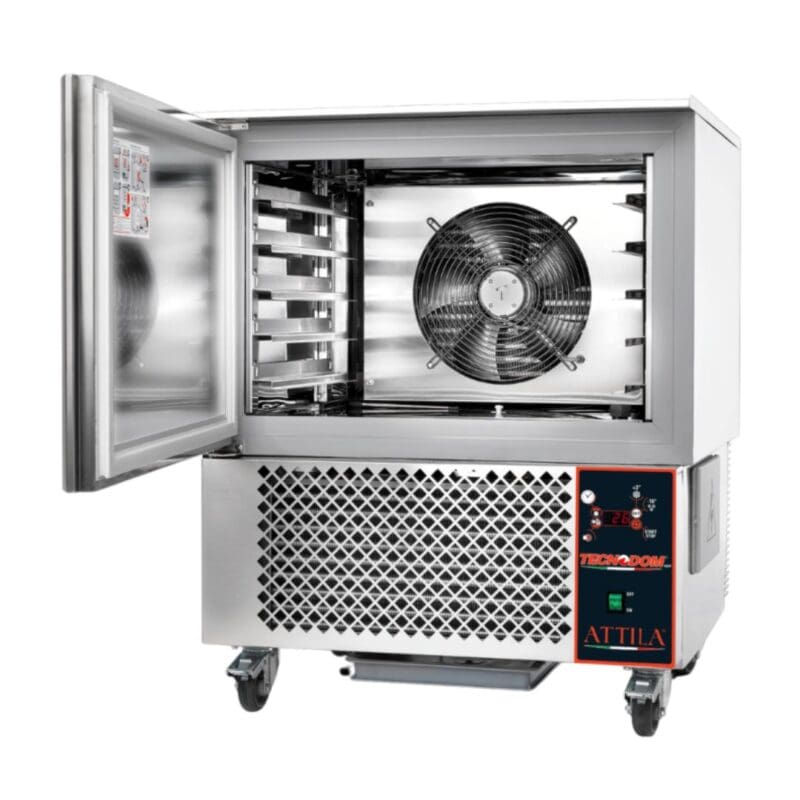
A blast chiller rapidly cools hot food by driving a stream of extremely cold air across the product. Unlike a standard fridge, which cools slowly and unevenly, a blast chiller reduces temperature so quickly that it moves food safely through the danger zone (5°C – 60°C), where bacteria multiply fastest.
This fast cooling protects both quality and safety, making it essential for kitchens that prepare food ahead of time, batch-cook, or need consistent portioning and storage.
Common users include:
Restaurants and cafés
Catering companies
Bakeries and patisseries
Hotels and resorts
Meal-prep businesses
Supermarkets and food manufacturers
If you work with cooked food in batches or need reliable HACCP-compliant cooling, a blast chiller is one of the most valuable tools you can invest in.
1. Capacity & Tray Size
Choosing the right size is the first step. Blast chillers are typically measured in two ways:
Tray Capacity
This tells you how many pans the unit holds. Common sizes include:
3 trays
5 trays
7 trays
10 trays
These trays follow industry-standard GN/EN sizes.
Yield Capacity
This refers to how many kilograms of food the unit can chill per cycle.
For example:
A 5-tray model might chill 22–34 kg per cycle
A 10-tray chiller may handle 50 kg or more
If you prep high volumes of cooked food, pastries, proteins or sauces, always look at yield capacity — not just the number of trays.
2. Which Size Is Right for Your Business?
Small cafés, bakeries and restaurants
A 3–5 tray blast chiller is usually enough for:
pastries
sauces
desserts
small batch cooking
daily meal prep
Compact, energy-efficient and easy to install.
Medium restaurants, catering kitchens and meal-prep businesses
A 7-tray model offers more throughput without taking up too much space. It’s ideal for:
medium-scale batch cooking
prepping meals in advance
reducing food waste
improving service consistency
Large commercial kitchens, hotels and caterers
A 10+ tray blast chiller provides maximum capacity and compliance for high-volume production. Ideal for:
banqueting
event catering
bulk frozen meals
central kitchen operations
3. Performance & Cooling Range
Blast chillers typically have two core functions: rapid chilling and blast freezing.
Rapid Chilling
Lowers food from +90°C to +3°C in about 90 minutes
Perfect for cooked dishes
Prevents bacterial growth
Maintains moisture, texture and flavour
Blast Freezing
Drops food from +90°C to −18°C in approx. 240 minutes
Prevents large ice crystals
Preserves colour, texture and long-term quality
Ideal for pastries, bakery items, doughs, proteins and pre-made meals
4. Operating Conditions for Australian Kitchens
Australian kitchen environments are hot — especially in summer or in commercial buildings with poor ventilation.
Always choose a tropicalised blast chiller rated for +40°C to +43°C ambient temperatures.
This ensures:
consistent cooling
improved reliability
reduced compressor strain
lower long-term running costs
Non-tropicalised models may struggle in real-world conditions, reducing their lifespan and performance.
5. Who Benefits Most From a Blast Chiller?
Restaurants & cafés
Cool dishes fast for safe storage, reduce waste, and speed up service.
Caterers
Prepare food ahead of time, chill quickly and transport safely.
Bakeries & patisseries
Protect delicate pastries, mousse, chocolate work and doughs from heat damage.
Hotels & large kitchens
Handle bulk batches without compromising quality.
Meal-prep companies
Ensure consistent, repeatable results and long shelf life.
Supermarkets & manufacturers
Extend shelf life, improve efficiency and maintain strict food safety controls.
If your business handles high volumes, prepares food ahead, or follows HACCP requirements, a blast chiller is a game-changing tool.

6. How to Use a Blast Chiller (Simple Step-by-Step)
Cook your food as normal.
Load hot trays or pans directly into the blast chiller.
Select the cycle:
Chill Mode: +90°C → +3°C
Freeze Mode: +90°C → −18°C
Let the unit run automatically — it will manage the entire blast cycle.
Transfer food to refrigerated storage or hold for later use.
That’s it. The process is simple, safe and highly effective.
Final Thoughts: Choosing the Right Blast Chiller
A blast chiller is one of the smartest investments a commercial kitchen can make. It improves food safety, reduces waste, boosts efficiency and helps you prepare high-quality dishes in advance. The key is picking the right size, yield and performance level for your workflow.
Whether you run a small café or a large production kitchen, choosing the right model ensures smooth daily operations and long-term savings.
Browse Blast chillers and Freezers at Bens Hospitality Equipment.