How to Store Food Safely in Your Commercial Fridge

Brought to you by Bendgs Catering Kitchen Equipment
When you’re running a busy café, restaurant, bakery, butcher, or takeaway in Australia, your commercial fridge isn’t just a storage space — it’s your frontline defence against food spoilage and contamination. Correct food storage keeps ingredients fresh, reduces waste, and helps you meet strict Australian food safety laws under the Food Standards Code (FSANZ).
At Bendgs, we’ve seen kitchens lose thousands of dollars from poor fridge organisation and temperature control. Let’s break down exactly how to store food safely in your commercial fridge so you can protect your business, your customers, and your bottom line.
Table of Contents
Set and Maintain the Correct Temperature
In Australia, keeping your commercial fridge or freezer at the right temperature isn’t just best practice — it’s a legal requirement under the Australia New Zealand Food Standards Code (FSANZ) to prevent the growth of harmful bacteria. For most ready-to-eat or perishable foods, the magic number is 5°C or below. Anything warmer and bacteria can multiply rapidly, putting your customers — and your business reputation — at risk.
Recommended Storage Temperatures by Food Type:
Raw meat, poultry & seafood → 0–3°C – Keeps protein fresh and slows spoilage. Store these items on the lowest shelf in sealed containers to avoid cross-contamination.
Dairy products & prepared meals → 2–4°C – Ideal for milk, cheese, yoghurts, and pre-made dishes. Keeps flavour, texture, and safety intact.
Fresh fruit & vegetables → 2–5°C – Most produce stores well in this range, but some fruit (like bananas, avocados, and tomatoes) are better kept at slightly higher temperatures or in cool storage to prevent chilling damage.
Frozen goods (if using a commercial freezer) → -18°C or below – Required for long-term safe storage.
Temperature Monitoring Best Practice:
Check fridge temperatures at least twice daily using a separate fridge thermometer — don’t rely solely on the unit’s digital display, which can be inaccurate if the probe is faulty or incorrectly positioned.
Log temperature checks in your Food Safety Program records (a requirement for many Australian food businesses).
Adjust for conditions – If your fridge is in a hot kitchen or is being opened frequently during peak service, set the thermostat slightly lower (e.g., 1–2°C) to compensate for temperature fluctuations.
💡 Pro Tip: For busy kitchens, invest in a digital temperature monitoring system that alerts you via SMS or email if your fridge or freezer rises above the safe range. This can save thousands in spoiled stock and prevent compliance breaches. Visit Food Standards Australia and New Zealand(FSANZ) for more details
Organise by Shelf to Prevent Cross-Contamination
The way you arrange your food can make or break your food safety compliance. Always store raw and ready-to-eat foods separately.
Best practice fridge layout:
Top shelves: Cooked meats, prepared salads, desserts, dairy products
Middle shelves: Prepared meals, marinades, deli items
Bottom shelves: Raw meat, poultry, and seafood (so juices can’t drip down)
Crisper drawers: Fresh fruit and vegetables (separate drawers for each where possible)
💡 Tip: Use sealed food-grade containers for raw proteins to stop leakage.
Label, Date, and Rotate Stock (FIFO)
The FIFO (First In, First Out) method ensures older stock is used before new deliveries.
Clearly label every container with item name, date received, and use-by date.
New stock should always go behind older stock.
Keep a whiteboard or digital inventory to track expiry dates for quick checks.
💡 Real-life example: A café that implemented FIFO reduced weekly waste by 25%, saving over $2,000 a year.
Avoid Overloading Your Fridge
Bacteria love moist fridge environments, so weekly cleaning is a must.
Use food-safe sanitiser on shelves, drawers, and handles.
Wipe up spills immediately to avoid contamination.
Clean door seals monthly to prevent mould growth and energy loss.
💡 Tip: If your fridge has a removable air filter (like many Hoshizaki models), clean it every fortnight to keep airflow strong.
Follow Recommended Storage Times
Even in the best fridge, food won’t last forever.
Cooked meat & poultry: 3–4 days
Fresh seafood: 1–2 days
Dairy: Follow use-by date, store in original packaging
Prepared salads: 1–2 days
Cut fruits & veg: 2–3 days in sealed containers
Choose the Right Commercial Fridge
Selecting the right commercial fridge or freezer isn’t just about keeping food cold — it’s about meeting Australian food safety laws, streamlining your kitchen workflow, and protecting your stock investment. The best choice depends on your menu, kitchen layout, and service style.
Underbench fridges: Great for busy prep areas (quick access, fits GN pans)
Perfect for cafes, restaurants, and bars where space is tight and quick access is crucial.
Designed to slide neatly under workbenches, keeping fresh ingredients within arm’s reach during service.
Many models fit Gastronorm (GN) pans, so you can store prepped food in standard-sized containers for easy swapping and cleaning.
Ideal for sandwich, salad, and pizza prep stations.
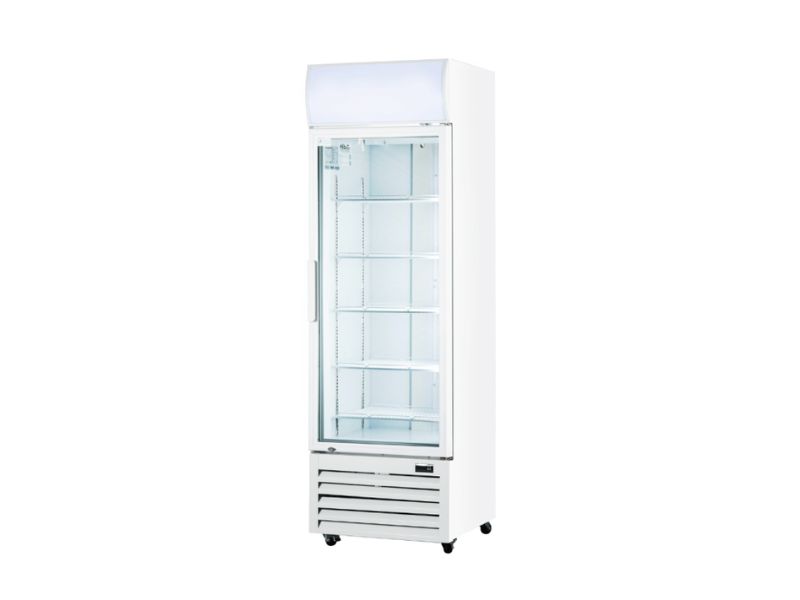
Upright fridges: Best for high-volume storage
The go-to for kitchens that need to store bulk produce, meat, dairy, and other high-volume stock.
Available in single, double, and triple-door options to suit everything from small cafes to large-scale catering operations.
Easy to organise with adjustable shelves, making it simple to separate raw and ready-to-eat foods for FSANZ compliance.
Display fridges: Ideal for front-of-house where customers can see the product
Designed to showcase chilled products to customers while keeping them at safe serving temperatures.
Perfect for bakeries, supermarkets, delis, and takeaway counters selling drinks, cakes, sandwiches, or grab-and-go meals.
Options include glass door upright displays, cake display fridges, and open-front grab-and-go merchandisers.
Specialty fridges: Like sushi cabinets or wine coolers for specific temperature needs
Sushi Cabinets – Maintain stable humidity and precise cold temperatures to preserve delicate seafood without drying it out.
Wine Coolers – Keep wine at optimal serving or cellaring temperatures with low vibration and humidity control.
Blast Chillers – Rapidly cool cooked food to safe storage temperatures, ideal for large-scale catering and HACCP compliance.
Pro tip for Australian operators
Choose proven commercial brands like Hoshizaki, Liebherr, and Bromic — they’re built for consistent cooling in tough Aussie kitchen conditions, handle high ambient temperatures (up to 40°C+), and often come with extended warranties for extra peace of mind. Before buying, check the fridge or freezer’s ambient temperature rating. In Australia’s climate, look for models designed for tropical or high ambient conditions, so your unit performs reliably even during summer rush periods.
Monitor and Record for Compliance
1. Temperature Logs: Your First Line of Defence
Australian food inspectors commonly require evidence of temperature monitoring to ensure cold storage stays below 5°C for perishable food.
According to Victoria’s Department of Health, you should manually check fridge/freezer temperatures twice per day using a probe thermometer, or opt for a Remote Monitoring System (RMS) that logs data automatically and triggers alarms—so you don’t miss deviations.
Moreton Bay Regional Council recommends checking at least once daily, ideally at the start of each shift and during high-risk times like restocking. For critical units, twice-a-day recording is best.
Queensland’s Whitsunday Regional Council suggests temperature checks should be a minimum of twice daily, spaced at least 6 hours apart—and always signed off by staff.
2. Use Templates & Record-Keeping Tools
FSANZ provides ready-to-use temperature log templates in Appendix 8 of Safe Food Australia—covering refrigeration, cleaning, supplier tracking, and more—to help you stay compliant.
For NSW food operators, there’s a helpful PDF of temperature record sheets that include prompts for date, time, corrective actions, and staff initials.
3. Maintain Maintenance & Cleaning Logs
Under Food Safety Standard 3.2.2A, Category 1 businesses—those handling ready-to-eat or high-risk food—are required to keep accurate records, including temperature logs, cleaning schedules, corrective actions, and staff training documentation. These must be kept for at least three months and be audit-ready.
4. Go Digital for Real-Time Alerts
Digital Temperature Monitoring Systems (RMS) offer key advantages:
Automatically log readings at least twice daily
Trigger alarms when temperatures fall outside safe limits
Track corrective actions instantly
Require annual calibration and validation for legal compliance
This helps maintain compliance and avoids reliance on manual checks, which can be inconsistent—especially during busy service.
5. Corrective Actions: Document and Act Fast
When temperatures are out of range (e.g., above 5°C for chillers or above –18°C for freezers), you must:
Log what caused the issue (e.g. door left open)
Move affected items to another unit
Contact maintenance or your equipment supplier
Note every action in the temperature log sheet
Including corrective steps in each entry builds a strong trail for inspectors and ensures prompt response if something goes wrong.
To Sum Up
Safe food storage in your commercial fridge is about more than ticking boxes — it’s about protecting your customers, your reputation, and your profit margins.
At Bendgs Catering Kitchen Equipment, we supply top-brand commercial fridges and freezers that keep temperatures consistent, are easy to clean, and built to last in busy Australian kitchens.
📞 Call us on 1300 434 125 or visit bendgs.com.au to find the perfect fridge for your business.