
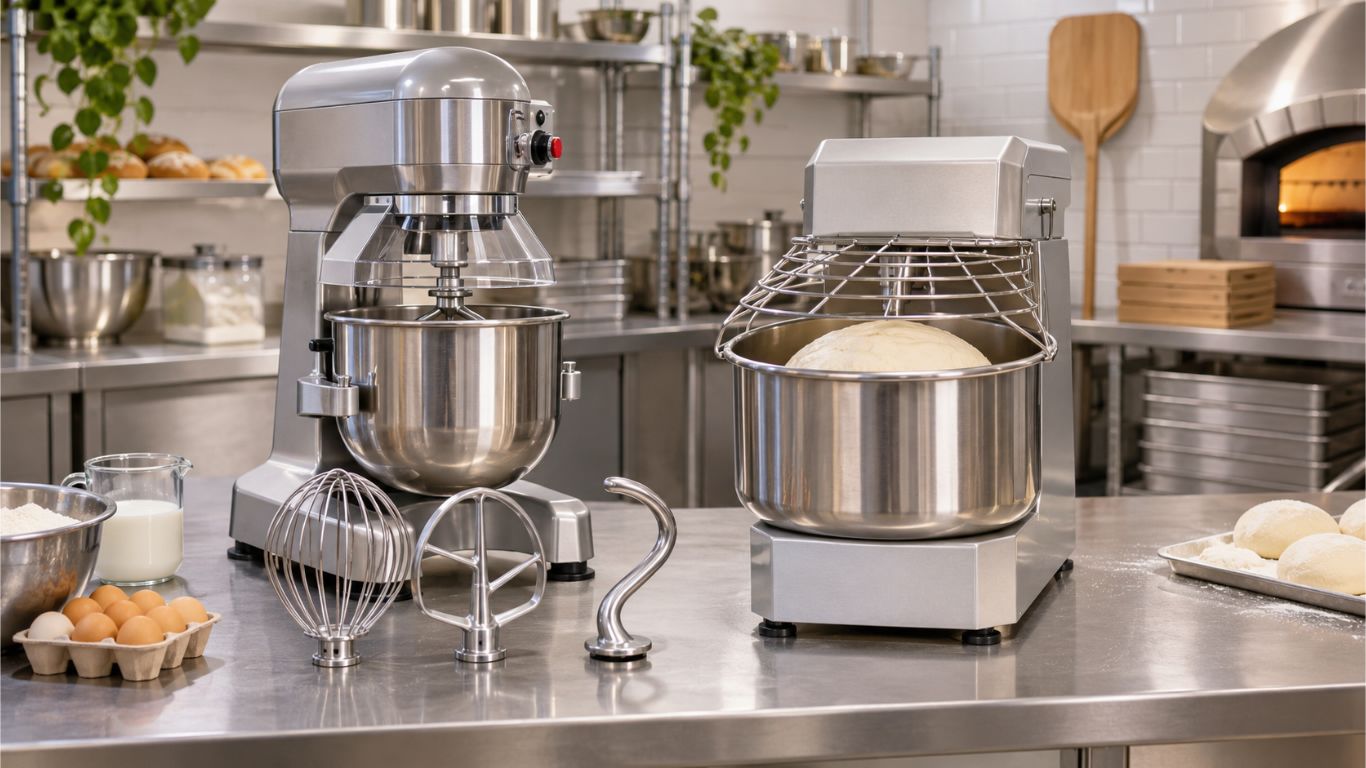
Choosing the best commercial mixer isn't simply about buying the biggest machine or the most powerful motor. It's about finding a mixer that can handle your recipes, daily production and available kitchen space without spending more than necessary.
For a café making cakes, muffins and whipped cream, a compact planetary mixer might be all you need. A busy pizza shop preparing dough every morning will usually benefit more from a dedicated spiral dough mixer.
In this buying guide, we'll compare mixer types, explain how to choose the right capacity and suggest suitable models for cafés, restaurants, bakeries and pizza shops in Australia. You can also browse our range of commercial dough mixers as you read.
1. Which Type of Commercial Mixer Do You Need?
Most hospitality businesses will be choosing between two types: planetary mixers and spiral dough mixers. Both make food preparation easier, but they're designed for different jobs.
Planetary Mixers: The All-Rounder for Commercial Kitchens
A planetary mixer uses an attachment that rotates around the mixing bowl while also turning on its own axis. By changing attachments, you can use one machine for a range of kitchen tasks.
Most commercial planetary mixers include:
- Wire whisk: For whipping cream, egg whites, meringues and light mixtures.
- Flat beater: For cake batter, icing, cookie dough and general mixing.
- Dough hook: For kneading bread and pizza dough within the mixer's rated capacity.
A planetary mixer is a practical choice for cafés, restaurants, cake shops and caterers preparing different foods throughout the day. Its main advantage is versatility: one mixer can handle several jobs. However, not every planetary mixer is designed for heavy or continuous dough kneading. Always check the manufacturer's maximum dough capacity and recommended mixing speeds.
Spiral Dough Mixers: Built for Bread and Pizza Dough
A spiral mixer is specifically designed for kneading dough. It uses a spiral-shaped hook, typically working together with a rotating bowl, to develop gluten and produce consistent dough.
Spiral mixers are particularly useful for pizza dough, bread, sourdough, focaccia and repeated dough batches. A busy pizza shop preparing 20kg or more of dough each morning may benefit more from a dedicated spiral mixer than a general-purpose planetary mixer.
The trade-off is that spiral mixers aren't designed for whipping cream or making cake batter. If your bakery produces both bread and decorated cakes, you may need both types. For a closer look at their differences, read our planetary vs spiral mixer comparison.
Planetary vs Spiral Mixer: Quick Comparison
| What Matters | Planetary Mixer | Spiral Mixer |
|---|---|---|
| Main purpose | General mixing and baking | Dough kneading |
| Cake batter | Excellent | Not suitable |
| Cream and icing | Excellent | Not suitable |
| Pizza and bread dough | Depends on model | Excellent |
| Attachments | Usually several | Usually dough hook only |
| Frequent heavy dough batches | Only if rated for the task | Generally better suited |
| Best businesses | Cafés, restaurants, cake shops | Pizzerias, bread bakeries |
Our buying tip: If your kitchen prepares a variety of foods, start with a planetary mixer. If bread or pizza dough makes up most of your production, consider a spiral dough mixer.
2. What Size Commercial Mixer Should You Buy?
Commercial mixers are commonly advertised by bowl size, such as 10L, 20L, 30L or 40L. But a 20-litre bowl doesn't mean the machine can knead 20kg of dough. Bowl capacity and maximum dough capacity are different measurements. Dough capacity depends on the mixer design, ingredients, hydration and manufacturer's specifications.
Commercial Mixer Size Guide
| Bowl Size | Typical Business | What to Consider |
|---|---|---|
| 7–10L | Small cafés, restaurants and cake shops | Small batches and limited space |
| 20L | Busy cafés, small bakeries and catering kitchens | Regular daily production |
| 30L | Growing bakeries and pizza shops | Larger batches |
| 40L | Busy commercial kitchens and bakeries | Higher production volume |
| 50–60L+ | High-volume bakeries and pizzerias | Large batches and dedicated floor space |
These are general size categories, not guaranteed ingredient or dough capacities. Check each individual mixer's load ratings.
How to Calculate the Dough Capacity You Need
Imagine you operate a pizza restaurant and prepare 150 pizzas on a busy Saturday. Each pizza requires a 250g dough ball.
Example:
- 150 pizzas per day
- 250g dough per pizza
- Total dough required: 37.5kg
- Mixer rated for 12kg dough per batch
- Minimum mixing batches required: 4
Check that the manufacturer's 12kg dough rating applies to your recipe, and allow time for preparation between batches.
If you are setting up a new pizza kitchen, think about dough preparation alongside your commercial pizza oven capacity. A fast oven won't help much if dough preparation becomes the bottleneck.
Don't Forget Your Smallest Batch
Buying a larger machine isn't automatically better. A large mixing bowl may struggle with small quantities of cream, icing or dough. Check minimum batch quantities and whether smaller bowls are available.
3. Best Commercial Mixers to Consider in Australia
Here are eight commercial mixers from the Bens Hospitality Equipment range, covering small cafés through to larger bakeries and pizza shops. These are recommendations based on intended use, published specifications and capacity, rather than hands-on comparative testing.
Planetary Mixers for Cafés, Restaurants and Bakeries
1. Apuro CP921-A 7L Planetary Mixer
Best for: Small cafés and compact kitchens.
With its 7-litre bowl and variable speed control, the Apuro CP921-A is a practical starting point for small batches of cake batter, whipped cream, icing and desserts. Its compact design makes it worth considering when benchtop space is limited.
Before buying: Check the rated dough capacity and suitability for heavier recipes.
2. Tyrone B10GX 10L Planetary Mixer
Best for: Growing cafés and cake shops.
A useful step up when a 7-litre mixer is too small. It provides more working capacity for cake batter, buttercream, sauces and general food preparation without moving to a large floor-standing machine.
Before buying: Confirm flour and dough capacity if you regularly make bread.
3. Yasaki B20KG 20L Planetary Mixer
Best for: Small bakeries comparing flour capacity.
This 20-litre gear-drive mixer has a published flour capacity of 3.5kg. That figure is more useful for assessing recipes than bowl volume alone.
Before buying: Check permitted dough hydration and mixing speed.
4. Tyrone B20GX 20L Planetary Mixer
Best for: Restaurants and commercial kitchens preparing varied mixtures.
The Tyrone B20GX combines a 20-litre bowl with variable speed operation. It is worth considering for busy kitchens preparing cakes, batters, sauces and other mixtures throughout the day.
Before buying: Ensure the bowl suits both your smallest and largest quantities.
5. Tyrone B40GX 40L Planetary Mixer
Best for: Larger commercial kitchens and bakeries.
This 40-litre model has ten adjustable speeds, a digital timer, and whisk, beater and dough hook attachments. It is worth comparing if your kitchen has outgrown smaller mixers.
Before buying: Consider its size, weight and safe loading arrangements.
Spiral Dough Mixers for Pizza Shops and Bakeries
6. AG SPMF20 20L Spiral Dough Mixer
Best for: Small pizza shops and bakeries.
The AG SPMF20 is a compact fixed-bowl spiral mixer with a published maximum wet dough capacity of 12kg. Its standard Australian 10A power connection is useful for many smaller kitchens.
Before buying: Consider the fixed bowl for cleaning and dough removal.
7. Prismafood SFM20 20L Spiral Mixer
Best for: Pizza businesses needing higher dough capacity from a 20L bowl.
This Italian-made mixer has a published 17kg maximum dough capacity and 10.5kg flour capacity, along with a timer and safety guard.
Before buying: Compare the rating with your flour type and hydration.
8. Prismafood SFR50 50L Spiral Mixer
Best for: High-volume bread and pizza production.
The SFR50 is a larger fixed-head spiral mixer with a published 42kg dough capacity and 27kg maximum flour capacity. It makes more sense when production volumes justify the space and capacity.
Before buying: Check electrical requirements, batch sizes and unloading access.
For more options, explore our commercial bakery equipment range, including machines used for baking and dough preparation.
Commercial Mixer Comparison at a Glance
| Model | Type | Bowl Size | Main Reason to Consider |
|---|---|---|---|
| Apuro CP921-A | Planetary | 7L | Compact and versatile |
| Tyrone B10GX | Planetary | 10L | Everyday café mixing |
| Yasaki B20KG | Planetary | 20L | Published flour rating |
| Tyrone B20GX | Planetary | 20L | Variable speed operation |
| Tyrone B40GX | Planetary | 40L | Larger batches |
| AG SPMF20 | Spiral | 20L | Up to 12kg wet dough |
| Prismafood SFM20 | Spiral | 20L | Up to 17kg dough |
| Prismafood SFR50 | Spiral | 50L | Up to 42kg dough |
Check the current manufacturer specifications and recipe-related capacity limits before buying. The same bowl size does not mean the same dough capacity across models.
4. What Should You Look for Before Buying a Commercial Mixer?
Maximum Dough Weight and Flour Capacity
Some manufacturers quote maximum flour weight, while others quote total dough weight. These aren't interchangeable. A recipe using 6kg of flour and 3.6kg water produces at least 9.6kg dough before adding other ingredients. Hydration also matters: stiffer dough usually creates more resistance.
Accurate ingredient weighing is important for consistent recipes. Our range of commercial kitchen scales may be useful if you're setting up a new bakery or pizza preparation area.
Motor, Gearbox and Mixing Speeds
A commercial mixer needs sufficient torque for the workload, not simply a high wattage figure. Multiple speeds help planetary mixers switch from gentle mixing to whipping, while suitable kneading speeds help spiral mixers develop dough. Compare the drive system, available settings and recommended operating conditions.
Fixed Bowl or Removable Bowl?
A fixed bowl may be suitable for a consistent daily dough recipe. A removable bowl can make unloading and cleaning easier when switching mixtures, but a large bowl filled with dough can be heavy to handle.
Power Requirements and Installation
Some smaller mixers use standard Australian 10A power, while larger models may require 15A connections or three-phase electricity. Before buying, check the plug, dimensions, weight, available bench or floor space, delivery access and installation requirements.
Safety Features
Look for suitable bowl guards, interlocks, overload protection and accessible controls. Train staff to stop and isolate the machine before changing attachments or reaching into the mixing area.
Cleaning, Service and Warranty
Check how easily the bowl, attachments and guard can be cleaned, whether replacement parts are available, and what routine maintenance is needed. Service support can matter as much as the purchase price in a busy kitchen.
5. Which Commercial Mixer Is Best for Your Business?
| Business | Main Requirement | Mixer Type to Investigate |
|---|---|---|
| Small café | Cakes, cream and sauces | 7–10L planetary |
| Cake shop | Batters, buttercream and icing | 10–20L planetary |
| Restaurant | General food preparation | 10–20L planetary |
| Small pizza takeaway | Daily pizza dough | 20L spiral |
| Artisan bakery | Bread and focaccia | Spiral sized by dough weight |
| Busy pizzeria | Multiple dough batches | 30–50L+ spiral |
| Large catering kitchen | Larger mixed-food batches | 20–40L+ planetary |
Planning a new café? Our café equipment checklist covers the other equipment to consider alongside a mixer, from food preparation to refrigeration and service.
6. Is a More Expensive Commercial Mixer Worth It?
A less expensive mixer can be sensible for a few small batches each day. For a bakery using mixers frequently, durability, capacity, spare parts and service support may be worth more than saving money upfront.
Example: If the right mixer and an improved workflow save 20 minutes of staff time per day across 300 trading days, that's 100 hours annually. At an illustrative labour cost of $35 per hour, the potential saving is $3,500 a year.
Actual savings depend on your workflow and staffing; this is an example, not a guaranteed return.
7. Common Mistakes to Avoid When Buying a Commercial Mixer
- Choosing by bowl size alone: Check the actual load capacity.
- Using a planetary mixer for continuous heavy dough production: Check its rating or compare spiral mixers.
- Ignoring minimum batch size: A large mixer may not handle small mixtures well.
- Overlooking power requirements: Verify the connection before ordering.
- Not measuring access: Check doorways, bench space and unloading.
- Forgetting maintenance: Ask about parts and servicing.
If you're still deciding which type of equipment suits your recipes, our guide to commercial mixer types also explains where stick blenders and bar blenders fit into commercial kitchen preparation.
8. Where to Buy Commercial Mixers in Australia
Bens Hospitality Equipment supplies planetary mixers and spiral dough mixers for cafés, restaurants, bakeries, pizza shops and hospitality businesses throughout Australia. We offer Australia-wide delivery, including Sydney, Melbourne, Brisbane, Adelaide, Perth and regional locations.
Need Help Choosing the Right Commercial Mixer?
Tell us what you're mixing, how much you prepare per batch and how often you'll use the machine. We can help you compare suitable options for your kitchen.
Call Bens Hospitality Equipment on 1300 434 125.
Browse Commercial Mixers