Essential Café Equipment Checklist for Opening a Café in Australia
Opening a café in Australia is exciting, but choosing the right equipment can feel like a big job. You are not just buying appliances. You are building a workflow that needs to handle early morning coffee rushes, food prep, cold storage, cleaning, takeaway orders and busy weekend service.
The right café equipment depends on your menu, available space, customer volume and budget. A small takeaway coffee bar may only need compact refrigeration, a coffee machine, grinder, ice maker and glasswasher. A full breakfast café may need commercial cooking equipment, ovens, fridges, freezers, dishwashers, stainless steel benches and display cabinets.
This guide walks through the essential equipment most café owners should consider before opening, so you can plan your fit-out properly and avoid buying gear that does not suit your space or service style.
Why Choosing the Right Café Equipment Matters
A café can look beautiful from the front, but the real test happens behind the counter. Can your barista move quickly? Can your milk stay cold during the morning rush? Can your dishwasher keep up with dine-in cups and plates? Is there enough prep space for food service?
Good café equipment helps your team work faster, safer and more consistently. It can also reduce waste, improve food safety, support better presentation and make daily service less stressful.
Before buying equipment, think about:
- Your café menu
- Your expected number of customers per day
- Available kitchen and front counter space
- Power and plumbing requirements
- Ventilation requirements
- Storage space for fresh, frozen and dry goods
- Dine-in versus takeaway service
- Future menu growth
A café that mainly sells takeaway coffee has very different equipment needs compared with a breakfast café, bakery café or smoothie bar. Planning around your actual service style is the best place to start.
Commercial Coffee Machine
For most cafés, the coffee machine is the heart of the business. It is usually one of the first pieces of equipment customers notice, and it plays a big role in speed, consistency and customer satisfaction. When choosing a commercial coffee machine, think about how many coffees you expect to make during peak hours. A small café may suit a compact machine, while a busy venue may need a larger multi-group model so more than one barista can work at the same time. You should also consider bench space, water connection, power requirements and how easy the machine is to clean and service.
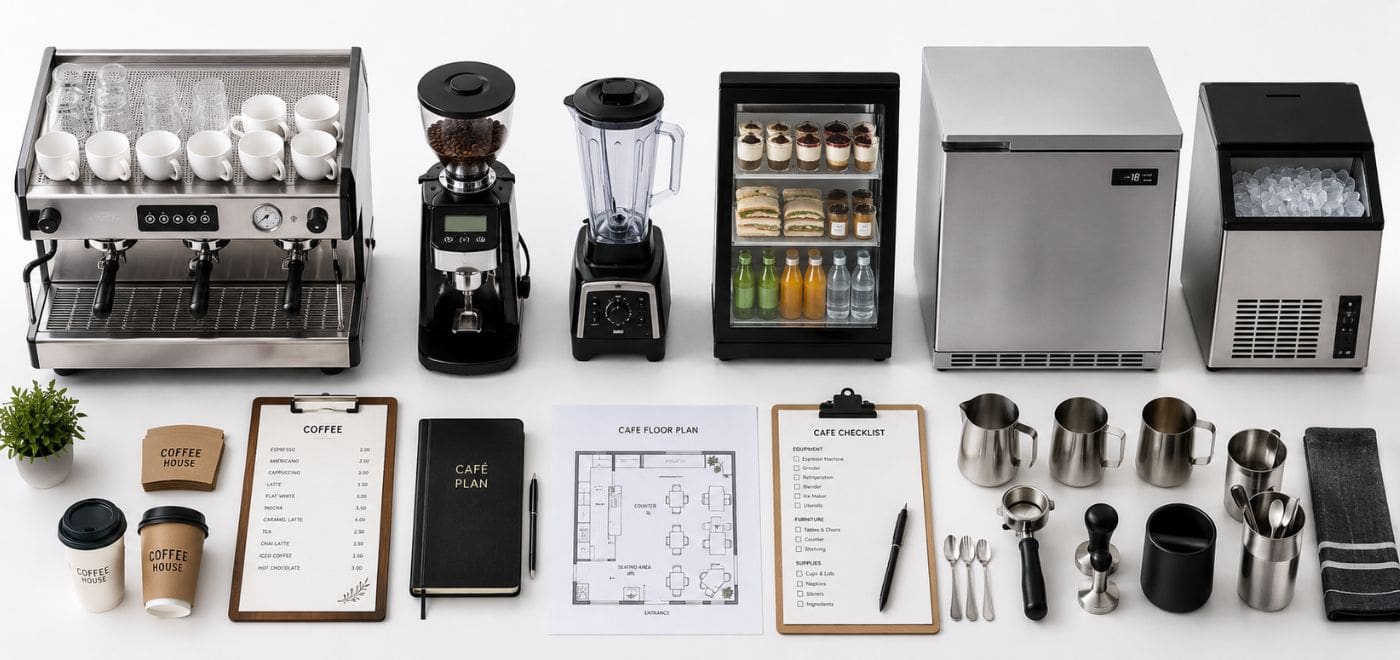
A good commercial coffee setup may include:
- Commercial coffee machine
- Coffee grinder
- Knock box
- Milk jugs
- Tamper
- Cleaning products
- Water filtration system
- Under bench fridge for milk storage
If coffee is your main product, this is not the place to guess. Choose equipment that can handle your busiest morning, not just your quietest day.
Coffee Grinder and Beverage Equipment
A quality coffee grinder is just as important as the coffee machine. Fresh grinding helps create better flavour and more consistent shots throughout the day. For cafés, consistency matters because customers often come back expecting the same taste every morning. If your café also offers cold drinks, smoothies, frappes, juices or milkshakes, you may also need beverage equipment such as commercial blenders, juicers or drink mixers. These machines can help you add high-margin menu items without needing a full kitchen. A smoothie or iced coffee menu can be especially useful in warmer months or for cafés near gyms, schools, offices and shopping areas.
Useful beverage equipment may include:
- Commercial blender
- Juicer
- Milkshake mixer
- Drink dispenser
- Ice maker
- Bar fridge
- Display fridge for bottled drinks
Under Bench Fridges
Every café needs reliable chilled storage, especially for milk, cream, fruit, sauces, sandwich fillings, salads, cakes and prep ingredients. Under bench fridges are one of the most practical choices for cafés because they sit neatly below the workbench and keep ingredients close to the team. This helps save floor space and improves workflow during busy service. For example, placing an under bench fridge near the coffee machine allows baristas to access milk quickly. Another unit near the prep bench can hold sandwich fillings, sauces, cheese, fruit and other high-use ingredients.
Common uses for under bench fridges include:
- Milk storage near the coffee machine
- Sandwich and wrap ingredients
- Salad ingredients
- Desserts and cakes
- Sauces and condiments
- Prep containers
- Cold drinks
If your café has limited space, an under bench fridge can also give you extra usable bench space on top, depending on the model.
Upright Commercial Fridges
While under bench fridges are great for quick access, upright commercial fridges are better for bulk storage. Many cafés use both. An upright fridge can be placed in the back-of-house area to store extra milk, drinks, dairy, produce, sauces and prepared food. This allows your front counter or prep area to stay organised while still keeping backup stock close by.
When choosing an upright fridge, check the capacity, shelving layout, temperature range, door type and available kitchen space. Glass door fridges can make stock easier to see, while solid door fridges may suit back-of-house storage where display is not important. Good refrigeration is not just about keeping food cold. It also helps protect stock quality, reduce waste and support food safety.
Display Fridges for Cakes, Sandwiches and Drinks
A display fridge does more than store food. It helps sell it. Cakes, slices, sandwiches, salads, bottled drinks and desserts are easier to sell when customers can see them clearly. A well-stocked display fridge near the counter can increase impulse sales during coffee orders, lunch breaks and afternoon snack runs.
For cafés, common display options include:
- Cake display fridge
- Countertop display fridge
- Glass door display fridge
- Sandwich display fridge
- Drink display fridge
If your café sells cakes, pastries or desserts, a cake display fridge can make your products look more appealing while keeping them at the right temperature. If you focus on takeaway, a glass door display fridge can help customers quickly grab bottled drinks, salads, wraps and ready-made meals.
Placement matters too. A display fridge should be easy for customers to see without blocking your service area.
Commercial Freezers
Even small cafés often need freezer space. You may need to store pastries, frozen fruit, desserts, bread, chips, backup ingredients, ice cream or frozen meals. An under bench freezer is useful when floor space is limited, while an upright freezer is better for larger storage. If your menu includes smoothies, açai bowls or desserts, freezer space becomes even more important. Freezers can help cafés reduce waste by allowing bulk storage, but they should still be easy to organise. Poor freezer organisation can slow your team down and make stock hard to manage.
Common freezer uses in cafés include:
- Frozen pastries
- Frozen fruit
- Bread and bakery items
- Ice cream or gelato
- Desserts
- Chips and snacks
- Backup ingredients
Commercial Ice Maker
If your café serves iced coffee, smoothies, frappes, juices or cold drinks, a commercial ice maker is worth planning early. Buying bags of ice may seem easy at the start, but it can become inconvenient and costly as your drink sales grow. Running out of ice during a busy day is also frustrating for staff and customers. The right ice maker depends on your drink menu and volume. A small café may suit an undercounter ice machine, while a busy venue may need a higher-capacity modular ice maker.
Cafés commonly use ice for:
- Iced coffee
- Iced lattes
- Smoothies
- Frappes
- Juices
- Soft drinks
- Cold display and food presentation
When choosing an ice machine, think about daily production, storage bin capacity, available space, drainage and ventilation.
Commercial Cooking Equipment
Not every café needs a full commercial kitchen, but most cafés need some form of cooking equipment. A small takeaway coffee shop may only need a sandwich press, toaster and compact convection oven. A breakfast café may need a griddle, cooktop, fryer, oven or hot plate to handle eggs, bacon, toast, hash browns and other breakfast items. Before buying cooking equipment, start with your menu. Do not buy equipment just because another café has it. Buy what helps you cook your actual menu quickly and consistently.
Common café cooking equipment includes:
- Commercial toaster
- Sandwich press
- Contact grill
- Benchtop griddle
- Commercial cooktop
- Deep fryer
- Convection oven
- Microwave
- Rice cooker or soup kettle, depending on menu
If you plan to cook hot food, also check whether your shop requires exhaust ventilation, gas connection, three-phase power or extra bench space.
Commercial Ovens
A commercial oven is useful for cafés serving pastries, pies, toasties, roasted vegetables, baked goods or light meals. Convection ovens are popular for cafés because they cook evenly and suit a wide range of products. They can be used for reheating, baking, roasting and finishing food before service. For bakery-style cafés, ovens are even more important. You may need a larger oven, proofer, mixer or other bakery equipment depending on whether you bake in-house or finish pre-made products.
When choosing an oven, consider:
- Tray size
- Cooking capacity
- Power requirement
- Temperature range
- Bench space
- Ventilation needs
- Menu type
A compact oven may be enough for light food service, while a larger café may need more capacity to keep up during breakfast and lunch.
Commercial Dishwasher or Glasswasher
A domestic dishwasher is not designed for café service. It may be too slow, too small and not suitable for the workload of a commercial venue. A commercial dishwasher or glasswasher helps cafés clean cups, plates, cutlery and glassware quickly throughout the day. This is especially important if your café offers dine-in service. A glasswasher may be enough for a small coffee bar with mostly cups and glasses. A café serving breakfast, lunch or plated food will usually need a commercial dishwasher.
Benefits of commercial dishwashing equipment include:
- Faster wash cycles
- Better workflow during busy service
- Cleaner cups, plates and cutlery
- Reduced manual washing
- Improved hygiene
- Less pressure on staff
When planning your café layout, place the dishwasher near the sink and dirty dish return area if possible. A poor wash-up layout can slow the whole venue down.
Stainless Steel Benches, Sinks and Shelving
Good café workflow starts with the right prep area. Stainless steel benches, sinks and shelving help create a clean, practical and food-safe workspace. Stainless steel is popular in commercial kitchens because it is strong, hygienic, easy to clean and suitable for daily hospitality use. For cafés, stainless benches can be used for prep, plating, coffee service, equipment placement and storage.
You may need:
- Stainless steel work benches
- Benches with splashback
- Sink benches
- Hand wash basins
- Stainless steel shelves
- Wall shelves
- Equipment stands
- Tapware and pre-rinse sprays
Before choosing benches, think about how food and drinks move through the café. Stock comes in, ingredients are stored, food is prepared, coffee is made, dishes are washed and orders go out. Your layout should make that movement easy.
Food Preparation Equipment
Food preparation equipment depends heavily on your menu. A café making sandwiches, salads, smoothies, cakes or breakfast items will need different tools compared with a simple takeaway coffee bar.
Useful prep equipment may include:
- Food processor
- Commercial blender
- Planetary mixer
- Stick blender
- Vegetable slicer
- Meat slicer
- Scales
- Colour-coded chopping boards
- Knives and utensils
- GN pans and food storage containers
Even small items can make a big difference to workflow. For example, colour-coded chopping boards help separate food types, while food storage containers help keep prep organised and easy to access.
Hot Food Displays and Bain Maries
If your café sells pies, sausage rolls, pastries, hot meals or grab-and-go lunch items, hot food displays can be very useful. A hot food display keeps food warm and ready to serve while making it visible to customers. This can help improve speed of service and encourage impulse purchases. Bain maries are also useful for cafés offering hot breakfast or lunch service. They can hold cooked food at serving temperature, making them helpful for high-volume takeaway or buffet-style service.
Common options include:
- Pie warmer
- Countertop hot food display
- Freestanding heated display
- Bain marie
- Soup kettle
These items are not essential for every café, but they are worth considering if ready-to-serve hot food is part of your menu.
Takeaway Packaging and Servingware
Many Australian cafés rely heavily on takeaway trade. Coffee cups, takeaway containers, napkins, paper bags and food packaging should be planned before opening, not left until the last minute. Your packaging should suit your menu and service style. A café selling salads, rice bowls, pastries and sandwiches will need a different packaging setup compared with a coffee-only takeaway bar.
Common café packaging items include:
- Takeaway coffee cups and lids
- Takeaway containers
- Salad bowls
- Clamshell containers
- Paper bags
- Napkins
- Cutlery
- Food trays
- Drink carriers
Good packaging helps protect food quality, improve presentation and make takeaway orders easier for customers to carry.
Equipment Checklist by Café Type
Every café is different. Here are a few simple examples to help you plan based on your business model.
Small Takeaway Coffee Bar
A small takeaway café usually needs compact, efficient equipment that supports fast service in a limited space.
Recommended equipment:
- Commercial coffee machine
- Coffee grinder
- Under bench fridge
- Bar fridge
- Small ice maker
- Glasswasher
- Sandwich press
- Commercial toaster
- Countertop display fridge
- Takeaway coffee cups and packaging
This setup is ideal for cafés focused on coffee, toasties, pastries and simple grab-and-go items.
Breakfast Café
A breakfast café needs more cooking, prep, storage and washing capacity because the menu is usually larger and service is more intense.
Recommended equipment:
- Commercial coffee machine
- Coffee grinder
- Under bench fridge
- Upright fridge
- Commercial freezer
- Commercial cooktop or griddle
- Convection oven
- Commercial dishwasher
- Stainless steel benches
- Sink bench
- Shelving
- Food processor or blender
- Hot food display, depending on menu
This setup suits cafés serving eggs, bacon, toast, pastries, sandwiches, salads and plated meals.
Bakery Café
A bakery café needs strong display, refrigeration and baking equipment. Presentation is especially important because customers often choose cakes, slices and pastries by sight.
Recommended equipment:
- Commercial coffee machine
- Coffee grinder
- Cake display fridge
- Commercial oven
- Bakery equipment
- Upright fridge
- Commercial freezer
- Stainless prep benches
- Mixer
- Dishwasher
- Takeaway packaging
This setup suits cafés selling cakes, pastries, desserts, pies, sausage rolls and baked goods.
Smoothie and Cold Drink Café
A smoothie or juice-focused café needs reliable cold storage, ice production and beverage preparation equipment.
Recommended equipment:
- Commercial blender
- Juicer
- Commercial ice maker
- Under bench fridge
- Display fridge
- Freezer for fruit or ice cream
- Prep bench
- Sink
- Glasswasher
- Takeaway cups and lids
This type of café should plan carefully around ice production and chilled storage because cold drinks can use a lot of ingredients during peak times.
Common Mistakes to Avoid When Buying Café Equipment
Buying café equipment can be expensive, so it is worth avoiding common mistakes early.
Buying Domestic Instead of Commercial
Domestic appliances are not designed for continuous café use. They may struggle with frequent opening, heavy workload and commercial cleaning requirements. Commercial equipment is built for business use and is usually a better long-term choice.
Not Measuring the Space Properly
Always check the width, depth and height of your available space before ordering equipment. Also allow room for doors to open, staff to move and equipment to ventilate properly.
Forgetting Power, Gas and Plumbing Requirements
Some commercial equipment may need 15amp power, three-phase power, gas connection, water connection or drainage. Check these details before buying so you do not end up with equipment that cannot be installed easily.
Underestimating Refrigeration
Cafés often need more fridge space than expected, especially once milk, drinks, cakes, sauces, produce and prep ingredients are added. It is better to plan your chilled storage properly from the start.
Ignoring Workflow
Equipment should be placed where it makes sense. Milk fridges should be near the coffee machine. Prep fridges should be near the prep bench. Dishwashers should be near the sink and dirty dish area. A good layout saves time every day.
Choosing Only by Price
The cheapest equipment is not always the best value. Consider reliability, warranty, spare parts, capacity, energy use, cleaning, service support and whether the equipment suits your venue.
Final Thoughts
Opening a café is a big step, and the equipment you choose can affect your daily workflow, food quality, customer service and long-term running costs.
Start with your menu, then build your equipment list around how your café will actually operate. A takeaway coffee bar, breakfast café, bakery café and smoothie shop all need different setups. Choosing the right commercial coffee machine, fridges, freezers, ice maker, dishwasher, cooking equipment, stainless benches and display cabinets can help your team work faster and serve customers better.
FAQs
Most cafés need a commercial coffee machine, coffee grinder, under bench fridge, display fridge, commercial dishwasher or glasswasher, stainless steel benches, sinks, shelving and basic cooking equipment. The exact list depends on your menu, shop size and expected customer volume.
Yes, commercial equipment is recommended for cafés because it is designed for business use. Domestic appliances may not handle constant use, frequent door openings, heavy cleaning and busy service periods.
Most cafés use a combination of under bench fridges, upright fridges and display fridges. Under bench fridges are useful near the coffee or prep area, upright fridges are better for bulk storage, and display fridges help sell cakes, drinks, sandwiches and takeaway food.
An ice maker is highly recommended if your café serves iced coffee, smoothies, frappes, juices or cold drinks. It saves time compared with buying bags of ice and helps keep up during busy service.
If your café offers dine-in service, a commercial dishwasher or glasswasher is usually very important. It helps clean cups, plates, cutlery and glassware quickly throughout the day.
This depends on the menu. A simple coffee bar may only need a sandwich press, toaster and small oven. A breakfast café may need a griddle, cooktop, fryer, convection oven and more prep equipment.
The cost depends on the size of your café, your menu and whether you need front-of-house, back-of-house or full kitchen equipment. A small takeaway café may start with a compact setup, while a full breakfast café or bakery café may need a larger investment in refrigeration, cooking, washing and display equipment.