

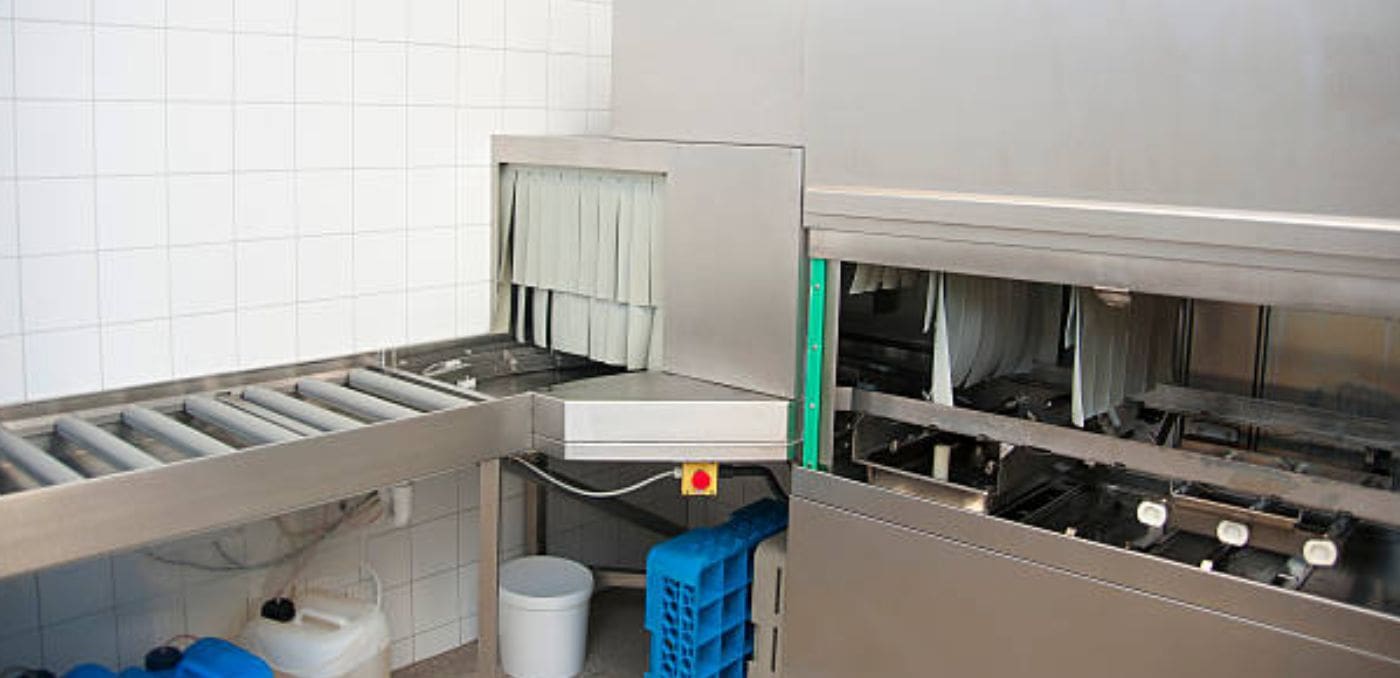
Average Cost of a Commercial Dishwasher in Australia
Buying a commercial dishwasher is one thing. Getting it installed properly is where many hospitality operators get caught off guard.
A lot of buyers focus on the machine price first, then realise later they may also need a licensed plumber, a licensed electrician, a new 15A outlet, a dedicated circuit, or even 3-phase power, depending on the model and output they want. In Australia, many underbench machines run on 240V / 15A, while larger pass-through and higher-output pot washers are commonly available in 415V three-phase configurations.
If you are budgeting for a new machine, the better question is not just “How much is the dishwasher?” but “How much will it cost to get it site-ready and installed?”
Typical Commercial Dishwasher Installation Cost in Australia
For most Australian cafés, restaurants, bars, and hospitality venues, a realistic installation budget usually falls into these ranges:
-
Like-for-like replacement with existing plumbing and suitable power already on site: around $300 to $1,000 (Ex. GST)
-
Install needing a new 15A outlet or small electrical upgrade: around $800 to $1,800 (Ex. GST)
-
Install needing 3-phase power or larger electrical works: around $1,100 to $3,000 (Ex. GST)
-
If the site requires a full single-phase to three-phase upgrade, costs can go much higher again, often into the $2,500 to $6,000 range just for the power upgrade itself.
These figures are best treated as a planning guide rather than a fixed national rate, because installation costs vary depending on your location, your building, your existing services, and the dishwasher model you choose. The power and plumbing requirements can change a lot between a small underbench unit and a larger hood-type or conveyor machine.
Why Installation Costs Vary So Much
A compact underbench commercial dishwasher may be fairly straightforward if your site already has the right water connection, drainage, and a compliant 15A power supply. Some machines are sold ready for 240V / 15A use, making installation simpler in many cafés and bars.
But once you move into pass-through dishwashers, models with the heat recovery, larger pot washers, or conveyor washer systems, the installation can become more involved. Many pass-through and conveyor-style machines are designed for 415V three-phase or may be offered in both single-phase and three-phase variants. That means you need to confirm what is actually available on site before you buy.
Then there is plumbing. Commercial dishwasher installation usually requires a proper water supply, waste connection, correct drainage, and sometimes additional items such as a drain pump, rinse aid pump, detergent dosing, or water softener, depending on the machine and local water conditions.

What You Are Actually Paying For
When a customer asks how much it costs to install a commercial dishwasher in Australia, the total normally includes a mix of the following:
1. Plumbing connection
The machine needs a compliant water connection and drainage setup. In some venues, this is easy because an old commercial dishwasher was already there. In others, the plumber may need to alter pipework, change drainage, or improve waste fall. Proper drainage matters, especially in busy kitchens where poor setup can lead to backups or overflow problems.
2. Electrical work
This is one of the biggest cost variables. Some smaller glass washers and undercounter dishwashers use 15A plug, while many commercial machines need a hardwired connection or a larger dedicated supply. Most pass-through or conveyor machines require three-phase power, safety switching, and isolation that must be done by a licensed electrician.
3. Site modifications
Sometimes the machine itself is not the expensive part, but the site is. If the dishwasher does not fit the existing bench run, if the waste point is awkward, or if the venue needs inlet and outlet benches to suit a hood machine, installation costs can climb quickly. Pass-through machines are often paired with dishwasher benches to improve workflow.
4. Water treatment or accessories
In some Australian areas, hard water can shorten machine life and affect rinse quality. That is why some commercial dishwashers are offered with integral water softeners or are recommended to be installed with water treatment equipment such as “REVERSE OSMOSIS”.
Underbench vs Pass-Through: Which Costs More to Install?
In general, underbench commercial dishwashers are usually cheaper to install.
That is because many underbench units are more compact, often run on 240V / 15A, and are easier to place in smaller kitchens if the existing setups are already in place.
A pass-through dishwasher, on the other hand, usually costs more to install because the machine is larger, often has higher output, and may require either 15A single-phase or 415V three-phase, depending on the model and performance level. Most pass-through dishwashers available on the market require a 3-phase power connection. Be sure to confirm your site’s electrical capacity before purchasing.
You may also need to factor in additional benches, better drainage planning, and more electrical work.
So as a rough rule:
Underbench dishwasher installation: usually the lower end of the cost range
Pass-through dishwasher installation: usually the mid to upper end
Conveyor or flight-type dishwasher installation: usually the highest, especially when site services need upgrading.
Hidden Costs Buyers Often Miss
Here’s where people can get stung.
They order the machine, then discover they also need:
a 15A outlet instead of a standard power point
a dedicated electrical circuit
three-phase power
a plumber to alter drainage
a water filter or softener
chemical dosing setup
benching or site reconfiguration around the machine.
That is why the cheapest dishwasher on paper is not always the cheapest dishwasher once installed.
How to Keep Installation Costs Under Control
The easiest way to save money is to choose a machine that suits what your site already has.
If your venue already has a compliant 15A single-phase setup, a compatible underbench machine may be the most cost-effective path. If you need a high-output hood machine but the site does not have the right power, your install budget can jump fast.
Before you order, check these 5 things:
Power available on site — 10A, 15A, or 3-phase
Water connection location
Drainage and waste position
Whether you need a drain pump or a softener
Machine dimensions and bench layout
Conclusion
When you’re buying a commercial dishwasher in Australia, it helps to think in two parts: the purchase price and the installation cost.
As a rough buying guide, undercounter commercial dishwashers commonly start from around the mid-$3,000s to $5,000+ ex GST, while many pass-through dishwashers sit roughly in the $7,000 to $15,000+ range depending on brand, output, and features. Conveyor and larger warewashing systems usually sit well above that again. Current Australian listings show examples such as an Asber underbench unit at $3,816.50 ex GST, a Washtech underbench at $4,198.00 ex GST, and pass-through models ranging from about $7,096.65 up to $14,130.60 ex GST.
That means a realistic planning budget is not just “What does the dishwasher cost?” but “What will the whole setup cost once it is installed and ready to run?” For many venues, the machine itself may be only part of the spend if you also need plumbing changes, a 15A outlet, a dedicated circuit, or 3-phase power.
It is also worth thinking long term. A well-maintained commercial dishwasher will often give you around 7 to 10 years of service, and sometimes longer in lower-stress sites with proper cleaning, water treatment, and regular servicing. Lifespan depends heavily on usage intensity, water quality, daily cleaning habits, and whether the machine is correctly matched to the venue. That 7–10 year range is a common industry expectation rather than a fixed manufacturer guarantee, so real-world results can vary.
In other words, the cheapest machine is not always the cheapest ownership option. A slightly better dishwasher with lower water use, better parts support, and the right power setup for your site can save a lot of grief over its working life.
If you are comparing options, a simple rule of thumb is:
Small café or bar: usually start with an undercounter dishwasher
Busy restaurant or pub: often better suited to a pass-through or hood-type dishwasher
Large-volume kitchen, club, hospital, or production site: look at conveyor or larger warewashing systems.
Before you buy, check your power supply, plumbing layout, space, and service volume. Get that right from the start, and your commercial dishwasher should quietly do its job for years — keeping service moving, labour down, and your kitchen running smoothly.


