
What Can You Cook in a Commercial Convection Oven?
How Does a Commercial Convection Oven Cook Food?
Unlike a conventional oven that relies largely on stationary hot air and radiant heat, a convection oven uses a built-in fan to circulate heated air around the cooking chamber.
This moving hot air transfers heat efficiently, helping food cook more consistently and often more quickly than in a conventional oven.
For a busy kitchen, that means you can:
- Bake multiple trays of pastries, biscuits or other suitable products in one batch.
- Roast vegetables and meats with good surface browning.
- Produce consistent results when following tested cooking programmes.
- Prepare different menu items throughout the day without needing a separate oven for every task.
However, not all convection ovens offer the same performance. Fan speed, heating capacity, tray spacing and moisture controls can make a big difference, particularly when baking delicate products.
15 Foods You Can Cook in a Commercial Convection Oven
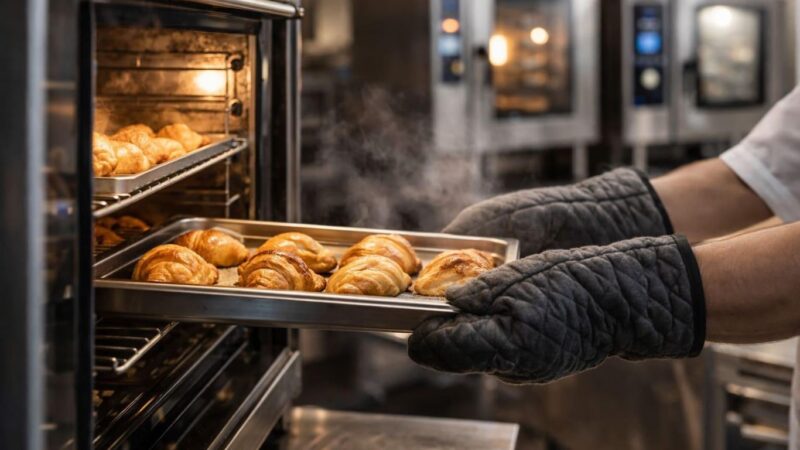
1. Croissants and Danish Pastries
Freshly baked croissants are a favourite in Australian cafés, and convection ovens are widely used to prepare them.
Circulating hot air helps puff pastry rise and develop a golden, flaky exterior. You can also bake chocolate croissants, fruit Danishes, cinnamon scrolls and other laminated pastries, provided the oven's airflow and settings suit the product.
Best for: Cafés, bakeries, coffee shops and hotel breakfast services.
Cooking tip: Allow enough space between pastries for expansion. Use a lower fan setting if available when strong airflow causes delicate pastries to bake unevenly.
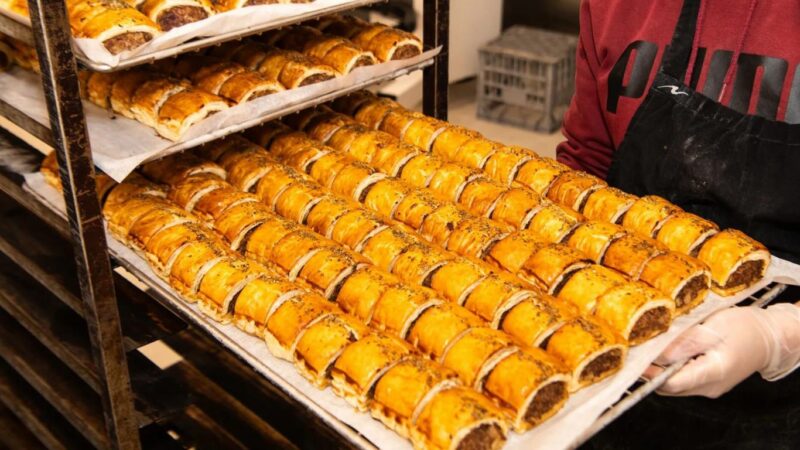
2. Sausage Rolls, Meat Pies and Pasties
If your café or takeaway sells hot savoury snacks, a commercial convection oven can be a great addition.
You can bake:
- Sausage rolls and spinach rolls
- Individual meat pies and family-sized pies
- Cornish pasties
- Vegetable pastries
- Quiches and savoury tarts
The dry circulating heat helps pastry become golden and crisp while the filling heats through.
Best for: Bakeries, school canteens, takeaway shops and service stations.
Cooking tip: When baking chilled or frozen products, follow the product manufacturer's instructions and verify that meat fillings reach a safe temperature.
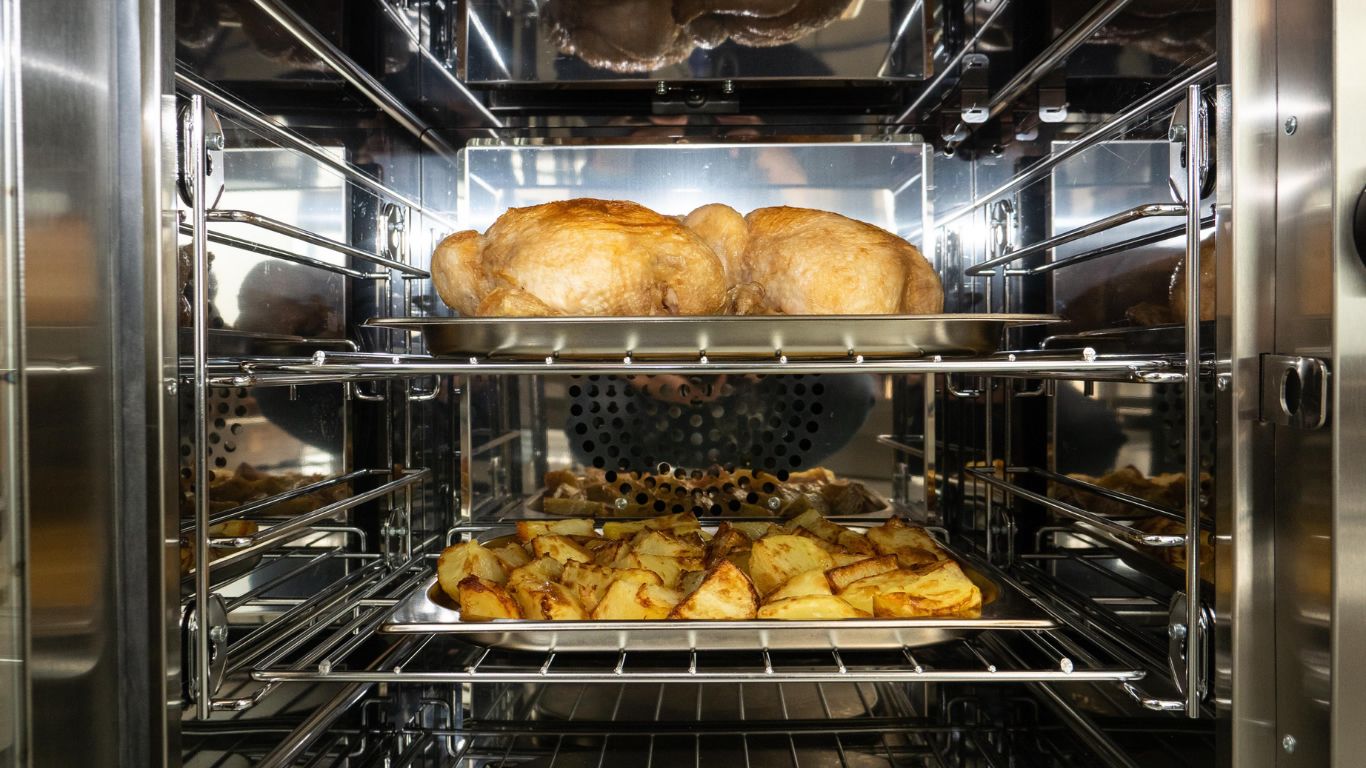
3. Roast Chicken
Commercial convection ovens are well suited to roasting chicken portions, wings, drumsticks and whole birds that fit safely within the cooking chamber.
The moving hot air helps brown the skin while cooking the meat.
A restaurant could use the oven to prepare roasted chicken for lunch specials, sandwiches, salads or dinner service.
Cooking tip: Avoid overcrowding roasting trays. Use a calibrated food thermometer to check the thickest part of the chicken reaches at least 75°C.
4. Roast Potatoes and Vegetables
Roasted vegetables are among the best foods to prepare in a convection oven because they benefit from dry heat and air circulation.
Popular options include:
- Roast potatoes and sweet potatoes
- Pumpkin and carrots
- Zucchini and eggplant
- Cauliflower and Brussels sprouts
- Capsicum and onions
These can be prepared in batches for restaurant side dishes, salad bars and catering menus.
Cooking tip: Spread vegetables across shallow trays rather than piling them too high. Overcrowding traps moisture and reduces browning.
5. Biscuits and Cookies
From chocolate chip cookies to shortbread and ANZAC biscuits, convection ovens can help bakeries produce repeatable batches throughout the day.
Multi-tray models are particularly useful when you need to bake larger quantities.
Cooking tip: When adapting a recipe developed for a conventional oven, consider starting with a temperature approximately 10–20°C lower, then adjust after testing. Not every oven or recipe needs the same reduction.
6. Muffins, Cupcakes and Cakes
Commercial convection ovens can bake a variety of sweet products, including blueberry muffins, banana bread, cupcakes, brownies and many types of cake.
For cafés that make their own baked goods, this allows one oven to handle several products across the day.
Keep in mind that delicate sponge cakes and soufflés may be affected by strong fan circulation, so a low-fan or fan-off option can be helpful.
Best for: Cafés, patisseries, bakeries and dessert shops.
7. Bread Rolls and Small Loaves
A convection oven is a practical choice for baking bread rolls, dinner rolls, focaccia and certain sandwich loaves.
Some commercial convection ovens also offer steam injection or humidity assistance, which can support oven spring and crust development.
For artisan sourdough and crusty bread requiring precisely controlled steam or strong bottom heat, a specialist deck oven or combi oven may be more suitable.
8. Pizza and Flatbreads
You can bake smaller pizzas, flatbreads, garlic bread and focaccia in a commercial convection oven.
This can work particularly well for cafés offering occasional pizzas or reheating pre-baked bases.
However, if pizza is the main product on your menu, a dedicated commercial pizza oven may be better suited to producing a traditional high-temperature base and crust.
Cooking tip: Use a suitable pizza tray or approved baking surface and check the oven's maximum operating temperature.
9. Lasagne and Pasta Bakes
A commercial convection oven can cook family-sized lasagne, macaroni cheese, cannelloni and other oven-baked pasta dishes.
This makes it useful for restaurants and catering kitchens preparing larger batches before service.
The circulated heat helps the top brown while the dish cooks through. Deeper dishes may require longer cooking times.
10. Fish and Seafood
Convection ovens can roast or bake salmon, barramundi, fish fillets and selected seafood dishes.
They work particularly well for fish baked in a suitable tray with herbs, lemon and oil, or prepared in covered dishes to help retain moisture.
Because fish can dry out quickly, time and temperature control are important.
Cooking tip: If your restaurant regularly prepares delicate seafood and needs tighter moisture control, consider a commercial combi oven.
11. Roast Beef, Lamb and Pork
Roasting meat is another common use for a commercial convection oven.
It can be used for roast beef, lamb shoulders, pork loin and smaller roasting joints, depending on the oven's capacity.
A kitchen serving roast meals or preparing sliced meat for sandwiches can benefit from batch cooking.
Choose cooking settings according to the cut, portion size and desired result, and verify safe internal temperatures.
12. Chicken Wings and Oven-Baked Snacks
Commercial convection ovens can prepare marinated chicken wings, potato wedges, crumbed chicken products and certain oven-ready snacks.
They offer an alternative to deep frying for products designed to be baked.
However, a convection oven won't always deliver the same texture as a commercial deep fryer, especially with wet-battered foods.
For businesses comparing cooking methods, read our guide to alternatives to a commercial deep fryer.
13. Baked Eggs, Frittatas and Quiches
A convection oven can help cafés prepare breakfast and brunch items such as frittatas, mini quiches, baked egg dishes and breakfast muffins.
These dishes can be prepared in suitable oven-safe trays or moulds, making them useful for batch production.
For delicate egg dishes, lower temperatures and controlled airflow may help prevent overcooking.
14. Desserts and Sweet Treats
Beyond cakes and biscuits, convection ovens can prepare:
- Apple crumble and fruit crumbles
- Baked cheesecakes, using suitable settings
- Brownies and blondies
- Fruit tarts
- Bread and butter pudding
- Baked slices
The right setting depends on the dessert. Products requiring gentle, moist heat may benefit from covered baking dishes, a water bath where appropriate or a humidity-controlled oven.
15. Reheating Pies, Pastries and Prepared Meals
A convection oven isn't only for cooking food from scratch.
It can also be used to reheat suitable chilled or pre-cooked food, including pies, pastries, lasagne and roasted menu items.
For cafés, this can help maintain a supply of hot baked products during service.
However, dry convection heat can affect foods that need to retain moisture, and a standard convection oven is generally less suited to rapid reheating of individual orders than a dedicated speed oven.
For food being reheated for hot holding, follow safe time and temperature procedures.
Which Foods Cook Best in a Commercial Convection Oven?
Here's a quick guide to help you match popular foods with the right cooking method.
| Food | Suitability | What to Consider |
|---|---|---|
| Croissants and pastries | Excellent | Fan strength and tray spacing |
| Sausage rolls and pies | Excellent | Crisp pastry and safe filling temperatures |
| Cookies and biscuits | Excellent | Consistent temperature and batch size |
| Roast vegetables | Excellent | Shallow trays and airflow |
| Roast chicken | Very good | Internal temperature and moisture loss |
| Bread rolls | Very good | Steam assistance may improve results |
| Cakes and muffins | Good | Delicate products may need gentler airflow |
| Pizza | Good for selected styles | Dedicated pizza ovens provide different base results |
| Fish fillets | Good | Avoid drying out |
| Lasagne and pasta bakes | Very good | Dish depth and cooking time |
| Artisan sourdough | Model-dependent | Steam and bottom heat often important |
| Steamed vegetables | Not ideal in dry-only models | Consider a combi or steam oven |
What Should You Avoid Cooking in a Commercial Convection Oven?
Although convection ovens are versatile, they aren't ideal for every cooking method.
- Delicate foods affected by strong airflow: Light soufflés, delicate sponges and some meringues may require a lower fan speed or static heat setting.
- Foods requiring controlled steam: Steamed fish, dumplings and vegetables are better suited to steam-capable equipment.
- Wet-battered fried foods: A convection oven doesn't replace the oil immersion used to cook traditional battered fish or tempura.
- Traditional high-temperature pizza: A dedicated pizza oven may provide a better result for the specific crust and base you're trying to achieve.
- Artisan bread needing specialist baking conditions: Some loaves benefit from a deck oven or a convection oven with suitable steam controls.
This doesn't mean you can't adapt some of these recipes. It simply means you should choose equipment that matches the results your customers expect.
How to Get Better Cooking Results From Your Commercial Convection Oven
Even a good commercial oven can produce disappointing results if it isn't used correctly. Here are a few practical habits that make a difference.
Preheat Before Loading
Allow the oven to reach the required cooking temperature before putting food inside. Loading cold food too early can affect rising, browning and cooking consistency.
Leave Space Between Trays
Convection ovens rely on airflow. If trays are overcrowded or placed too close together, some food may cook unevenly.
Follow the manufacturer's loading instructions and avoid blocking fans or ventilation openings.
Adjust Cooking Times and Temperatures
Recipes written for conventional ovens may need adjustment because convection cooking often transfers heat more quickly.
Start with a tested recipe or manufacturer programme, then refine the cooking time based on actual results.
Use the Right Trays
Shallow trays work well for biscuits, pastries and roasted vegetables. Deeper gastronorm pans may be better for lasagne and other prepared dishes.
Always check that the tray dimensions are compatible with your oven.
Separate Raw and Ready-to-Eat Food
Don't place raw chicken above uncovered ready-to-eat food where juices could drip onto it. Follow safe food handling procedures and use a calibrated probe thermometer for temperature checks.
For Australian food businesses, Food Standards Australia New Zealand provides guidance on safe cooking temperatures and food preparation.
What Size Convection Oven Does Your Business Need?
Choosing the right commercial convection oven depends on your menu, available space and how much food you need to prepare at once.
- Small cafés and coffee shops: A compact 3 or 4-tray convection oven may be suitable for pastries, muffins, pies and light meals.
- Bakeries and pastry shops: A larger model that accepts standard 600 × 400mm bakery trays can make batch production easier.
- Restaurants: A larger-capacity oven may be useful for roasting meat, baking pasta dishes and preparing vegetables.
- Catering businesses: Consider tray capacity, recovery time and whether your menu requires humidity control or programmable cooking cycles.
Remember to check the tray size, not just the number of trays. Some commercial ovens accept smaller proprietary trays, while others accommodate 600 × 400mm bakery trays or gastronorm pans.
Electrical requirements matter too. Depending on the model, you may need a standard power point, a dedicated 15A connection or a three-phase electrical supply.
For more detailed buying advice, see our guide to choosing a commercial convection oven in Australia.
Commercial Convection Oven vs Combi Oven: Which Is Better for Your Menu?
If most of your menu involves baking pastries, roasting vegetables, preparing pies and cooking oven-ready meals, a standard commercial convection oven may be all you need.
However, if you regularly steam vegetables, cook delicate fish, regenerate plated meals or need precise humidity control, a combi oven offers additional flexibility.
The main difference is simple:
Commercial convection oven: Uses circulating hot air for baking, roasting and reheating. Some models include limited steam or humidity assistance.
Commercial combi oven: Combines hot air and controlled steam, allowing additional cooking methods and greater moisture control.
The best choice depends on what you cook most often, rather than simply which appliance has the most features.
Find the Right Commercial Convection Oven for Your Kitchen
From croissants and sausage rolls to roast chicken, vegetables and freshly baked desserts, a commercial convection oven can handle a wide range of everyday kitchen tasks.
The key is choosing a model that suits your menu, tray requirements and daily production needs.
At Bens Hospitality Equipment, we supply commercial convection ovens for cafés, restaurants, bakeries, takeaways and catering businesses across Australia.
Whether you’re after a compact benchtop oven or a larger commercial model for batch cooking, we can help you compare suitable options.
Shop Commercial Convection Ovens
Need help choosing an oven for your business? Call 1300 434 125 or email info@bendgs.com.au for assistance.
Australia-wide delivery available.