
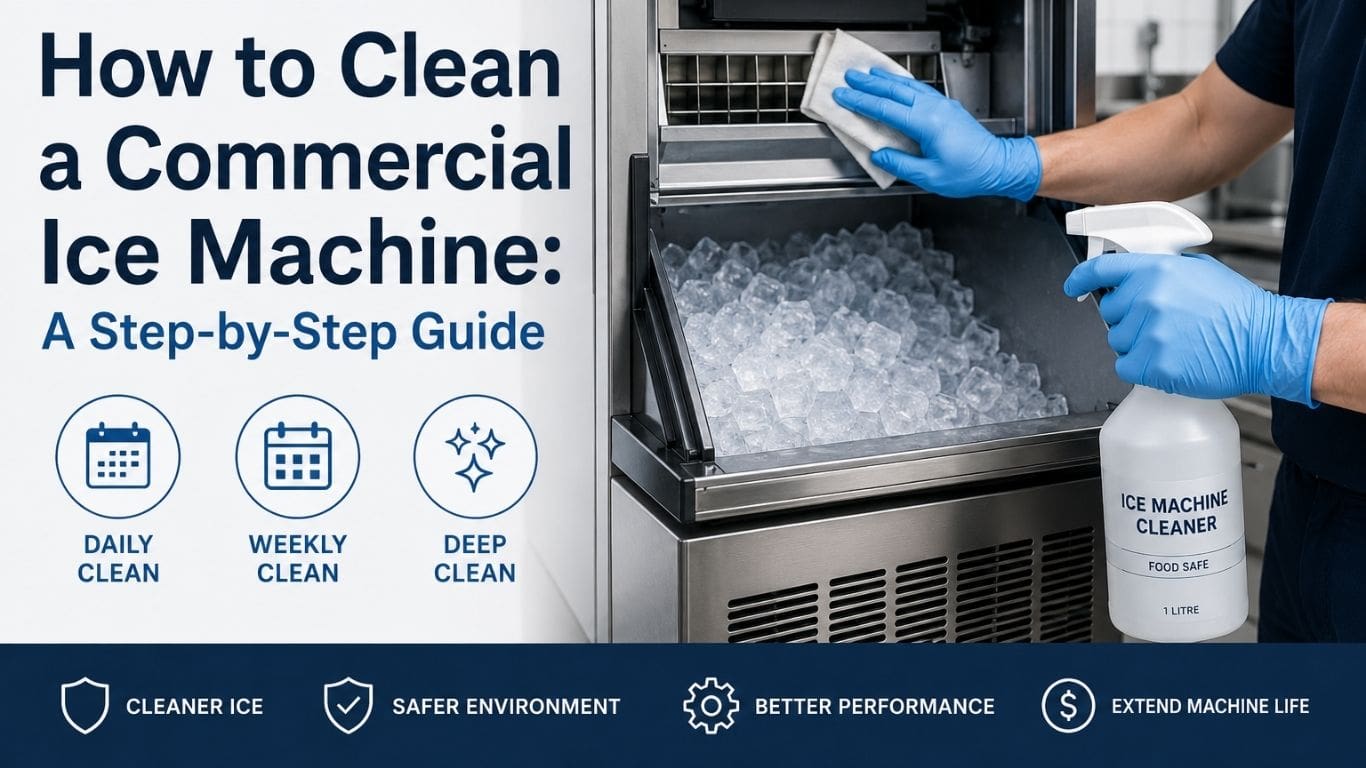
How to Clean a Commercial Ice Machine: A Step-by-Step Guide
A commercial ice machine sits in one of the most overlooked corners of a busy kitchen or bar, quietly making ice day after day with barely a second thought, until something goes wrong. The trouble is, the dark, damp inside of an ice machine is exactly the kind of environment where mould, algae and bacteria like to grow, and because ice is treated as a food under Australia’s Food Standards Code, keeping that environment clean is a genuine food safety responsibility rather than just good housekeeping. This guide walks through a simple daily, weekly and periodic cleaning routine, what products to use, and the warning signs that tell you it is time for a proper clean.
Why Cleaning Your Ice Machine Matters
Every time your ice machine runs, water flows over the same internal surfaces again and again, leaving behind tiny mineral deposits and the occasional trace of airborne mould spores or bacteria. Left alone, this builds into scale on the evaporator and a slimy layer called biofilm on the bin walls and water lines, which standard wiping cannot remove. Scale reduces how much ice your machine can produce and pushes up energy use, while biofilm can harbour organisms capable of making customers sick if it ends up in their drink. Since ice is legally classified as a food, the same general food safety obligations that apply to any other food contact surface in your kitchen apply here too.
Daily Tasks
Each day, wipe down the exterior of the machine and the area around it, and check that the ice scoop is being stored in a clean, dedicated holder rather than left sitting in the ice itself. Staff should never use their hands or a glass to scoop ice, since this is one of the easiest ways for bacteria to be introduced into the bin. It only takes a minute to glance inside the bin for any obvious build-up or unusual smell, and catching a problem early is always easier than dealing with it once it has spread.
Weekly Tasks
Once a week, empty the ice bin completely and wipe down the interior walls, door and any visible surfaces with a clean cloth, checking closely for the early signs of a pink, orange or black slimy film, which is the first sign of biofilm or mould forming. Check the door seal and bin lid for a tight fit, since a poor seal lets in warm, humid air that speeds up bacterial growth. If your machine is air-cooled, it is also worth checking that the condenser and surrounding vents are free of dust, since restricted airflow makes the unit work harder and run warmer than it should.
Deep Clean and Sanitising
On top of the daily and weekly routine, manufacturers generally recommend a full clean and sanitise every three to six months, and more often if your venue has hard water, high humidity or heavy ice use. This is a two-step process and the order matters: cleaning removes mineral scale and organic build-up first, then a separate sanitising step kills any mould, algae or bacteria left behind. The two should never be combined into one step or mixed together in the same solution, since this reduces how effective each one is. Always use a cleaner and sanitiser made specifically for ice machines, generally available as an NSF-certified solution, rather than reaching for vinegar or general kitchen cleaning products, which are far less effective against biofilm and can damage internal components or void your manufacturer’s warranty over time.
Choosing the Right Products
A purpose-made ice machine cleaner such as Viper – Nickel Safe Ice Machine Cleaner, and a separate food-safe sanitiser are the two products every venue should have on hand, along with a soft-bristle brush or scrubber for getting into corners without scratching internal surfaces. If you are not sure which products suit your specific model, our team can point you toward something appropriate when you get in touch, since the right cleaner can vary slightly between brands and ice types.
Signs Your Ice Machine Needs Attention Now
A visible pink, orange or black film anywhere inside the bin or on the ice itself is the clearest sign that mould or biofilm has taken hold and a full clean and sanitise is overdue. Reduced ice production, ice that looks cloudy or oddly shaped, or ice that tastes or smells slightly off are also common signs, often caused by scale building up on the evaporator rather than anything more serious. If you notice any of these signs, it is worth running a full clean and sanitise straight away rather than waiting for the next scheduled date.
When to Call a Technician
If a proper clean and sanitise does not bring ice production back to normal, or the same mould keeps returning shortly after each clean, the issue is likely either a mechanical fault or a hidden source of contamination further inside the machine than a standard clean can reach. At that point, it is worth getting a qualified technician to inspect the unit rather than repeating the same cleaning cycle without results.
Frequently Asked Questions
Daily wiping and scoop checks, a weekly bin clean, and a full clean and sanitise every three to six months is a good baseline, though venues with hard water, high humidity or heavy use may need to do the deep clean more often.
This is biofilm, a build-up of mould, algae and bacteria that forms in the damp environment inside an ice machine. It needs a proper two-step clean and sanitise to remove, since wiping alone will not get rid of it.
It is not recommended. Vinegar is much less effective than a purpose-made ice machine cleaner at removing scale and does nothing to sanitise against mould or bacteria, and repeated use can damage internal components.
Yes. Ice intended for consumption is treated as a food under Australia’s Food Standards Code, which means ice machines and ice contact surfaces are subject to the same general food safety obligations as any other food preparation equipment.
This is most often caused by scale building up on the evaporator or a blocked water filter, both of which restrict how efficiently the machine can freeze water. A proper clean usually resolves it, and a water filter helps slow scale build-up in the first place.
Need a Hand?
If your ice machine needs a service, replacement parts or you are ready to upgrade to a new model, our range of commercial ice makers covers undercounter, modular, cube, nugget and flake options. Call us on 1300 434 125 and our team can help.