
Is It Worth Buying an Ice Maker?
For many hospitality businesses, the answer is simple: yes, buying an ice maker is worth it if you use ice every day or regularly run out during busy service.
But it is not worth it for everyone.
If you only need a small amount of ice occasionally, buying bags of ice may be easier. But if you run a café, restaurant, bar, takeaway shop, seafood display, smoothie bar, bubble tea shop, office, hotel, supermarket or catering business, a commercial ice maker can save time, reduce stress and give you a more reliable supply of clean, consistent ice.
The real question is not just “Is an ice maker worth buying?”
The better question is:
“How much ice do you use, how often do you use it, and what happens when you run out?”
That is where the answer becomes very clear.
Why Businesses Start Looking for an Ice Maker
Most customers do not start shopping for an ice machine because they simply “want one”. Usually, there is a problem behind it.
In our experience, the most common reasons are:
- Staff keep running to the petrol station or supermarket for bagged ice
- The business runs out of ice during lunch, dinner or weekend rush
- Drinks service slows down because ice is not ready
- Bagged ice is taking up freezer space
- The business needs better-looking ice for cocktails, iced coffee or premium drinks
- Seafood, salad bars or displays need consistent ice throughout the day
- Staff are wasting time handling, storing and breaking up ice bags
- The business is growing and bagged ice is no longer practical
At the start, bagged ice feels cheaper because there is no machine cost. But over time, many businesses realise they are paying for convenience again and again.
A Simple Bagged Ice Cost Example
Let’s say a café or takeaway shop uses 3 bags of ice per day.
If each bag costs around $5 to $7, that works out to roughly:
- $15 to $21 per day
- $105 to $147 per week
- $5,460 to $7,644 per year
That does not include staff time, delivery hassle, freezer space or emergency runs when you run out.
For a business using ice every day, this is where a commercial ice maker starts to make sense. Instead of buying ice daily, the machine produces ice on site, ready for service.
Case Study 1: The Busy Café That Kept Running Out of Ice
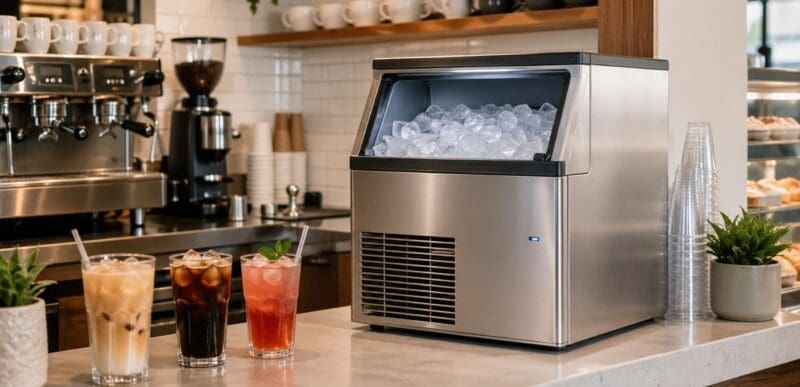
A common café situation looks like this:
A café starts with iced coffees, smoothies and a few cold drinks. At first, bagged ice is fine. Then summer comes. Iced drinks start selling better. Suddenly, the staff are using more ice than expected.
By 1 pm, the freezer ice is gone.
One staff member leaves the shop to buy more ice. Service slows down. Customers are waiting. The owner realises the actual problem is not just the price of ice — it is the disruption.
For this type of café, an underbench ice maker can be a smart investment. It gives the business a steady ice supply without taking over too much space. The owner is no longer relying on someone remembering to buy ice before the rush.
Best fit: cafés, juice bars, smoothie shops, bubble tea stores and takeaway shops using ice daily.
Case Study 2: The Bar Where Ice Quality Matters
For a bar, ice is not just frozen water. It is part of the drink.
A poor-quality ice supply can water down cocktails too quickly, look cloudy, or melt before the customer has finished their drink. In busy venues, staff also need ice to be available fast, especially during Friday and Saturday night service.
For cocktail bars, restaurants and pubs, buying an ice maker is usually worth it because it improves consistency. The venue can choose ice that suits the drinks menu, such as cube ice, gourmet-style ice or larger ice depending on the machine.
The value here is not only saving money. It is also about presentation, drink quality and speed of service.
Best fit: bars, pubs, clubs, restaurants, hotels and function venues.
Case Study 3: Seafood, Butcher and Retail Display Use
Some businesses do not use ice mainly for drinks. They use it for display and food presentation.
Seafood shops, fish markets, supermarkets and some butcher shops may need large volumes of ice for visual display and product temperature support. In this case, bagged ice can become expensive and unreliable very quickly.
Flake ice or suitable display ice can be easier to spread across trays and displays. It also gives the customer that fresh, clean look that matters in retail food presentation.
For these businesses, the question is not “Can we afford an ice maker?”
It is often “Can we afford to keep relying on bagged ice?”
Best fit: seafood shops, supermarkets, fish displays, food halls and fresh food retail.
When Buying an Ice Maker Is Worth It
Buying an ice maker is usually worth it when:
1. You use ice every day
Daily ice use is the biggest sign that a machine may make sense. Even a small daily ice cost adds up quickly over a year.
2. Running out of ice affects your sales
If no ice means no iced drinks, no cocktails, no smoothie orders or poor seafood display, the machine is helping protect revenue.
3. Staff are wasting time buying ice
Staff time has a cost. Every emergency ice run takes someone away from the business.
4. You need consistent ice quality
Commercial ice makers produce more consistent ice than random bags from different suppliers.
5. You are growing
Many businesses start with bagged ice, then outgrow it. Once your drinks or food display volume increases, an ice maker becomes much more practical.
When an Ice Maker May Not Be Worth It
To be fair, buying an ice maker is not always the right move.
It may not be worth it if:
- You only need ice once in a while
- You have no suitable water or drainage access
- You do not have space for ventilation
- Your business is very small and uses only a few kilos per week
- You are renting a temporary site for a short period
- You do not want to maintain or clean the machine properly
For very low usage, bagged ice can still be fine. The key is to be honest about your real daily demand.
Commercial Ice Maker vs Domestic Ice Maker
A domestic ice maker may look cheaper, but it is usually not designed for heavy commercial use.
A commercial ice maker is built for:
- Higher daily ice production
- Repeated use throughout the day
- Foodservice environments
- Better durability
- Larger storage capacity
- More consistent performance
- Serviceability and parts support
For a home, office or occasional use, a small machine may be okay. But for cafés, restaurants, bars and food businesses, a proper commercial unit is usually the safer choice.
Trying to save money with a domestic-style machine can backfire if it cannot keep up during service.
Choosing the Right Ice Type
Not all ice is the same. The best ice maker depends on how you use the ice.
Cube Ice
Cube ice is the most common choice for drinks, cafés, restaurants and general hospitality use. It is versatile and works well for soft drinks, iced coffee, water service and mixed drinks.
Crescent Ice
Crescent ice is popular in many commercial machines. It is reliable, practical and suitable for general beverage service.
Nugget Ice
Nugget ice is softer and chewable. It is popular for healthcare, smoothies, blended drinks, bubble tea and some quick-service venues.
Flake Ice
Flake ice is ideal for seafood displays, fresh food presentation and some food production uses. It spreads easily and sits nicely around products.
Gourmet Ice
Gourmet-style ice is often used where drink presentation matters, such as cocktail bars, hotels and premium venues.
The Biggest Mistake: Buying Too Small
One of the most common mistakes is choosing an ice maker based only on price.
A smaller unit may look attractive, but if it cannot keep up, you are back to buying emergency bags of ice.
For example, if your business needs around 40kg of ice per day, buying a 20kg unit may not solve the problem. It may help in the morning, then fall behind during peak service.
When choosing a machine, think about:
- Your average daily ice use
- Your busiest day, not just your quietest day
- Summer demand
- Weekend demand
- Future menu growth
- How much ice storage you need at one time
A good rule: choose for your busy service, not your quiet service.
Installation Matters More Than People Think
An ice maker is not like a toaster where you just plug it in and forget about it. Most commercial ice machines need proper installation.
Before buying, check:
Water Supply
Most commercial ice makers need a clean water connection.
Drainage
Ice machines produce meltwater and need a suitable drain. Some sites require drainage planning before installation.
Water Filter
A water filter is strongly recommended. It can help improve ice quality and protect the machine from scale and mineral build-up.
Ventilation
Ice machines create heat. If the unit is installed too tightly with no airflow, performance can drop and the machine may work harder than it should.
Power Requirement
Many underbench units use standard power, but larger machines may have different electrical requirements. Always check before ordering.
Cleaning Access
Ice machines need cleaning and maintenance. Make sure staff can access the machine properly.
Underbench Ice Maker or Modular Ice Machine?
There are two common setups.
Underbench Ice Maker
An underbench ice machine is compact and usually suits cafés, small restaurants, offices, bars and takeaway shops. It fits under a bench and produces ice with built-in storage.
Best for:
- Cafés
- Small bars
- Restaurants
- Offices
- Takeaway shops
- Bubble tea and juice shops
Modular Ice Machine with Storage Bin
A modular ice maker sits on top of a separate ice storage bin. This setup is better for businesses needing higher daily ice production.
Best for:
- Large bars
- Hotels
- Clubs
- Seafood shops
- Supermarkets
- Function centres
- High-volume restaurants
How to Know What Size Ice Maker You Need
Here is a simple way to think about it.
Ask yourself:
- How many drinks do you serve per day?
- How much ice goes into each drink?
- Do you use ice for food display or only drinks?
- Do you need ice all day or mainly during peak hours?
- Do you get much busier in summer?
- How much ice do you need stored and ready before service starts?
For a small café, an underbench unit may be enough.
For a busy bar or seafood display, a larger modular ice maker may be the better option.
It is better to slightly allow for growth than to buy a machine that is already working at its limit from day one.
Is an Ice Maker Expensive to Run?
Commercial ice makers do use electricity and water, but the running cost is often only one part of the picture.
You should compare it against:
- Bagged ice cost
- Staff time
- Lost sales when ice runs out
- Freezer space used for ice bags
- Customer experience
- Drink quality and presentation
- Operational stress during busy periods
For many businesses, the value comes from reliability, not just the direct cost saving.
Is a Water Filter Necessary?
In most commercial situations, yes, a water filter is a smart idea.
A filter can help:
- Improve ice clarity and taste
- Reduce scale build-up
- Protect internal parts
- Support better long-term performance
- Reduce avoidable service issues
Ice is part of what your customer consumes, so water quality matters.
To Sum Up
Yes, buying an ice maker is worth it for most businesses that use ice daily, rely on cold drinks, need food display ice, or regularly buy bagged ice.
It is especially worth it for cafés, bars, restaurants, takeaway shops, bubble tea stores, seafood shops, supermarkets, hotels and busy offices.
However, it is only worth it if you choose the right size, the right ice type and install it properly.
A cheap machine that is too small can become frustrating. A properly sized commercial ice maker can make daily service smoother, reduce emergency ice runs and give your business a more reliable supply of ice when you need it most.
For Australian hospitality businesses, the best approach is simple:
Work out how much ice you use on your busiest day, allow room for growth, check your installation requirements, and choose a commercial ice maker that suits your operation — not just the cheapest one on the page.