Buyers' Guide to Commercial Meat & Deli Slicers 2026
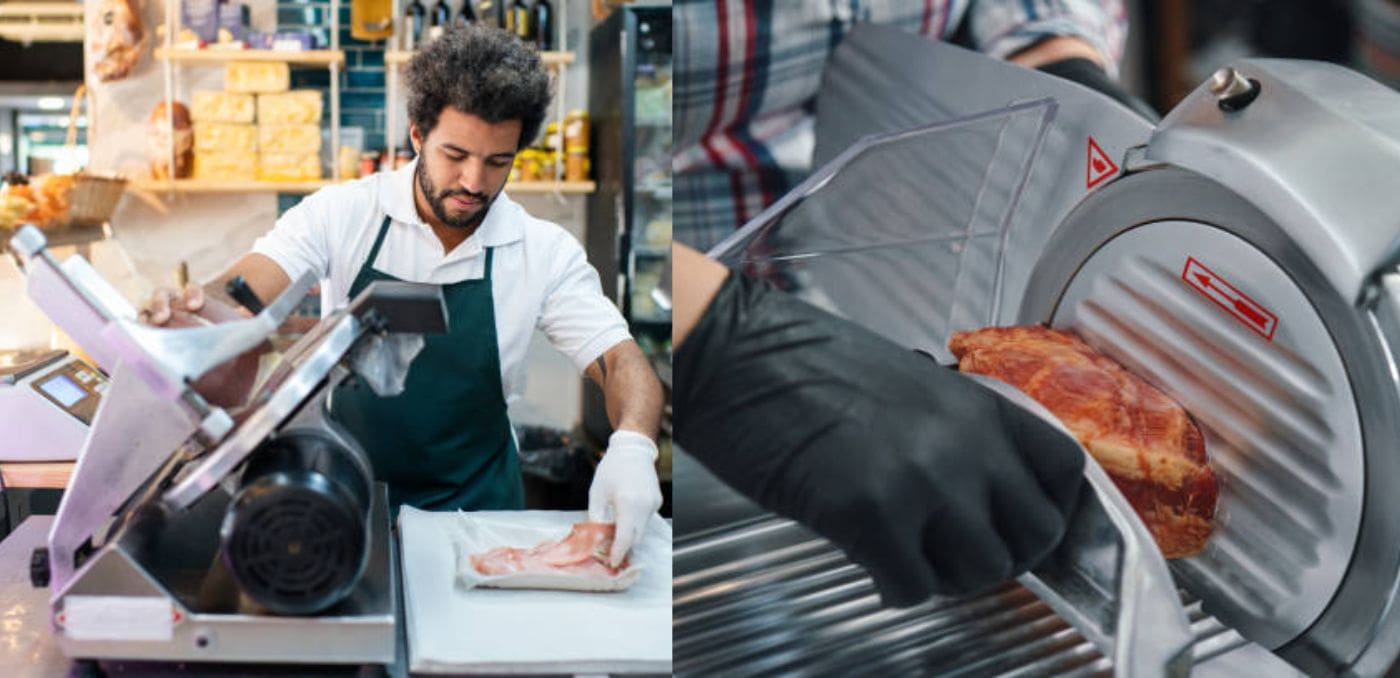
Choosing the right commercial meat slicer can make a big difference to speed, consistency, labour efficiency, and food presentation in your business. Whether you run a butcher shop, deli, café, supermarket, sandwich bar, restaurant or catering kitchen, the right slicer helps you prepare meat, smallgoods, cheese and deli items quickly while keeping every slice neat and uniform.
A lot of buyers look at blade size first, but there is more to it than that. You also need to think about the type of product you are slicing, how often the machine will be used, how much output you need during busy periods, and how easy the unit is to clean at the end of the day. In Australia, safety and food hygiene matter just as much as performance, so it is worth buying a machine that is built for commercial use and is easy to maintain properly. WorkSafe Victoria advises businesses to ensure guards on powered cutting equipment are in place and functioning, and to de-energise cutting equipment before cleaning or maintenance. Food Standards Australia New Zealand and NSW/Victoria food safety guidance also stress that food-contact equipment such as meat slicers must be kept clean and sanitary, with cleaning done before sanitising.
What is a commercial meat slicer used for?
A commercial meat slicer is designed to slice products quickly and evenly, which is especially handy when presentation, portion control and speed matter. These machines are commonly used for:
- ham
- salami
- roast beef
- pastrami
- bacon
- cooked meats
- cheese
- vegetables in some cases
For delis and sandwich shops, a slicer helps staff serve customers faster and maintain the same slice thickness every time. For butchers and supermarket service counters, it improves workflow and gives a cleaner, more professional finish. For restaurants and cafés, it saves prep time and helps reduce waste by creating more consistent portions.
Start with your business type
Before buying, think about where and how the slicer will be used.
A small café, sandwich shop or takeaway may only need a light to medium-duty manual slicer for ham, turkey and cheese. A busy deli or supermarket often needs a medium to heavy-duty machine that can handle longer run times and deliver consistent results all day. A butcher shop or commercial production kitchen may need a heavy-duty or semi-automatic slicer with stronger drive systems, larger blades and more output capacity.
The more frequently the slicer will be used, the more important it becomes to choose a machine built for continuous commercial work.
Manual, automatic or semi-automatic
One of the first decisions is the operating style.
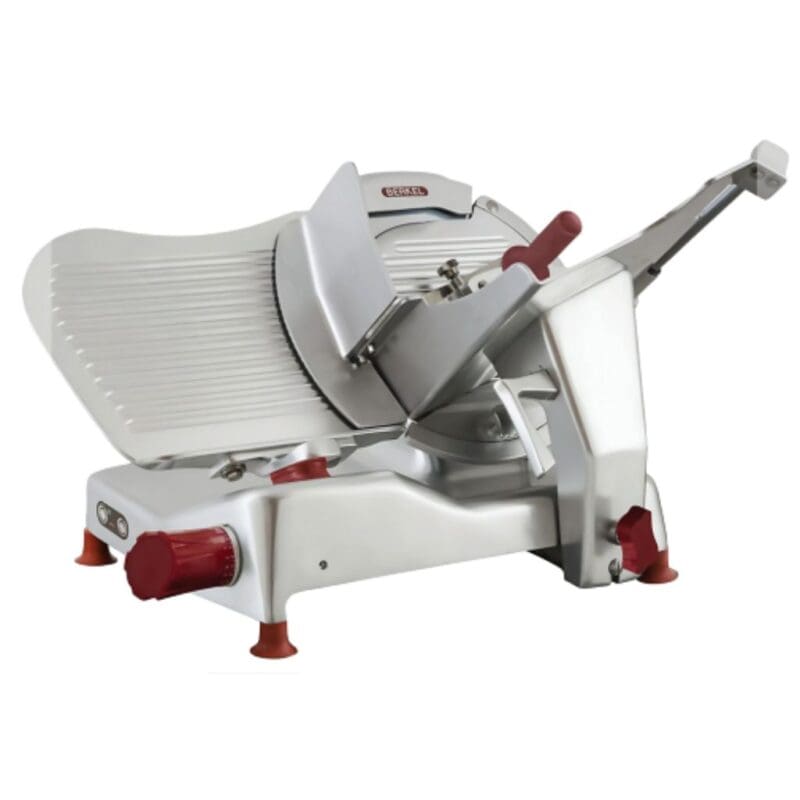
Manual meat slicers
A manual slicer gives the operator full control over the carriage movement. These are popular for cafés, delis and smaller food businesses because they are straightforward to use and often more affordable. They work well when the slicing volume is moderate.
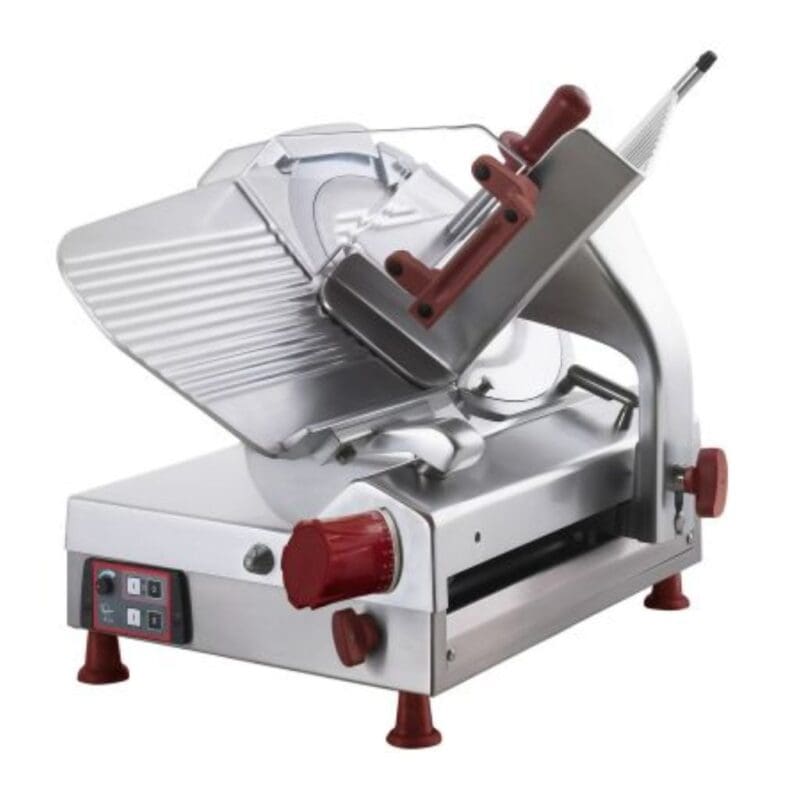
Semi-automatic meat slicers
A semi-automatic slicer reduces operator effort and is a smart option for businesses slicing large volumes every day. These units are handy in busy kitchens, delicatessens and butcher environments where staff need speed and consistency.
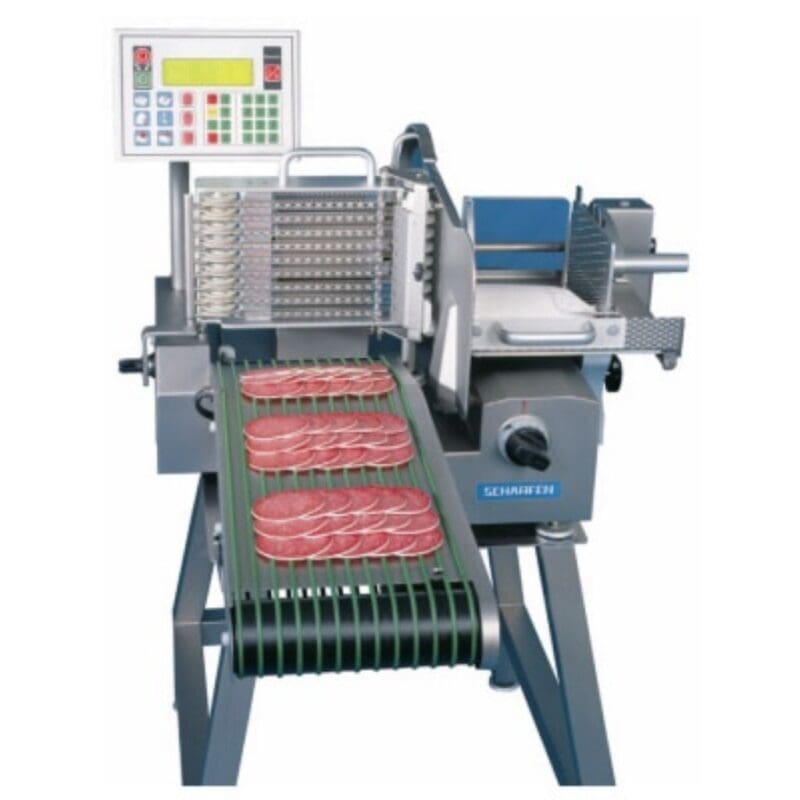
Automatic slicers
Automatic slicers are best suited to higher-output operations where efficiency is critical. They help reduce labour strain and improve throughput, though they are usually a bigger investment.
Choose the right blade size
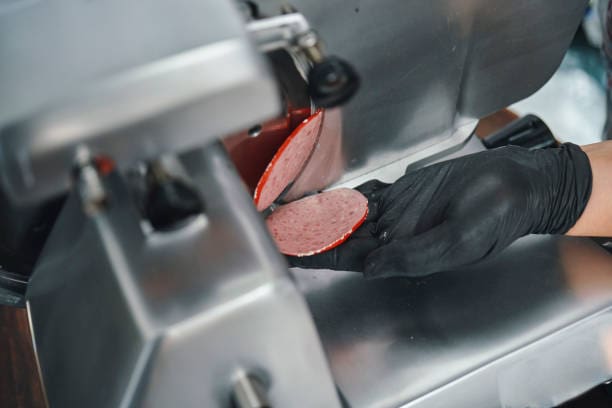
Blade size affects the size of product you can slice and the machine’s overall suitability for your menu or display.
Common blade sizes include:
- 250mm–300mm for lighter tasks and smaller products
- 315mm–330mm for general commercial use
- 350mm and above for larger meats and higher-volume slicing
If you regularly slice larger hams, roasts or wide deli products, a bigger blade gives you more flexibility. If bench space is limited and your slicing needs are modest, a smaller unit may be the better fit.
Consider the drive system
Not all commercial meat slicers are built the same, and one of the most important differences is the drive system. The drive system is what transfers power from the motor to the blade, so it plays a big role in how the slicer performs under load, how smoothly it slices, how much maintenance it may need over time, and what type of business it suits best.
When comparing slicers, the two most common options are belt-driven and gear-driven models. Both can work well in the right setting, but they are designed for different levels of use.
Belt-driven slicers
A belt-driven meat slicer uses a belt to transfer motor power to the blade. These models are commonly chosen for light to medium-duty commercial use and are often well suited to cafés, sandwich bars, smaller delis, and food businesses that slice moderate volumes each day.
One of the main advantages of a belt-driven slicer is that it often runs more quietly and smoothly, which can be useful in front-of-house or customer-facing environments where excessive noise is not ideal. They are also often a more budget-friendly choice for businesses that do not need constant high-volume slicing.
Belt-driven units are generally a good fit for slicing:
- ham
- turkey
- roast meats
- soft deli meats
- cheese
- other everyday sandwich or display products
They are a practical option when the slicer is used in shorter bursts throughout the day rather than continuously for long periods.
However, belt-driven slicers are usually better suited to lighter workloads. In very busy operations or when slicing firmer, denser or larger products all day, they may not offer the same long-term heavy-duty feel as a gear-driven machine. For businesses with growing demand, it is worth thinking ahead before choosing a lighter-duty unit just to save money upfront.
Gear-driven slicers
A gear-driven meat slicer uses a gear transmission system instead of a belt. These slicers are generally designed for heavier-duty commercial applications where strength, durability and consistent output are more important than keeping initial cost low.
Gear-driven units are often preferred in:
- butcher shops
- supermarket service counters
- busy delicatessens
- commercial production kitchens
- hospitality businesses with high daily slicing volume
Because the drive system is more robust, gear-driven slicers are usually better suited to repetitive slicing of larger, firmer or tougher products. They are built to keep working through demanding prep periods and are a popular choice where the machine may be used for longer sessions every day.
A gear-driven slicer is often the better option when you need:
- stronger heavy-duty performance
- reliable output during busy periods
- better suitability for larger meats
- more confidence in high-volume daily use
- long-term durability in demanding environments
These models are especially appealing for operators who want a machine that feels solid and dependable under pressure. While they can be a bigger investment at the start, many businesses see the value in the extra durability and workload capacity over time.
Which One is Better?
There is no one-size-fits-all answer. The better choice depends on how often you slice, what products you slice, and how hard the machine will need to work each day.
A belt-driven slicer is usually the better fit if you:
- run a café, sandwich shop or smaller deli
- slice moderate volumes
- mainly work with softer deli products
- want a quieter and more economical option
A gear-driven slicer is usually the better fit if you:
- slice large volumes every day
- run a butcher shop, supermarket or busy deli
- need extra strength for demanding products
- want a more heavy-duty machine for long-term commercial use
Slice thickness range matters
One of the most important features to look at in a commercial meat slicer is the slice thickness range. This controls how thin or thick each slice can be cut, and it has a direct impact on presentation, portion control, product consistency, and how flexible the slicer will be across different menu items.
Different food businesses need different slicing results. A deli may need ultra-thin shaved ham or salami for sandwiches and antipasto. A butcher may need thicker cuts for bacon, roast portions or specialty products. A café or sandwich shop may need reliable medium slices that look neat, stack well, and help keep serving sizes consistent.
That is why it is important to choose a slicer with a practical thickness adjustment range that suits the products you plan to prepare every day.
Why Thickness Control is So Important
A good slice thickness control does more than just change the size of the cut. It helps your business with:
- presentation: clean, even slices look better in display cabinets, sandwich bars and deli counters
- portion control: consistent slicing helps reduce over-serving and manage food costs
- versatility: one machine can handle multiple products and serving styles
- speed during prep: staff can quickly adjust the slicer for different jobs
- reduced waste: more accurate cutting means less product loss
In a busy food business, small differences in slice thickness can affect the final look, yield and customer experience more than people realise.
Thin Slices for Delis, Sandwiches and Presentation
Some products are best sliced very thin. This is common for:
- salami
- prosciutto
- shaved ham
- pastrami
- sandwich meats
- cured deli products
Thin slicing is especially important in delicatessens, sandwich bars, cafés and gourmet food stores where product presentation matters. Fine slices fold better, layer more neatly, and often create a more premium look in sandwiches, platters and display cabinets.
If your business sells sliced meats for takeaway, made-to-order sandwiches or antipasto, precise thin-slice control can be a real advantage.
Thicker Slices for Butchers and Heavier Portions
Other businesses may need a slicer that can comfortably handle thicker cuts. This can be useful for:
- bacon
- roast meats
- thicker deli portions
- cooked chicken breast
- steak-style sliced products
- specialty portions for display or prep
For butcher shops, supermarkets and larger commercial kitchens, the ability to move beyond very fine cuts gives more flexibility. A wider thickness range can help you prepare different products without needing separate machines.
A Wider Range Gives You More Flexibility
A slicer with a broader slice thickness range is often the better choice for businesses that handle a variety of products. It allows staff to move from fine deli slicing to thicker cuts depending on the day’s prep needs.
This flexibility is useful for businesses such as:
- delis with mixed product lines
- cafés preparing multiple sandwich styles
- supermarkets with varied service counter items
- restaurants that slice meats for different dishes
- caterers producing platters and buffet items
Instead of limiting the machine to one narrow use, a broader thickness range helps the slicer support more parts of your operation.
Easy Adjustment Makes Daily Use Better
The actual adjustment mechanism matters just as much as the thickness range itself. A slicer may offer a good range on paper, but if the control is awkward, stiff or hard to read, it can slow staff down during prep.
Look for a slicer with:
- a smooth adjustment knob
- clear thickness settings
- reliable control from thin to thick cuts
- easy repeatability for the same result each time
This is especially important during busy service periods when staff need to make quick changes without stopping workflow. A slicer that is simple to adjust helps save time and improves consistency across different operators.
Consistency Helps Protect Margins
Consistent slice thickness is not just about appearance. It also affects your food cost. If slices are uneven, some serves may be too generous while others may look skimpy. Over time, that inconsistency can chip away at margins.
With accurate thickness control, businesses can produce more even serves across:
- sandwiches
- deli packs
- portioned meats
- platters
- takeaway items
- counter displays
For businesses selling by weight or portion, this consistency can make stock control and pricing more predictable.
Match the Thickness Range to Your Products
Before choosing a slicer, think about what you will slice most often. Ask yourself:
- Do you mainly need thin deli slices?
- Will you also cut thicker sandwich portions?
- Are you slicing bacon or roasts?
- Do you need one slicer to handle many product types?
- Will different staff need to adjust settings throughout the day?
The answers will help determine whether a basic thickness range is enough, or whether a wider and more precise adjustment range is the better investment.
Think about product type
A slicer that is great for shaved ham may not be the best option for dense meats or firm products.
Ask yourself:
- Are you mainly slicing cooked meats?
- Will you slice cured meats and salami?
- Do you also need to slice cheese?
- Are you working with larger roasts or bulky products?
- Do you need fine presentation slices for display?
Matching the slicer to the product type is one of the easiest ways to avoid buying the wrong machine.
Safety features to look for
This is a big one. A commercial meat slicer should never be chosen on price alone. Proper safety features are essential for staff protection and day-to-day compliance.
Look for features such as:
- blade guard or blade ring guard
- safety switch
- non-slip feet
- product pusher or food grip
- secure carriage operation
- easy-access controls
- built-in sharpener with safe operation
- stable base construction
Australian workplace guidance says cutting equipment guards should be in place and functioning, and powered equipment should be switched off and isolated before cleaning or maintenance.
Easy cleaning is not optional
Meat slicers need proper cleaning and sanitising, especially in businesses handling ready-to-eat foods. Food safety guidance in Australia makes it clear that food-contact equipment, including meat slicers, must be kept in a clean and sanitary condition, and cleaning must happen before sanitising. Hard-to-reach equipment like slicers needs special attention.
When comparing slicers, check for:
- removable parts for cleaning
- easy-to-access blade area
- smooth surfaces
- minimal food traps
- integrated liquid collection tray
- simple disassembly for wash-down and wipe-down
A slicer that is difficult to clean often leads to more downtime, more staff frustration, and more food safety risk.
Build quality and materials
A proper commercial slicer should be built from durable materials that can handle busy daily use. Many quality units use anodised aluminium and stainless steel components for strength, corrosion resistance and easy cleaning.
Strong construction matters because slicers deal with repetitive movement, sharp blades, food acids, salt exposure and constant handling. A flimsy unit might save money up front, but it can cost more over time in repairs, downtime and replacement.
Bench space and footprint
It is easy to focus on blade size and forget about the actual machine footprint. Before buying, check:
- width × depth × height
- operator clearance
- carriage travel space
- access for loading and unloading product
- nearby power point location
- surrounding prep area
In smaller kitchens, you need enough room not just for the slicer itself, but for safe and comfortable operation.
Power supply and commercial suitability
Before buying a commercial meat slicer, it is important to check both the power supply requirements and whether the machine is genuinely designed for commercial use. These two details are easy to overlook, but they can have a big impact on installation, day-to-day reliability, and whether the slicer will actually suit the demands of your business.
A slicer might look right in terms of blade size and features, but if the power supply is not suitable for your site, or if the machine is built for only light occasional use, it may cause problems from the start.
Check the Power Supply First
Most small to mid-size commercial meat slicers commonly used in cafés, delis, sandwich shops and small butcher businesses run on standard 240V single-phase power. This is convenient for many Australian food businesses because it means the machine can often be installed without any special electrical setup, provided the location already has a suitable power point.
For many operators, this makes setup easier and helps avoid unexpected installation issues. It can also give you more flexibility when deciding where the slicer will sit in the kitchen, prep room or service area.
However, not every slicer is the same. Some larger or heavier-duty meat slicers may have different electrical requirements depending on their motor size, design and intended workload. That is why it is always worth checking the power details before ordering, especially if you are buying for a busy butcher shop, supermarket prep room or high-output commercial kitchen.
Why Power Requirements Matter
Checking the power supply is about more than just whether the plug fits the wall. It also affects:
- where the slicer can be installed
- whether your existing power outlets are suitable
- how practical the machine will be for your workflow
- whether you need help from an electrician before setup
- how easily the slicer can be moved or repositioned later
A machine that suits your business operationally but does not suit your site’s power setup can create delays, extra cost and unnecessary frustration.
Think About Where the Slicer Will Be Used
When reviewing power requirements, it helps to think about the actual work area. Ask yourself:
- Is there a nearby power point where the slicer will be used?
- Will the slicer sit permanently in one position?
- Is there enough bench space and access around it?
- Will staff be using it in a prep zone, service counter or front-of-house area?
- Does the location support safe and practical operation?
The right power supply should work together with the available space and workflow, not against it.
Built-in sharpener or external sharpening
A blunt blade slows down service, tears product, affects presentation and can make slicing harder on staff. Many commercial slicers come with a built-in blade sharpener, which makes ongoing maintenance easier.
A good sharpener helps keep slices clean and consistent, though staff still need to follow proper maintenance procedures and safe operating practices.
Which businesses benefit most from a commercial meat slicer?
A commercial slicer is a smart investment for:
- butcher shops
- delicatessens
- sandwich bars
- cafés
- restaurants
- supermarket deli counters
- catering businesses
- hotel kitchens
- convenience stores with fresh food prep
If your team slices product by hand every day, a commercial slicer can save serious time and improve consistency.
Common mistakes to avoid
A few buying mistakes come up again and again:
Buying too small
A slicer that is too light-duty may struggle in a busy shop and wear out faster.
Ignoring cleaning access
If it is hard to clean, it becomes a daily headache.
Choosing only by price
The cheapest option is not always the best value when safety, performance and durability are on the line.
Not checking the footprint
A bigger blade often means a much bigger machine.
Overlooking the product type
Dense, large or frequent slicing needs a stronger machine than occasional sandwich prep.
How to choose the right commercial meat slicer
A simple way to narrow it down is to ask these five questions:
- What products will I slice most often?
- How many hours per day will the slicer be used?
- Do I need manual or semi-automatic operation?
- How much bench space do I have?
- How important are easy cleaning and heavy-duty construction for my workflow?
Once you answer those, it becomes much easier to match the right machine to your business.
Final thoughts
The best commercial meat slicer, as an essential piece of butcher equipment, is one that suits your daily workload, product type, available space, and staff needs. For lighter café or sandwich use, a compact manual slicer may be perfect. For a deli, butcher or supermarket environment, it often makes sense to step up to a larger, gear-driven or semi-automatic unit built for higher output.
A good slicer should do more than just cut. It should improve speed, support food presentation, help with portion control, and make daily prep easier without creating cleaning or safety headaches.
If you are choosing a slicer for your business, it pays to look beyond the price tag and focus on performance, hygiene, safety and long-term value.