Commercial Food Warmers: Which Type Does Your Business Actually Need?
If you are searching for a commercial food warmer, chances are you are not quite sure which type suits your kitchen yet. A bain marie, a heated display cabinet, a pie warmer and a heat lamp all do slightly different jobs, and choosing the wrong one can mean dried out food, slow service or wasted counter space. This guide walks through the main types of commercial food warmers used across Australian cafes, restaurants, bakeries and takeaways, what foods each one suits best, and what to check before you buy.
What to Think About Before Buying a Commercial Food Warmer
Before comparing models, it helps to answer a few simple questions. What type of food are you holding? Do customers need to see the food, or is it kept out the back? How long does food usually sit in the warmer during service? And how much food do you need to hold during your busiest period? The answers to these questions will point you towards the right type of warmer far more reliably than price alone.
Main Types of Commercial Food Warmers
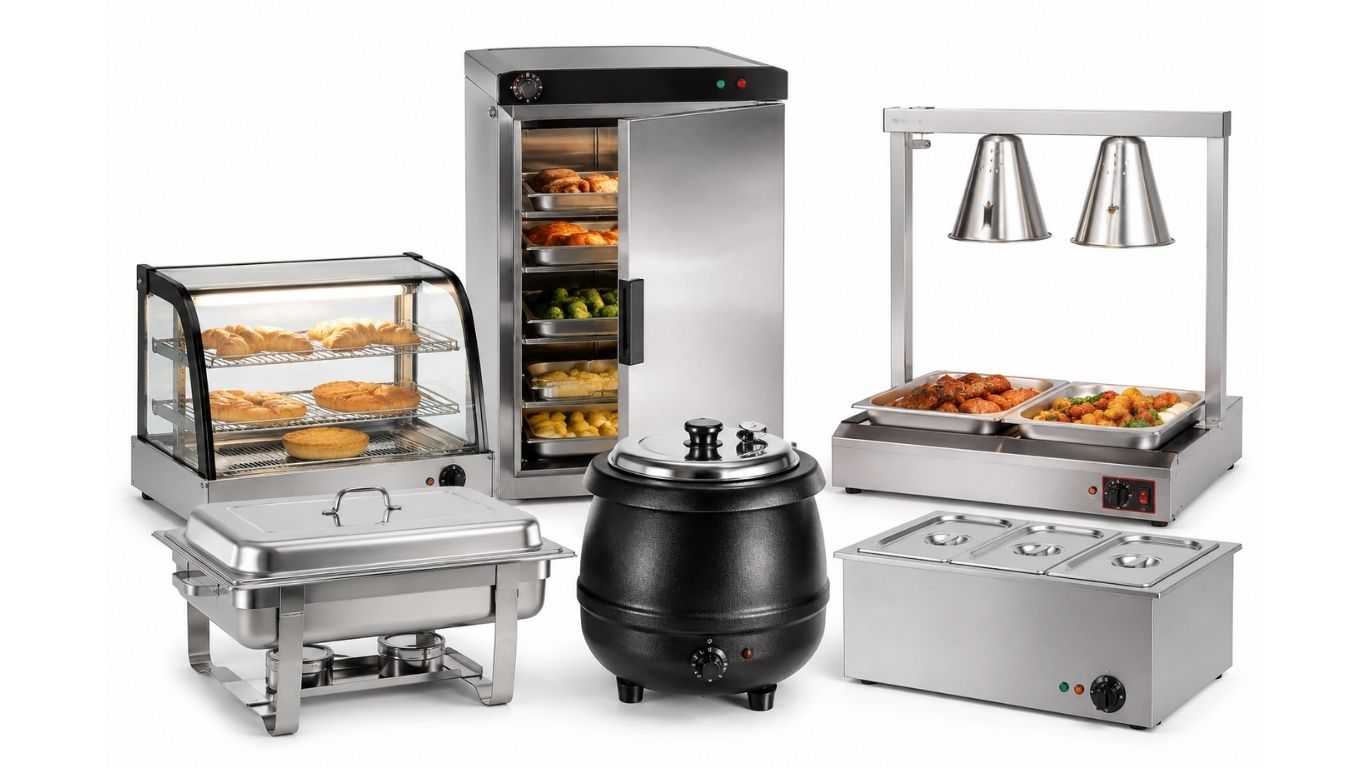
Most Australian commercial kitchens use one or more of the warmer types below, depending on the food they serve and how customers interact with it.
| Food Warmer Type | Best For | Typical Foods |
|---|---|---|
| Bain marie | Restaurants, takeaways, buffets | Curry, gravy, vegetables, rice, sauces, cooked dishes |
| Heated food display | Cafes, takeaways, bakeries | Roast food, pastries, fried food, hot snacks |
| Pie warmer | Bakeries, cafes, service stations, canteens | Pies, sausage rolls, pastries |
| Heat lamp | Restaurants, pass areas, carving stations | Plated meals, chips, roasted meat |
| Soup kettle | Cafes, buffets, catering | Soup, curry, chilli, gravy |
| Heated holding cabinet | Restaurants, catering, high volume kitchens | Trays of cooked food, plated meals |
| Hot cupboard | Buffets, hotels, catering | Plates, gastronorm pans, bulk prepared food |
| Chafing dish | Buffets, events, catering | Prepared dishes for self service |
| Sauce warmer | Cafes, dessert shops, takeaways | Chocolate, cheese sauce, gravy, toppings |
Commercial Bain Marie: The Most Common Choice
A large share of people searching for a commercial food warmer actually need a commercial bain marie. A simple way to think about it is this: if you need to keep cooked food hot in pans throughout service, a bain marie is usually the answer. They suit curries, soups, gravy, sauces, cooked vegetables, rice, pasta, meat dishes and general buffet food. Most commercial bain maries take gastronorm pans in different sizes and combinations, so you can rearrange the layout as your menu changes.
Wet Heat vs Dry Heat Bain Marie
This is one of the most useful things to understand before buying a bain marie, since it affects how well your food holds up.
Wet heat bain marie uses a water bath under the food pans, which transfers heat gently and evenly. It suits curry, gravy, sauces, soup and other moist dishes, particularly if food needs to be held for a longer service period. The trade off is that you need to fill, monitor and drain the water.
Dry heat bain marie uses heating elements to warm the pans directly, without a water bath. It heats up faster, avoids handling hot water, and is often more portable. The trade off is that moist foods and sauces can dry out more quickly than they would in a wet heat unit.
Heated Food Display Cabinets
A heated food display cabinet is different to a bain marie, mainly because the goal is to show the food to customers rather than hold it out of sight. This makes it a common choice for cafes selling pastries, hot rolls and savouries, takeaways selling fried food and roast meats, bakeries selling pies and sausage rolls, and service stations selling grab and go hot food. A glass fronted display also helps with merchandising, since customers can see what is on offer without staff opening the cabinet repeatedly. Larger venues that need a stand alone unit rather than a countertop model may prefer a free standing heated food display. You can browse the full range of options in our hot food display collection.
Commercial Pie Warmers
Commercial pie warmers deserve their own category rather than being lumped in with general heated displays, since buyers usually have quite specific questions. Common things to check include how many pies the unit holds, the number of shelves, how visible the pies are through the glass, whether access is from the front or rear, how easy the temperature is to control, the footprint on your counter, whether shelves are adjustable, and how easy the unit is to clean. Smaller countertop pie warmers suit cafes and convenience stores, while larger cabinets suit busy bakeries, service stations and sporting venues. Commercial models in Australia typically range from around 25 pie capacity up to 100 pies or more.
Commercial Soup Kettles
A commercial soup kettle is worth considering if your business mainly needs to hold one liquid or semi liquid food rather than a full bain marie setup. They work well for soup, curry, chilli and gravy. Commercial soup kettles in Australia commonly range from around 6 to 12 litres, which suits cafes, buffets, food trucks and catering businesses.
Commercial Heat Lamps
A heat lamp serves a different purpose again. Rather than holding large volumes of food for hours, a heat lamp keeps plated food warm for a short period between the kitchen and the customer, such as at a restaurant pass or carving station. It is not a replacement for a bain marie, but it is very useful for keeping plated meals, chips and roasted foods at serving temperature while they wait to be collected.
Heated Holding Cabinets and Hot Cupboards
These suit higher volume kitchens that need to keep multiple trays, bulk food, plated meals or gastronorm pans hot before service. That makes them a good fit for hotels, catering companies, function venues and large restaurants. Some bain marie units also combine a top bain marie with a fan forced heated cupboard underneath, giving you two separate hot holding areas in one piece of equipment. You can see the full range of hot food holding cabinets on our site.
Best Commercial Food Warmer by Business Type
| Business | Food Warmers to Consider |
|---|---|
| Cafe | Heated display, pie warmer, soup kettle, sauce warmer |
| Restaurant | Bain marie, heat lamp, heated holding cabinet |
| Takeaway | Bain marie, heated display, pie warmer |
| Bakery | Pie warmer, heated display |
| Pizza shop | Bain marie, sauce warmer, heat lamp |
| Kebab shop | Bain marie, heated display |
| Indian restaurant | Wet bain marie, hot cupboard |
| Chinese takeaway | Bain marie, heated display |
| Buffet | Bain marie, chafing dishes, soup kettles |
| Hotel | Bain marie, hot cupboard, heated holding cabinet |
| Food truck | Compact dry bain marie, soup kettle |
| Catering business | Mobile bain marie, hot cupboard, chafing dishes |
| Service station or convenience store | Pie warmer, heated display |
| Dessert shop | Sauce and chocolate warmers |
Food Warmers Are for Holding Food, Not Reheating It
This is worth being clear about, since it matters for food safety. A commercial food warmer is designed to hold cooked food at a safe hot temperature. It is generally not designed to cook food or to reheat cold food quickly. Previously cooked and chilled food that needs to be hot held should be reheated properly first, then transferred to the warmer once it has reached a safe temperature. Bain maries, pie warmers and similar hot holding equipment are not built to bring cold food up to temperature fast enough to be safe.
Hot Holding Temperature Guidelines in Australia
Under Australian food safety guidance, potentially hazardous food generally needs to be kept either at 5 degrees Celsius or colder, or at 60 degrees Celsius or hotter, unless a business has another validated method of temperature control in place. This is an important point when shopping for a warmer, since the question is not simply whether the unit can reach a certain temperature on its thermostat. The real question is whether it can keep the actual food at 60 degrees or above throughout service. A probe thermometer is a useful way to check the food itself, rather than relying only on the display on the unit.
Choosing Capacity: Look Beyond Litres
For bain maries in particular, thinking in terms of gastronorm pan capacity is usually more useful than thinking in litres alone. A unit might be described as taking one, two, three, four or five full size gastronorm pans, and those wells can often be split into combinations of smaller pans instead. A busy takeaway serving curry, rice, vegetables and gravy, for example, may get more use out of several smaller gastronorm pans than one large one. When comparing models, it is worth looking at gastronorm capacity alongside width, power requirements, wet or dry heating, whether the unit is countertop or floor standing, and overall capacity.
What to Check Before You Buy
A good buying decision usually comes down to a handful of practical checks. Start with the food itself, since moist dishes and sauces behave very differently to pies or fried food in a warmer. Think about how long food typically sits before it is served, since a restaurant pass and an all day buffet have very different needs. Consider whether customers need to see the food, which points you towards a glass fronted display rather than an enclosed bain marie or holding cabinet. Size the unit around your busiest period rather than an average quiet shift, and choose wet or dry heating based on the food you are holding rather than price alone.
Gastronorm compatibility matters if your kitchen already uses gastronorm pans elsewhere, since it keeps everything consistent. Look for reliable thermostatic control and a clear temperature display. Power supply is also worth checking carefully in Australia, since smaller warmers may run from a standard 10 amp outlet while larger bain maries and hot cupboards can require a 15 amp connection or greater. A drain valve is genuinely useful on larger wet bain maries, since draining a full water well without one becomes a real hassle. Finally, think about cleaning, including removable pans and shelves, rounded or welded corners, removable doors and easy access to the heating area, as well as the counter space the unit will take up. Always check the width, depth and height of a model against your available space before ordering.
Food Quality Matters as Much as Food Safety
Keeping food safe is essential, but customers also care about whether their meal still tastes good after sitting in a warmer. Wet heat generally suits curry, gravy, sauce, soup and braised dishes, since the moisture helps stop them drying out. Dry holding or display units tend to work better for pies, pastries, fried food and some roasted foods. Even the right warmer will not keep food at its best indefinitely, so it is worth thinking about how food quality holds up during service rather than assuming a warmer will keep food fresh all day.
Frequently Asked Questions
Potentially hazardous hot food generally needs to be held at 60 degrees Celsius or hotter under Australian food safety guidance, so your warmer should be set to comfortably maintain the food itself at or above that temperature throughout service.
A bain marie is one specific type of commercial food warmer, designed to hold cooked food in gastronorm pans using either a water bath or dry heat. Food warmer is a broader term that also covers heated displays, pie warmers, soup kettles, heat lamps and other hot holding equipment.
It depends on the food you are holding. Wet heat suits moist dishes like curry, gravy and soup, since it heats gently and helps stop food drying out. Dry heat suits kitchens that want faster warm up and do not want to fill or drain water, though moist foods can dry out a little faster.
No. A food warmer is designed to hold already hot food at a safe temperature, not to reheat cold food. Food should be reheated properly using cooking equipment before it goes into the warmer.
This depends on how many gastronorm pans your menu needs during your busiest service period, rather than litres alone. Many commercial bain maries take between one and five full size gastronorm pans, often in different smaller pan combinations.
Cafes often do well with a heated display, pie warmer or soup kettle, since customers can see the food on offer. Takeaways often use a combination of a bain marie for cooked dishes and a heated display or pie warmer for items customers choose by sight.