
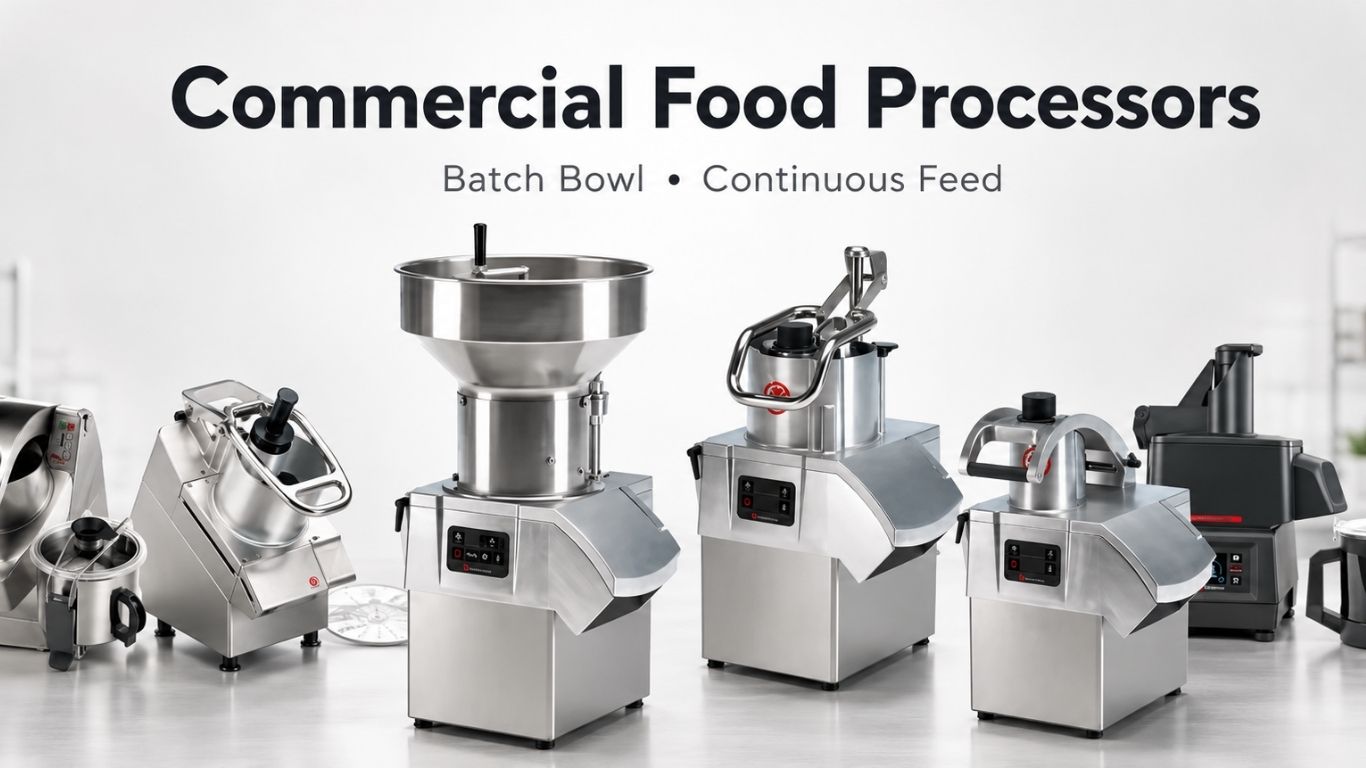
Commercial Food Processor Buying Guide: Continuous Feed vs Batch Bowl for Australian Kitchens
Chopping, slicing and shredding by hand eats up hours your kitchen doesn’t have. A good commercial food processor takes that prep time down from hours to minutes, while keeping every cut the same size. But before you buy one, you need to know the difference between a batch bowl and a continuous feed model, because picking the wrong type for your kitchen means paying for speed or capacity you’ll never use, or worse, not having enough of it.
What's the Difference Between Batch Bowl and Continuous Feed?
Both types use the same basic idea: a motor spins a blade or disc to chop, slice, shred or purée food fast. The difference is what happens to the food once it’s processed.
Batch Bowl Food Processors
A batch bowl processor works food inside an enclosed bowl, much like the food processor you’d find in a home kitchen, just built tougher and with a far stronger motor. You load ingredients in, run the machine, then stop to empty the bowl before starting again. Bowl sizes on commercial units usually run from around 2.5 litres up to 8 litres or more, depending on the model.
Batch bowl processors are the better choice when you’re making sauces, dips, purées, dressings, mousses, pastes or doughs, anything wet, sticky, or that needs to be blended into a smooth or semi-smooth texture. They’re also generally easier to pull apart and clean, since the bowl, lid and blade usually lock in and out in a couple of steps.
Continuous Feed Food Processors
A continuous feed processor skips the bowl. Instead, you drop whole or roughly cut ingredients into a feed chute, and the processed food is pushed straight out through an exit spout into a tray, tub or Cambro underneath. Because there’s no bowl to fill and empty, you can keep feeding ingredients in non-stop.
This makes continuous feed units the right call for high-volume slicing, shredding, dicing and grating jobs, think shredded cheese by the kilo, sliced cabbage for coleslaw, diced onion for a busy service, or grated carrot for a salad bar. If your kitchen needs to punch out large quantities of one cut, over and over, a continuous feed processor will outpace a batch bowl every time.
Combination Units
Some models give you both. A combination food processor uses one motor base with interchangeable tops, swap to the bowl attachment for sauces and purées, then switch to the continuous feed attachment for bulk slicing and shredding. It’s a smart middle ground if your kitchen needs both jobs done but doesn’t have room, or budget, for two separate machines.
Which One Does Your Kitchen Actually Need?
Ask yourself three things before you buy:
What are you processing? Wet ingredients, purées and doughs point you toward a batch bowl. Bulk vegetables, cheese and other solid ingredients point you toward continuous feed.
How much volume do you need? A café doing modest daily prep will get by fine with a batch bowl. A caterer, buffet venue, large restaurant or supermarket prep kitchen pushing out large quantities every day will save real labour time with a continuous feed unit.
How much bench space and budget do you have? Continuous feed and combination units tend to cost more and take up more room than a straightforward batch bowl processor. If your prep needs are modest, there’s no reason to pay for capacity you won’t use.
Other Features Worth Checking
Once you’ve settled on batch bowl, continuous feed or combination, a few other details make a real difference day to day:
- Motor power: higher wattage handles tougher, denser ingredients and longer daily runtime without overheating.
- Disc and blade range: look for interchangeable slicing, shredding, dicing and grating discs so one machine can cover more of your prep list.
- Build quality: stainless steel bowls and housings hold up far better under daily commercial use than plastic.
- Safety features: a proper feed pusher, safety interlocks that stop the blade when the lid or bowl isn’t locked, and an easy-to-reach emergency stop are all standard on a genuine commercial unit, and worth checking for on any model you’re considering.
- Ease of cleaning: parts that are dishwasher safe or that pull apart without tools will save you time at the end of every service.
Trusted Brands We Stock
At Ben’s Hospitality Equipment, our range of commercial food processors includes batch bowl, continuous feed and combination models from Sammic, Dito Sama, Apuro and FED, 4 of the most trusted names in commercial food prep. Whether you’re fitting out a café kitchen or a high-volume prep room, we can help you match the right processor to your menu and daily volume.
Frequently Asked Questions
A food processor is built for chopping, slicing, shredding, dicing and grating solid or semi-solid ingredients using interchangeable blades and discs. A blender is built for puréeing and liquefying, and works best with liquids or soft ingredients. Many commercial kitchens use both for different jobs.
Yes, up to the capacity of the bowl, and you can always run multiple batches back to back. It just won’t match the non-stop output of a continuous feed unit for very high-volume, single-cut jobs like bulk shredding or slicing.
It generally takes a few more steps than a batch bowl model, since there are more parts to pull apart around the feed chute and exit spout. It’s still a straightforward job, just budget slightly more cleaning time at the end of service.
Most small cafés do well with a batch bowl processor in the 2.5 to 4.5 litre range. It’s enough for daily sauces, dips and dressings without taking up too much bench space.
No. Commercial food processors are freestanding electrical benchtop appliances, so they simply need a suitable power point. No licensed tradesperson or installation is required, unlike gas cooking equipment.