


How to Choose the Right Commercial Convection Oven in Australia
A commercial convection oven is one of the hardest working...
Read More
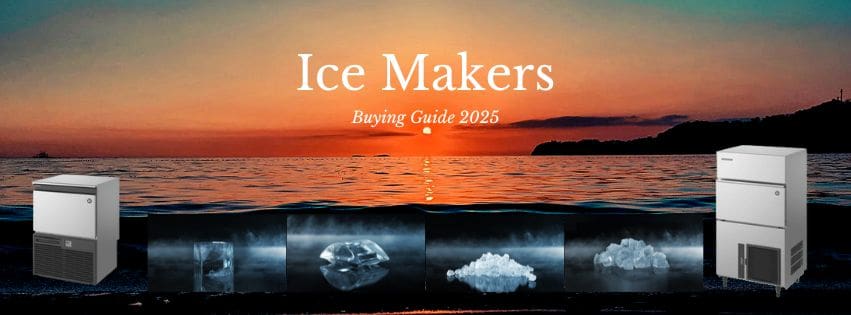
Choosing the best commercial ice maker for your café, bar, restaurant, or takeaway can feel tricky, but it doesn’t have to be. The right machine will keep up with your daily demand, deliver the type of ice your business needs, and save you money in the long run.
In this guide, we’ll walk you through:
Whether you run a busy cocktail bar, a seafood restaurant, or a coffee shop, this page will help you compare options and find the best-fit commercial ice maker for your business needs.
When you’re investing in a commercial ice maker, it’s not just about picking the biggest or cheapest unit. The right choice depends on your business type, how much ice you need, and the environment you’re working in. Here are the main factors to think about:
Measure your peak demand, not just daily use.
Small cafés might only need 20–30kg per day, while busy bars or seafood restaurants often need 100kg+ daily output.
Always go slightly above your needs so you’re not caught short during busy periods.
Cube Ice – versatile, melts slower, perfect for drinks.
Flake Ice – soft, great for displaying seafood or salads.
Nugget (Pearl) Ice – chewable and popular in juice bars and healthcare.
Crescent Ice – ideal for soft drinks and general food service.
Choose based on what your customers actually consume or what you’ll use it for.
If demand spikes, you’ll need a decent ice storage bin so you’re not running out halfway through service.
Underbench units usually have smaller storage (ideal for cafés and small restaurants). Modular units can sit on top of large bins to handle bulk demand.
Check available space in your kitchen or bar.
Underbench machines save space but produce less.
Modular machines need more room but can handle higher production.
Don’t forget ventilation — air-cooled models need clearance, while water-cooled options use more water.
Air-Cooled: Energy efficient, cheaper to run, but needs airflow and can be noisy.
Water-Cooled: Great in hot kitchens, quieter, but uses more water.
Remote-Cooled: Condenser sits outside, quieter and cooler inside but more expensive to install.
Some models are 10A plug-in ready, others need a higher amp connection.
Always check your venue’s electrical setup before purchasing.
Look for models with lower water and power usage. Over time, this saves you serious running costs.
Machines with eco-friendly refrigerants (like R290) are also better for compliance and sustainability.
Hygiene is critical with ice machines.
Choose units with rounded corners, easy-to-remove panels, and self-cleaning functions where possible.
Regular maintenance prevents bacterial build-up and keeps your warranty valid.
Go with trusted commercial brands (like Hoshizaki, Manitowoc, Blizzards, or Ice-O-Matic) for reliability and parts availability.
A 2-year parts and labour warranty is standard on many quality models — a must-have for peace of mind.
Compact and convenient, under-counter ice makers are designed to fit neatly beneath countertops — making them perfect for small bars, cafés, break rooms, and even food trucks. This style of commercial ice maker is one of the most popular in Australia because it saves space without sacrificing performance.
Space Saving – Ideal for venues with tight kitchens or bar areas.
Reliable Production – Produces between 20kg to 150kg of ice per day, depending on the model.
Easy Access – Built-in storage bin keeps ice within arm’s reach during service.
Professional Installation – Most units require a qualified plumber for setup. This not only ensures safety but also keeps your manufacturer warranty valid.
Small cafés and coffee shops
Bars and pubs with steady demand
Food trucks or mobile catering setups
Break rooms in offices or shared workspaces
If your business needs large volumes of ice every day, a modular ice maker is the way to go. These machines are designed to produce serious amounts of ice — from 100kg up to 1000+ kg per day — and are typically mounted on top of a separate ice storage bin.
Because of their capacity, modular ice machines are ideal for high-volume venues where ice demand never stops. Whether it’s cocktails at a bar, drinks in a hotel, or seafood displays in a restaurant, these machines are built to handle the busiest service periods.
High Production Capacity – Perfect for businesses that need 150kg or more daily output.
Flexible Storage Options – Pair with a storage bin size that matches your demand.
Scalable Solution – Suitable for expanding venues and large operations.
Reliable Performance – Designed for continuous use in demanding commercial environments.
Restaurants with heavy daily service
Large hotels
Busy pubs and cocktail bars
High-demand catering venues
Countertop ice makers are compact machines that sit directly on a bench or counter and dispense ice straight into cups. They’re most commonly found in healthcare settings, offices, and self-service stations, where convenience and hygiene matter most.
While not as popular in the commercial hospitality industry, they’re still a handy option for small takeaway shops or workspaces where only a modest amount of ice is needed each day. In many cases, similar machines can be sourced from the household appliance market at a lower cost, but dedicated commercial countertop units offer more reliability for professional use.
Compact & Portable – Perfect for small spaces like offices or kiosks.
Self-Service Friendly – Dispenses ice directly into cups, reducing handling.
Affordable – Usually cheaper than larger commercial ice makers.
Low Demand – Suited for businesses with minimal daily ice requirements.
Healthcare facilities
Office break rooms
Small takeaway shops
Self-service drink stations
Production Capacity: 10kg – 20kg per day
Installation: Simple plug-in unit that sits on a counter
Ice dispensers are all about hygiene, convenience, and efficiency. Instead of scooping ice from a bin, these machines let staff, guests, or customers dispense ice directly into cups or containers at the push of a button or via a sensor. Many models also provide chilled water, making them a two-in-one solution for businesses that want to save space and streamline service.
With production capacities ranging from 50kg to 300kg of ice per day, they’re a reliable choice for businesses that need steady ice supply but also want to keep handling to a minimum.
Hygienic – Reduced ice handling means lower risk of contamination.
Convenient – Push-button or sensor operation for quick self-service.
Space-Saving – Ice and water from one machine.
Professional Look – Sleek designs that suit hotels, healthcare, and retail spaces.
Hotels (guest self-service stations)
Hospitals and healthcare facilities
Convenience stores
Office buildings with shared break rooms
Production Capacity: 50kg – 300kg per day
Installation: Freestanding or countertop units with push-button or sensor operation
The most popular type of ice for food service businesses in Australia.
Full Cube (Dice Ice)
Larger, square-shaped cubes
Ideal for cocktails, spirits, and soft drinks
Melts slowly, so drinks stay colder longer without watering down too fast
Common in restaurants, pubs, and clubs
Half Cube (Half Dice Ice)
Smaller, rectangular cubes
Cool drinks quickly thanks to greater surface area
Often used in fast food restaurants, convenience stores, and quick-service venues
Works well with ice dispensers because it flows more easily
Nugget ice, often called chewable ice or pearl ice, is a small, soft, and crunchy type of ice that customers love to chew on. It’s widely used in juice bars, healthcare facilities, and quick-service restaurants because of its unique texture and versatility.
Soft & Chewable – Easy on the teeth and enjoyable to crunch, making it especially popular in healthcare and aged-care settings.
Absorbs Flavours – Its porous texture allows it to soak up the taste of drinks, enhancing the flavour experience.
High-Yield Production – Machines produce a large volume of nugget ice quickly, keeping up with demand.
Energy Efficient – Designed to use less water and energy compared to some cube ice machines.
Slow-Melting – Stays solid longer than flake ice, reducing waste and keeping drinks chilled.
👉 Best for: Juice bars, healthcare facilities, quick-service restaurants, and anywhere customer preference for chewable ice is strong.
Crescent ice is a unique, half-moon shaped ice that’s smooth, slow-melting, and doesn’t stick together. Its shape makes it perfect for ice dispensing machines and bagging applications, as it flows easily and won’t jam the system.
Efficient Production – Produces more ice per cycle compared to standard cubes.
Energy Saving – Known for low energy and water consumption, making it cost-effective.
Durable & Resistant – Crescent ice machines are often more resistant to descaling acids, reducing maintenance needs.
Versatile Applications – Ideal for quick-service restaurants (QSRs), bulk ice bagging, and the presentation of fresh produce in supermarkets and delis.
Customer-Friendly – Melts slowly, keeping drinks colder for longer.
👉 Best for: QSR venues, supermarkets, delis, and businesses needing high-volume dispensing or bagging.
Flake ice is small, thin, and soft, making it one of the most versatile ice types for commercial use. Its texture allows it to mold easily around items, keeping products cool, fresh, and perfectly presented.
Ideal for Displays – Commonly used in seafood counters, supermarkets, and buffets to showcase food while keeping it fresh.
Healthcare Applications – Popular in medical and therapeutic settings for its gentle cooling effect and flexibility.
Eco-Friendly – Uses less energy and water compared to some cube-style ice machines.
Cost-Effective – Reduces waste by tightly wrapping around products, keeping them chilled for longer.
Soft & Flexible – Easy to handle and perfect for businesses that require continuous ice replenishment.
👉 Best for: Seafood and fresh produce displays, healthcare facilities, buffets, and catering setups.
When choosing a commercial ice maker, one of the most important factors to consider is how much ice the machine can produce in 24 hours. This is known as the daily ice production capacity, and it ensures your business can keep up with customer demand without running short.
Small cafés, offices, or food trucks → typically need 20–50kg per day
Busy bars, pubs, or restaurants → often require 50–150kg per day
Hotels, nightclubs, or high-volume venues → may need 150–500+ kg per day
Large-scale catering or banqueting facilities → can exceed 1000kg per day
Peak Demand Coverage – Always choose a machine that can handle your busiest periods, not just average use.
Avoid Running Out – Having slightly more capacity than you think you need ensures you won’t get caught out mid-service.
Match to Storage – Pair your ice production with a storage bin that fits your service style — there’s no point producing 300kg a day if you can only store 50kg at a time.
👉 Tip: If you’re unsure, it’s better to size up slightly. An ice machine working at full capacity all day wears out faster, while a machine with a little extra capacity will last longer and save you stress during rush hours.
Warranty terms and conditions vary with brands and models that you choose
Hoshizaki: 3 years warranty part and labour and 5 years on compressor and condensing units
Bromic Simag: 5 years part and labour
Ice-O-Matic: 3 years part and labour
Manitowoc: 2 years part and labour
Blizzard: 2 years part and labour
Prices vary a lot depending on the type and daily production capacity. Compact under bench ice makers start from around $1,300, mid-range models producing 50kg to 100kg a day usually sit between $2,000 and $5,000, and high output modular ice machines built for busy venues can run from $6,000 up to $10,000 or more. The right price for your business comes down to how much ice you use each day and how much space you have, not just the cheapest option on the shelf.
Most commercial ice makers last around 7 to 10 years with regular cleaning and good water quality. Some brands last even longer. Hoshizaki machines, for example, are known to run well beyond 10 years thanks to their stainless steel evaporators. Poor water quality, skipped cleaning and poor ventilation are the main things that shorten a machine’s lifespan, so regular maintenance is worth the small amount of time it takes.
Buying suits businesses that want long term value and full control over the machine, since there’s no ongoing rental fee once it’s paid off. Renting suits newer venues or businesses that want to keep upfront costs down, since maintenance and servicing are often included in the weekly fee. At Ben’s Hospitality Equipment, most of our ice makers are available to rent from as little as $19 a week, so you can try a weekly rental if you’re not ready to commit to buying outright.
A commercial ice maker should be cleaned and sanitised every three to six months, though venues in hard water areas may need it more often. Regular cleaning stops scale and mineral buildup, keeps ice clear and free of odours, and protects your manufacturer warranty. Between deep cleans, wiping down the bin, scoop and exterior daily helps keep the machine hygienic for food and drink use.
Most commercial ice makers need both a water inlet and a drain for meltwater, especially larger models producing 20kg or more a day. Some smaller countertop units are fully self-contained and don’t need plumbing at all. It’s worth checking the plumbing requirements before ordering, and most installations should be carried out by a qualified plumber to keep your warranty valid.
Cloudy ice is usually caused by minerals in the water or a filter that needs replacing. Reduced ice production often comes down to a dirty condenser, low water flow, or a machine that isn’t getting enough airflow around it. Running through a quick check of the water filter, ventilation and cleaning schedule solves most of these issues, and if the problem continues it’s worth calling in a technician.
The most important features for a commercial ice machine in a busy restaurant are high daily ice output, a large storage bin and fast ice recovery, so you never run out during a rush. Look for a tough commercial build from a trusted brand, built-in water filtration and an easy-to-clean design. Energy efficiency and a good Australian warranty also matter, as they keep your running costs and downtime low.
Looking for the right ice maker to suit your business? We specialise in commercial ice machines and work closely with leading manufacturers such as Hoshizaki, Manitowoc, Ice-O-Matic, and Bromic. Whether you run a small café, a busy restaurant, a hotel, or a bar, we can help you choose the most suitable ice maker for your needs and budget.
With options ranging from undercounter units for small spaces to high-capacity modular machines, we’ve got solutions for every business size. Browse our range of commercial ice makers online today or give our friendly team a call on 1300 434 125 for expert advice.
Shop commercial ice makers and ice machines in Australia and keep your business running cool.
A commercial convection oven is one of the hardest working...
Read MoreYou have just bought a new commercial fridge. It looks...
Read MoreIf you are choosing a commercial upright bar fridge for...
Read MoreOpening a fish and chip shop is not simply a...
Read More