Wine Fridges From Thermaster, Liebherr & CASO Compared
If you run a restaurant, bar, bottle shop, hotel or...
Read More
If you’re looking to buy a wine fridge in Australia, you’ve got more choices than ever. Whether you’re a home collector wanting to store a few dozen bottles or a restaurant owner who needs a proper commercial wine fridge to serve and display a large selection, the right unit makes a real difference to both wine quality and presentation.
This guide covers the best wine fridges in Australia, the top brands to consider, what to look for before you buy, and which models from the Ben’s Hospitality Equipment range suit different budgets and venues. We stock Liebherr, Thermaster, and Caso, all well-established in the Australian market with local support.
A wine fridge, also called a wine cooler or wine cabinet, is a purpose-built refrigeration unit designed to store wine at the correct temperature. A regular bar fridge or domestic refrigerator keeps things cold, but it does so with a lot of vibration, inconsistent temperatures, and humidity levels that are all wrong for wine.
Wine is sensitive to temperature swings, UV light, vibration, and dry air. A dedicated wine fridge controls all four of these factors, which means your bottles stay in better condition for longer. For restaurants and wine bars, this also matters for service; a well-chilled white or correctly tempered red is part of a good dining experience.
For anyone who buys wine with the intention of keeping it for more than a few weeks, a wine fridge is absolutely worth the investment. Here is why it matters more in Australia than in most other countries.
Australian summers are extreme. A non-air-conditioned room in Sydney, Brisbane, or Perth can reach 35 to 40 degrees Celsius indoors during a heatwave. At those temperatures, wine degrades fast. Corks dry out, flavours flatten, and white wines turn prematurely oxidised. A wine fridge protects your collection regardless of what the weather is doing outside.
A standard kitchen fridge also does not work for wine. It runs too cold at 2 to 4 degrees Celsius, creates vibration from the compressor, and has dry air that wears out corks. Wine stored upright for months in a kitchen fridge loses its cork seal.
A wine fridge solves all of these problems in one unit. It holds bottles horizontal to keep corks moist, maintains the right storage temperature between 12 and 18 degrees Celsius, protects bottles from UV light, and minimises vibration. Over time this is far cheaper than losing bottles to heat damage or poor storage.
A single zone wine fridge holds one consistent temperature throughout the cabinet. It’s the simplest and most affordable type of wine storage. If you mainly drink one style of wine, say, mostly reds, or mostly whites, a single zone unit does the job reliably without added complexity. Single zone models are available from as small as 24 bottles up to 271 bottles in our range.
A dual zone wine fridge splits the cabinet into two separate temperature sections. You can keep your reds at around 14 to 18 degrees Celsius in the upper section and your whites at 8 to 12 degrees in the lower, or adjust to whatever suits your cellar. This is the most popular choice for restaurants, bars, and serious home collectors because it handles a mixed wine list in a single unit. Our dual zone wine fridges from Thermaster and Caso cover everything from 51 bottles through to 218 bottles.
A triple zone wine fridge has three separate temperature compartments. This allows you to store reds, whites, and sparkling or champagne simultaneously at the correct temperature for each. The Liebherr triple zone models are the top choice for upmarket restaurants and dedicated wine venues where every variety needs to be served at its best.
An underbench wine cooler fits under a bar counter or kitchen bench and keeps bottles within easy reach of staff. These are a practical choice for small cafes, wine bars, and hotel rooms where floor space is limited. The Thermaster WB-24H is a compact 24-bottle underbench model that fits neatly into tight spaces without taking up valuable floor area.
A freestanding wine cabinet is a larger, floor-standing unit designed to display and store a significant wine collection. These models are suited to restaurants, cellar rooms, and wine shops where you want customers to see what you’re offering. Models in the 100 to 271 bottle range are the most popular for commercial use.
The Thermaster WB-24H is the most affordable wine fridge for sale in our range and a great entry point for small venues or home use. It’s a 65-litre single zone unit designed to fit under a bench, holding 24 standard wine bottles. The compact footprint makes it a natural fit for cafes, small bars, or a kitchen bench at home. It’s simple, reliable, and easy to operate.
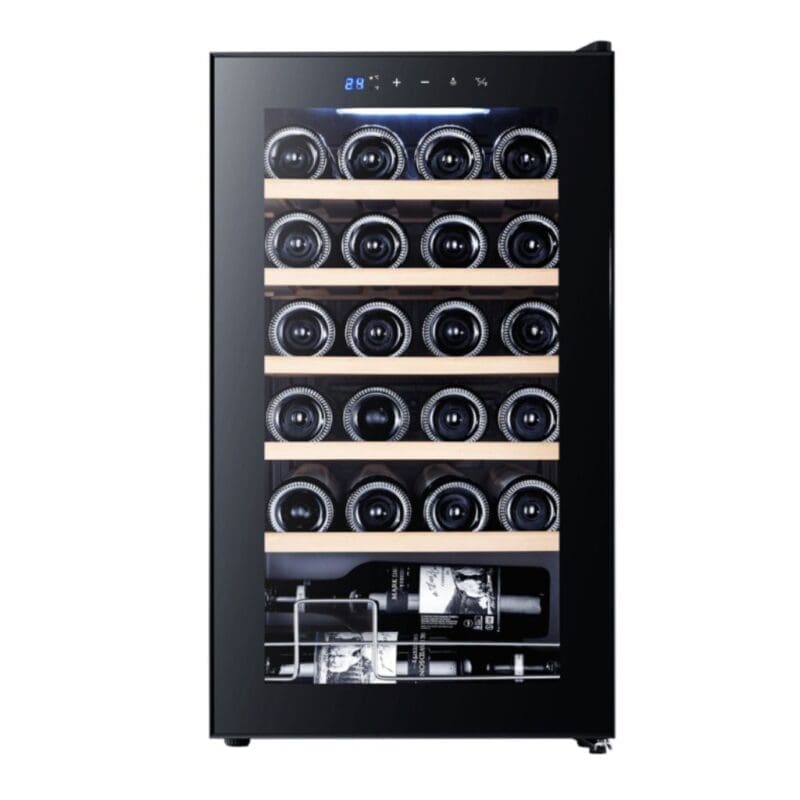
The Thermaster WB-51A is a popular choice for home collectors and small hospitality venues that want a proper freestanding wine cabinet without spending a lot. The 51-bottle capacity is enough for a solid personal collection or a curated wine selection at a small restaurant. The single zone design keeps operation simple and the unit quiet.

For venues that serve both red and white wine, the Thermaster WB-155B dual zone wine fridge gives you the flexibility to store both styles at their correct temperature in a single unit. With 155 bottle capacity across two temperature zones, it’s a practical choice for mid-size restaurants and bars that want control over their wine service without the cost of a premium European brand.

The Thermaster WB-271B is the largest wine fridge in the Thermaster range, holding up to 271 bottles in a single zone cabinet. If you’re building out a proper cellar, managing a wine shop, or stocking a large restaurant, this model handles volume storage at a practical price point. The 760-litre capacity makes it one of the more generous large wine fridges for sale in the Australian market.

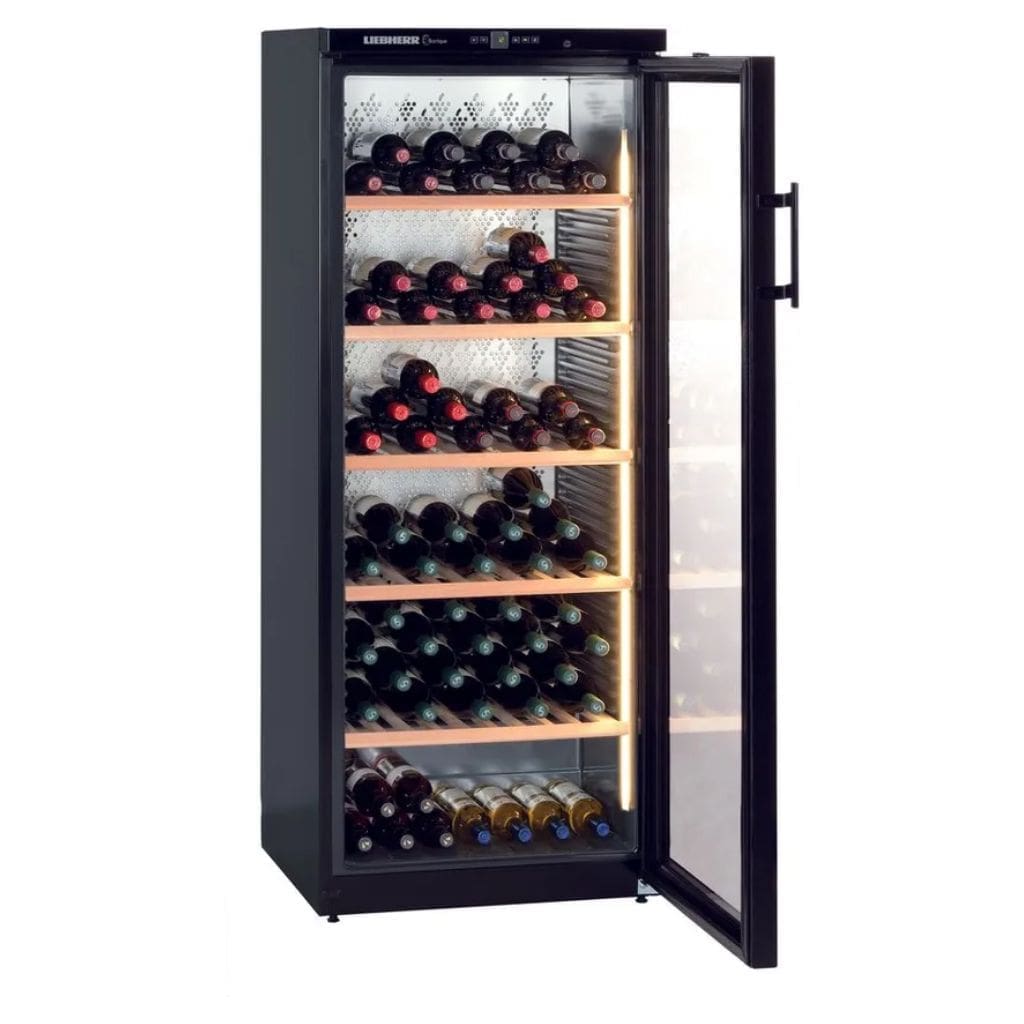
Liebherr is a German brand with a strong reputation for precision temperature control, build quality, and quiet operation. The Liebherr WKb 4611 Barrique holds 195 bottles in a single zone cabinet and is the kind of unit you’d see in a wine-focused restaurant or premium bottle shop. The multi-layered glass door provides UV protection and excellent insulation, and the anti-vibration system protects mature wine during long-term ageing.

The Liebherr WTes 5972 is a dual zone wine cabinet with 211 bottle capacity, combining the precision of Liebherr’s cooling technology with the flexibility of two independent temperature zones. It’s a flagship-level wine fridge for sale that suits fine dining venues, hotel wine programs, and collectors who want the best long-term storage available. The build quality and temperature stability are among the best in the Australian market.
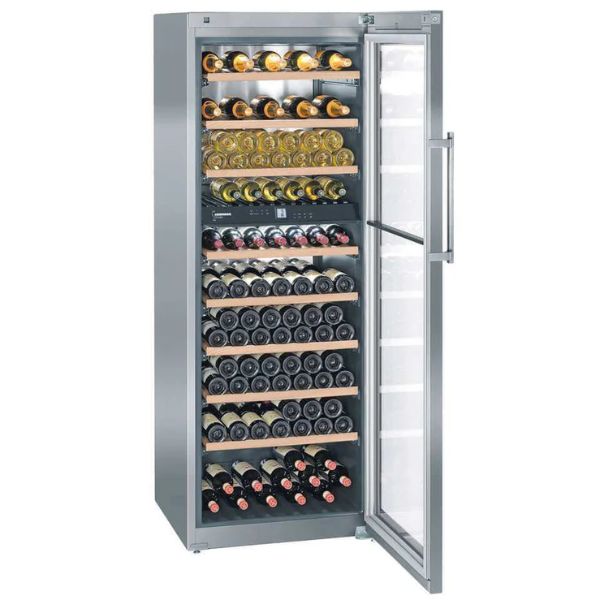
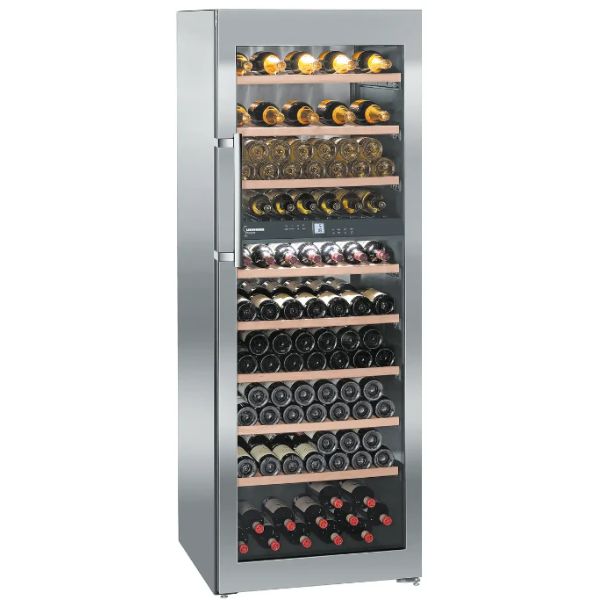
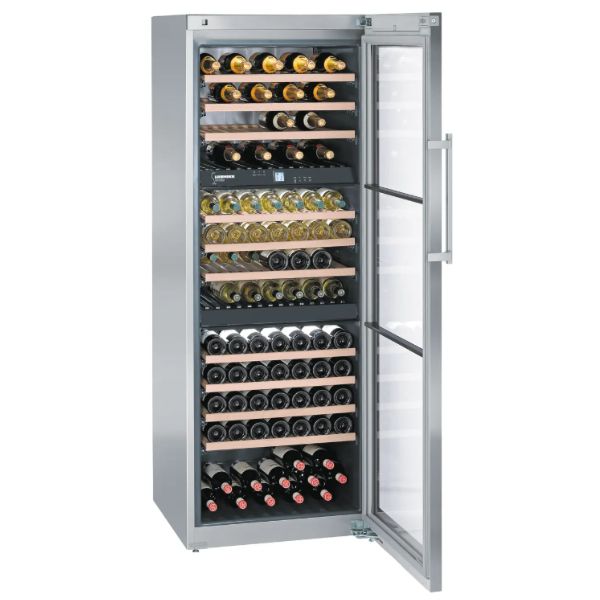
The Liebherr WTes 5872 is a triple zone wine fridge that lets you store reds, whites, and sparkling wine at three distinct temperatures simultaneously. With 178 bottle capacity across three zones, it’s the most versatile wine storage option in our range. If you serve a wide variety of styles and want every bottle served at its precise ideal temperature, this is the model to buy.
The best wine fridge brand depends on your budget and what you need from the unit. Here is an honest breakdown of the brands Australians buy most.
Liebherr consistently earns top ratings from Australian buyers for temperature accuracy, quiet operation, and build quality. Liebherr is a German brand whose Barrique wine cabinet range is purpose-built for wine storage. Their anti-vibration systems and UV-protective glass make them the preferred choice for serious collectors and premium hospitality venues. The Liebherr range at Ben’s covers single zone, dual zone, and triple zone options from 195 to 271 bottles.
Thermaster is the practical choice for Australian buyers who want dependable performance without spending premium money. Thermaster units are widely used in Australian hospitality, hold temperature reliably, and are well supported locally. Their range covers compact 24-bottle underbench coolers through to 271-bottle freestanding cabinets, with both single and dual zone options. For most cafes, small restaurants, and home collectors, Thermaster offers the best balance of price and capability.
Caso offers a strong mid-range option with a reputation for quiet operation and clean design. Their dual zone wine fridges are a popular choice for home use and boutique hospitality settings.
Vintec is Australia’s popular specialist brand that focuses exclusively on wine storage. Their models feature deep shelving that accommodates the wider shoulder profile of Australian wine bottles, which can be a real advantage over European brands, where bottle capacity is calculated on slimmer Bordeaux-size bottles.
Hisense fills the budget end of the market with affordable, widely available units that are quiet and simple to operate. A practical option for casual wine drinkers.
For long-term reliability, Liebherr and Thermaster are the two brands with the strongest track records in the Australian market. Liebherr’s precision German engineering and extended compressor warranties signal confidence in longevity. Thermaster’s widespread use across Australian hospitality venues speaks to their dependability under real commercial conditions.
One thing that matters for reliability in Australia specifically is the ambient temperature rating. Many budget wine fridges are only rated to operate in ambient temperatures up to 32 degrees Celsius. In Queensland, Western Australia, and much of New South Wales during summer, a non-air-conditioned room can easily exceed that. A unit rated to 38 or 43 degrees Celsius will work harder, last longer, and protect your wine better in genuinely hot Australian conditions. Always check the ambient temperature rating before you buy.
Wine fridges are not expensive to run at all. Most home wine fridges cost between $40 and $100 per year in electricity depending on size and how hard they work.
A small underbench wine fridge in the 24 to 30 bottle range typically costs around $40 to $50 per year. A mid-range 100 to 155 bottle unit usually sits between $60 and $100 per year. Large commercial wine cabinets may push towards $120 to $150 per year under normal use conditions.
To keep running costs low, position your wine fridge away from direct sunlight and heat sources, keep it well stocked (a full fridge holds temperature more efficiently than an empty one), and ensure adequate ventilation around the unit. If your fridge operates in a hot environment without air conditioning, choosing a unit rated for high ambient temperatures helps it run more efficiently through summer.
For context, a wine fridge costs less to run per year than most households spend on a dishwasher in a single month. Over a 10 to 15 year lifespan, electricity costs are a small fraction of the total cost of ownership.
Most freestanding wine fridges require no professional installation whatsoever. You position the unit, leave adequate clearance for ventilation, and plug it into a standard 240V Australian power point. Cost: nothing beyond the unit itself.
Built-in or underbench wine fridges designed to sit flush inside cabinetry are a little more involved. If an existing power point is nearby and no cabinetry modifications are needed, a basic installation by an appliance installer typically costs $80 to $150. If cabinet work is required to create the right opening or a new power point needs to be added, costs can rise to $300 to $600 or more depending on the complexity.
If you are having a wine fridge installed as part of a broader kitchen or bar renovation, the cost is usually absorbed into the cabinetry and electrical quote. Always use a licensed electrician for any new power points, and check that your circuit can handle the fridge’s power draw before installation.
A good quality wine fridge will last between 10 and 15 years with proper care and maintenance. Premium brands like Liebherr are built to the higher end of that range. Budget units from less-established brands may need attention sooner.
The main factors that affect lifespan are placement, maintenance, and how hard the compressor has to work. A wine fridge that operates in a stable ambient temperature, away from direct sunlight, and with clean condenser coils will outlast one that is overworked in a hot environment and neglected. Regular cleaning of the interior, cleaning the condenser coils once or twice a year, and keeping door seals in good condition all add years to the unit’s life.
The compressor is the component most likely to determine how long a wine fridge lasts. This is one reason paying more for a reputable brand makes sense over the full ownership period. Some manufacturers now offer extended compressor warranties of five or six years, which is a sign of confidence worth looking for when comparing models.
The most important feature of any wine fridge is its ability to hold a consistent temperature. Look for units with a range that covers 5 to 18 degrees Celsius, which covers sparkling, white, rose, and red wine. Temperature stability — meaning how precisely the unit holds its set point — matters more than the range itself. Compressor-based wine fridges hold temperature more reliably in warm environments than thermoelectric models, which makes them the better choice for commercial kitchens and warm Australian summers.
If you mostly drink one type of wine, a single zone wine fridge is simpler and more affordable. If you serve or collect both reds and whites, a dual zone gives you the flexibility to store both correctly in one unit. Triple zone models are for venues or collectors who need separate storage for sparkling, white, and red simultaneously.
It’s easy to buy too small. A common mistake is estimating how many bottles you currently have and buying to that number. Wine collections and restaurant stock both tend to grow. As a rough guide for Australian buyers:
If you’re between sizes, go up. You’ll fill the extra space.
A glass door wine fridge lets customers see your wine selection, which helps drive bottle sales in restaurants and bars. Glass door units also look better as a display feature in a dining room or behind the bar. Solid door models are suited to back-of-house storage or home cellars where presentation is less important than insulation. Most commercial wine fridges for sale in our range come with glass doors as standard.
Vibration is the enemy of wine that’s been laid down for ageing. Constant movement unsettles sediment and can speed up chemical reactions in the wine. Premium brands like Liebherr use anti-vibration systems to minimise this. For compressor-based wine fridges, some noise is normal, but good units are quiet enough to sit in a dining room without becoming a distraction.
A wine fridge runs 24 hours a day, so energy consumption adds up. Look for LED lighting (which generates less heat inside the unit), good door seals, and efficient compressors. Liebherr in particular has a strong track record on energy efficiency for its class.
Wine fridge prices in Australia vary considerably depending on capacity, brand, and number of zones:
All prices above are ex-GST. SilverChef Rent-Try-Buy finance is available on eligible models, which lets you spread the cost across weekly payments rather than paying upfront. This is a popular option for cafes, restaurants, and bars that prefer to preserve cash flow.
The terms wine fridge and wine cooler refer to the same type of unit. Some people use ‘wine cooler’ to describe smaller, less insulated units and ‘wine fridge’ or ‘wine cabinet’ for larger, more serious storage units, but in the Australian market the terms are used interchangeably.
The right temperature depends on the style of wine. Sparkling wine and champagne: 5 to 8 degrees Celsius. White wine and rose: 8 to 12 degrees. Light reds such as Pinot Noir: 12 to 14 degrees. Full-bodied reds such as Shiraz or Cabernet: 14 to 18 degrees. A dual zone wine fridge lets you set two different temperatures in one unit.
Yes, most wine fridges can also chill beer bottles and cans. If you plan to store a mix of wine and beer, a dual zone unit gives you the most flexibility, as you can keep wine at a higher temperature in one zone and beer colder in the other.
A good quality commercial wine fridge from a reputable brand should last 10 to 15 years with proper maintenance. Regular cleaning of the condenser coils, checking door seals, and keeping the unit in a well-ventilated space all extend the working life of the unit.
Most freestanding wine fridges simply plug into a standard 240V Australian power outlet. No special installation is required. Built-in models designed to sit inside cabinetry may need adequate ventilation clearance as specified in the installation guide.
The 30/30 rule is a simple temperature trick for serving wine at its best without a precision wine fridge. The rule works like this: red wine stored at room temperature should go into the fridge for 30 minutes before serving. This brings it down from typical indoor temperatures to a better drinking range. White or sparkling wine that has been chilled should come out of the fridge and sit at room temperature for 30 minutes before serving, which warms it slightly so the aromas and flavours open up properly.
The thinking behind this is that most people drink red wine too warm and white wine too cold. A full-bodied red served at 26 degrees in an Australian summer loses its balance and can taste boozy and flat. A Chardonnay pulled straight from a 4-degree fridge suppresses its aromas and tastes sharp. The 30/30 rule is a rough guide rather than an exact science, and lighter reds like Pinot Noir will benefit more from a brief chill than big tannic reds like Shiraz or Cabernet Sauvignon.
The 20 minute rule is a simpler version of the same idea. Take white wine out of the fridge 20 minutes before pouring. Put red wine into the fridge for 20 minutes before pouring. The goal is the same: arrive closer to the ideal serving temperature without a dedicated serving fridge.
For reds, the ideal serving temperature is broadly 15 to 18 degrees for full-bodied styles and slightly cooler at 12 to 15 degrees for lighter reds. For whites and sparkling wines, a range of 8 to 12 degrees is generally right depending on the style. Neither rule gives you precision, but both work well enough for everyday drinking. A dual-zone wine fridge removes the guesswork entirely by holding your reds and whites at their individual optimal temperatures, ready to pour whenever you need them.
Only if the unit is rated for high ambient temperatures. Most wine fridges are designed for indoor, climate-controlled environments. A garage in Queensland or Western Australia can exceed 40 degrees Celsius in summer, which is outside the operating range of most standard units. Look specifically for models rated to 38 or 43 degrees Celsius ambient temperature if you plan to use one in an uninsulated space.
For most buyers, a Thermaster dual zone model in the 50 to 155 bottle range offers the best combination of price, features, and reliability. For buyers who want premium long-term performance, Liebherr is worth the additional investment.
If you run a restaurant, bar, bottle shop, hotel or...
Read MoreIf you’re serious about wine, storing it properly isn’t optional....
Read MoreHow to Choose a Good Wine Fridge in Australia A...
Read More