
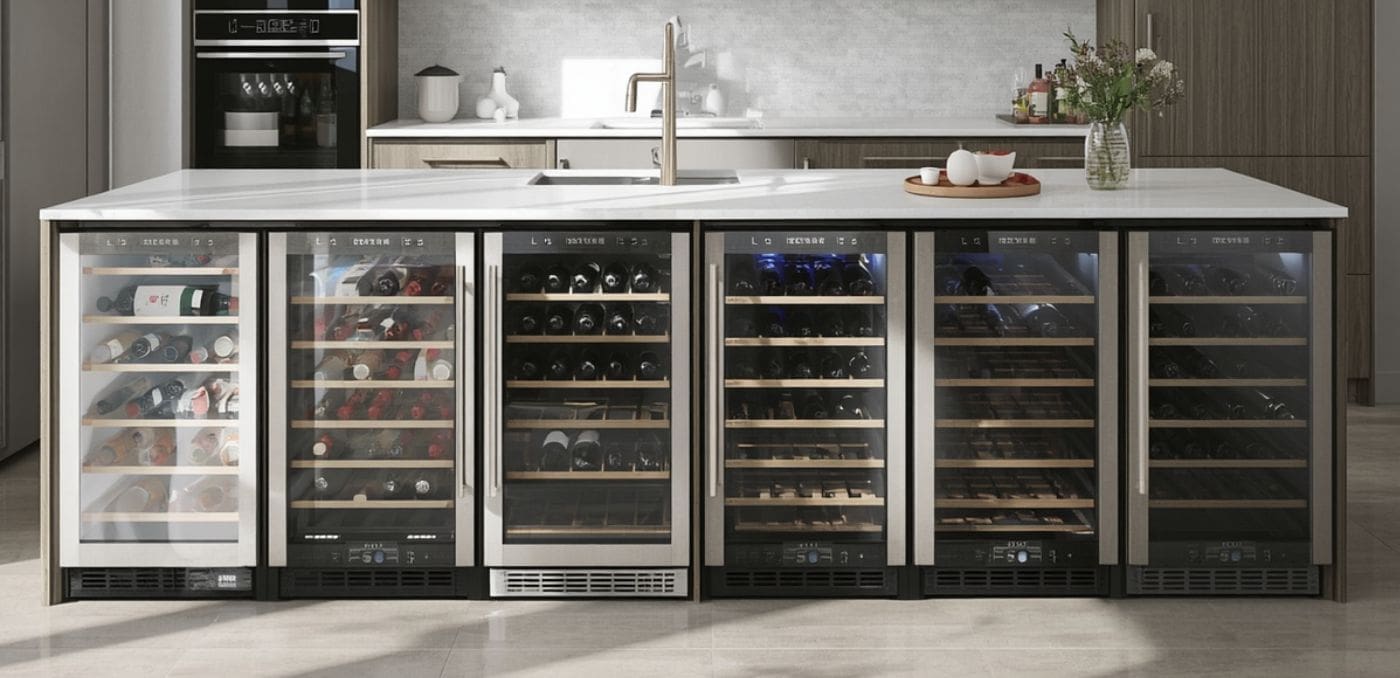
Wine Fridge Buying Guide Australia: Everything You Need to Know Before You Buy
If you’re serious about wine, storing it properly isn’t optional. It’s the difference between a bottle that gets better with age and one that ends up poured down the drain. A wine fridge (also called a wine cabinet or wine cooler) is one of the best investments any wine lover in Australia can make.
This guide covers everything you need to know, from temperature and zones to size, features, and budget, so you can buy the right wine fridge the first time.
Why You Need a Wine Fridge in Australia
Australia’s climate is tough on wine. Summer temperatures in Sydney, Melbourne, Brisbane, and Perth can push well above 30°C, and most homes don’t have a natural cellar or underground storage to fall back on.
A regular kitchen fridge sits around 3°C, which is way too cold for wine. It also lacks the humidity control and vibration dampening that wine needs for long-term storage. A bar fridge isn’t much better.
A dedicated wine fridge solves all of this. It holds a steady temperature, keeps the right humidity level (around 50–70%), blocks UV light, and keeps vibration to a minimum. All of these things matter when you’re storing wine for months or years.
What Temperature Should a Wine Fridge Be Set To?
This is the most common question Australians ask when shopping for a wine fridge, and it’s a good one.
The ideal temperature for long-term wine storage, for both reds and whites, is between 12°C and 18°C. Wine fridges are also designed to hold this temperature consistently, which is just as important as the number itself.
Here’s a quick breakdown:
- Red wine: 13–18°C for cellaring; let it warm slightly before serving
- White wine and rosé: 8–12°C for drinking; 12–14°C for longer storage
- Sparkling wine and Champagne: 6–9°C
- Fortified wines: up to 18–20°C
If you drink both reds and whites, a dual zone wine fridge lets you set different temperatures for each section at the same time.
Single Zone vs Dual Zone Wine Fridges: Which Is Right for You?
Single zone wine fridges maintain one temperature throughout. Set it to around 12–14°C and it handles most wines reasonably well. This works best if you mainly drink one style, all reds or all whites. Dual zone wine fridges have two independently controlled compartments, with the upper zone typically cooler for whites and the lower zone warmer for reds, so you can serve both at their ideal temperature from the same fridge.
Go single zone if: you collect mostly one type of wine or you’re on a tighter budget.
Go dual zone if: you drink both red and white, entertain regularly, or want flexibility for sparkling and fortified wines as well.
How Many Bottles Do You Actually Need to Store?
This is where a lot of buyers go wrong. They buy too small and regret it quickly. Think about not just how many bottles you have now, but how many you’ll have in 12 months.
Here’s a rough sizing guide:
| Capacity | Best For |
|---|---|
| 18–30 bottles | Casual drinkers, tight spaces |
| 40–80 bottles | Regular buyers, small collections |
| 100–200 bottles | Serious collectors, entertainers |
| 200+ bottles | Dedicated wine rooms, large collections |
If you have the space and the budget, buy a larger capacity wine fridge from the start. Many people replace their first wine fridge because it fills up faster than expected, and in the meantime, bottles end up sitting around the house unprotected.
Also keep in mind that some wine fridges model their bottle capacity on standard Bordeaux-size bottles, which means your actual capacity may be lower if you store wider Burgundy or Champagne bottles.
Compressor vs Thermoelectric Cooling: What's the Difference?
Compressor-type wine fridges are more cost-effective but produce higher vibration levels due to their mechanical nature. Thermoelectric fridges run more quietly and provide more consistent temperatures, though a small fan means there’s still some minor vibration.
For most Australian buyers, a quality compressor-based wine fridge with anti-vibration dampening is the practical choice. It handles hot summers better and costs less. Thermoelectric models suit smaller collections in climate-controlled rooms.
Key Features to Look For in a Wine Fridge
- UV-protected glass door UV light slowly damages wine and fades labels. All quality wine fridges use UV-resistant glass so you can see your collection without exposing it to harmful light.
- Humidity control Wine corks dry out in low humidity, which lets air into the bottle and ruins the wine. A dedicated wine fridge maintains stable humidity, whereas most bar fridges lack this capability entirely.
- Wooden shelves Beechwood or timber shelves absorb micro-vibrations better than wire racks and hold bottles more securely. They also look far better when showing off your collection.
- Low vibration design Vibration disturbs sediment and can speed up unwanted chemical reactions in wine, especially in aged bottles. Quality wine fridges use rubber dampeners or external compressors to minimise this.
- Digital temperature display Lets you monitor and adjust temperature precisely, which is useful when seasons change and ambient room temperature shifts.
- Freestanding vs built-in Freestanding wine fridges can go anywhere with adequate ventilation. Built-in or under-bench models are designed to fit flush inside cabinetry, which is great for renovations or kitchens with limited floor space.
How Much Does a Wine Fridge Cost in Australia?
Wine fridges in Australia range from around $250 for a compact 18-bottle cooler to well over $5,000 for large premium cabinets. Here’s a general price guide:
| Budget | What You Get |
|---|---|
| Under $500 | Entry-level compact coolers, 18–30 bottles, basic temp control |
| $500–$1,200 | Mid-range single zone, 30–80 bottles, better insulation |
| $1,200–$2,500 | Dual zone, solid build quality, anti-UV glass, 80–200 bottles |
| $2,500–$5,000+ | Premium large capacity, triple zone, full cabinets |
When deciding how much to spend, think about how many bottles you want to store, how long you plan to store them, the value of your wine collection, and the space you have available. Don’t buy cheap to save money if you’re storing valuable bottles, as the cost of a few replaced wines often exceeds the cost of a better fridge.
Where Should You Put a Wine Fridge?
- Away from direct sunlight UV light and heat are the enemy of wine
- Away from the oven, dishwasher, and hot appliances Consistent ambient temperature matters
- In a stable room temperature Some premium wine fridges are designed to operate in rooms up to 43°C, making them well suited to Australian climates, but not all models handle extreme heat
- On a level, stable surface This reduces vibration transferred into the unit
If you’re in Brisbane, Darwin, or regional WA where summers are extreme, pay close attention to the ambient temperature rating on the spec sheet before you buy.
Wine Fridge vs Wine Cellar vs Bar Fridge: Quick Comparison
| Feature | Wine Fridge | Bar Fridge | Wine Cellar |
|---|---|---|---|
| Temperature range | 6–20°C | 2–8°C | 12–18°C (passive) |
| Humidity control | ✅ | ❌ | Varies |
| UV protection | ✅ | Usually no | Depends on setup |
| Vibration control | ✅ | ❌ | ✅ |
| Cost | $250–$5,000+ | $100–$800 | $5,000+ (build cost) |
A bar fridge is fine for drinks at a party. A wine cellar is the gold standard for large collections. A wine fridge sits right in the middle, purpose-built for wine at a price most people can actually afford.
Top Tips Before You Buy
- Measure your space first including width, depth, and height, plus ventilation clearance at the back or top
- Check the ambient temperature rating which is essential for homes without ducted air conditioning
- Think about where you’ll place bottles and store ready-to-drink wines at eye level with cellaring bottles lower
- Look for a model with a warranty as most quality wine fridges come with a minimum 2-year parts and labour warranty in Australia
- Don’t assume bottle counts are accurate and test with your actual bottle sizes, especially if you collect European or large-format bottles
In Conclusion
A wine fridge is one of those purchases that pays for itself quickly, especially if you’re buying good Australian wine to lay down. Whether you’re after a compact under-bench unit for everyday whites or a full-sized cabinet to house your Barossa reds, getting the right size, zone setup, and features upfront saves money and frustration down the track.
FAQs
A wine fridge keeps your wine at a stable temperature that a standard household fridge or room environment simply can’t match. It protects bottles from heat, light and temperature swings, keeps your collection organised, and for restaurants, bars and cafés, it makes service faster and more professional.
For general storage, most wine fridges are set between 10°C and 13°C. White wine is usually kept on the cooler end for serving, while red wine is stored slightly warmer. A dual zone wine fridge lets you manage both at the same time without compromise. Most models can cool down to around 5°C and go up to 18°C to 22°C depending on the unit.
A single zone wine fridge holds one consistent temperature throughout the cabinet, which suits venues or collectors who stock mostly one style of wine. A dual zone wine fridge has two separate temperature sections, making it the better option when you want to store red and white wine in the same unit at different temperatures.
Yes. A wine fridge works well for bottled beer, craft beer, canned drinks and soft drinks. Keep in mind that wine fridges generally run warmer than a standard bar fridge, so drinks will be chilled rather than ice cold. If fast cold service is important, especially for beer, a mini bar fridge or drinks fridge may suit you better.
Not recommended. Wine fridges are designed to run at wine storage temperatures, which are warmer than what’s required for safe food storage. For dairy, meat, seafood, prepared meals or any perishable food, use a commercial fridge that meets food safety requirements.
A quality wine fridge will last many years with proper care. Good ventilation around the unit, regular cleaning of the condenser area and not overloading the cabinet all help extend its lifespan.
You can shop our full range of wine fridges online at Ben’s Hospitality Equipment. We stock commercial grade options in a variety of sizes and bottle capacities, suitable for restaurants, bars, cafés, bottle shops, hotels and home collections, with Australia-wide delivery available. Call us on 1300 434 125 if you need help choosing the right model.