Tube Fryer vs V-Pan Fryer: Key Differences for Australian Food Businesses
When you’re choosing a commercial deep fryer for your restaurant, café, takeaway shop, food truck, or catering kitchen, it’s not just about picking a well-known brand or the cheapest option. The internal design of the fryer plays a huge role in how it performs during busy service, how long your oil lasts, how easy it is to clean at the end of the night, and even the flavour and consistency of the food you serve.
In Australia, two of the most common designs you’ll come across are tube fryers and V-pan fryers. Each has its own strengths and trade-offs, and the right choice for you will depend on your menu, cooking volume, staff skill level, and how much time you want to spend on cleaning and maintenance. A busy fish and chip shop in Melbourne might swear by the power and recovery speed of a tube fryer, while a small café in Brisbane may prefer the easy cleaning and oil savings of a V-pan fryer.
By understanding the differences between these two designs, you can choose a fryer that not only keeps up with your busiest periods but also helps reduce running costs, maintain oil quality, and deliver consistently great results for your customers.

What is a Tube Fryer?
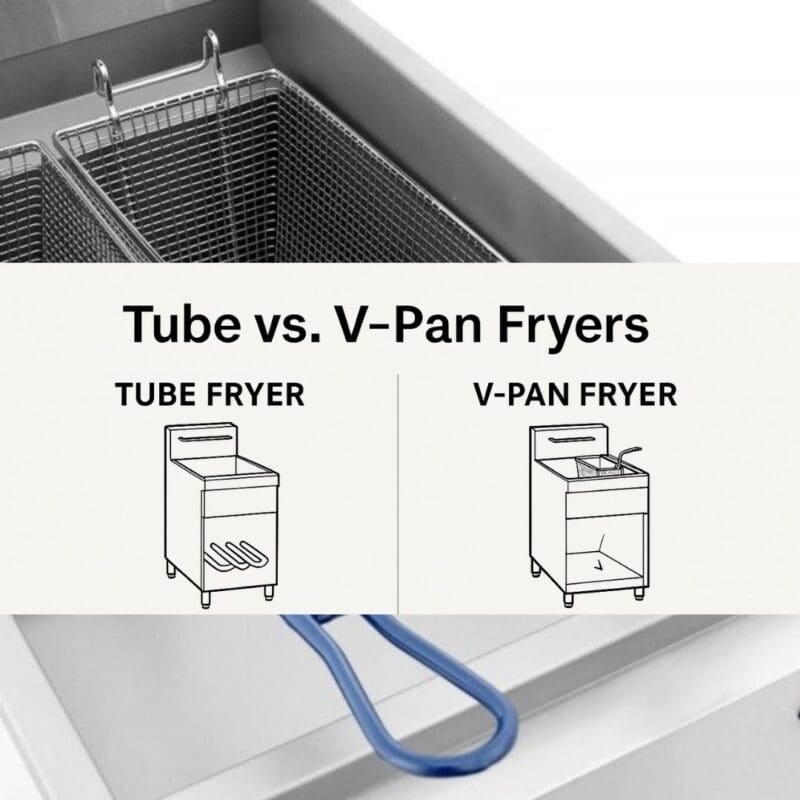
A tube fryer (also called a tube-style deep fryer) uses hollow metal tubes that run through the oil tank. Gas flames heat these tubes from underneath, and the oil circulates around them for consistent heating.
This design is popular in Australian fish and chip shops, pubs, RSL clubs, and busy commercial kitchens.
Key features of tube fryers:
Metal heating tubes sit inside the oil
Gas-powered heating system
Even heat distribution
Large “cold zone” under the tubes for crumb collection
Ideal for high-volume, high-demand cooking
- Widely used fryer type in Australia
What is a V-Pan Fryer?
A V-pan fryer (or V-bottom fryer) has a V-shaped oil well. The heating elements or burners are located at the base of the V, and food debris naturally sinks into the cold zone at the bottom — keeping oil cleaner for longer.
Key features of V-pan fryers:
V-shaped oil pan with cold zone
Can be gas or electric
Easier oil filtering and cleaning
Maintains oil quality by keeping crumbs away from the cooking zone
Popular in fast-food outlets, cafés, and mixed-menu venues in Australia
Tube Fryer Types – 3, 4, 5, and 6 Tubes
Tube fryers are available with different tube counts — the more tubes, the larger the heating surface and the faster the recovery.
| Tube Count | Oil Capacity (Approx.) | Best For |
|---|---|---|
| 3-Tube | 20–25L | Small kitchens or lighter frying loads |
| 4-Tube | 25–30L | Busy cafés, pubs, and restaurants |
| 5-Tube | 30–40L | High-volume service, thicker battered foods |
| 6-Tube | 40L+ | Heavy-duty takeaway and high-traffic venues |
Pros & Cons
Tube Fryers
Pros:
Excellent heat recovery during peak service
Great for heavy batter and crumbed foods
Large cold zone extends oil life
High cooking capacity for big batches
Cons:
More complex cleaning (crumbs around tubes)
Higher oil capacity means more oil to replace
Not ideal for very light, crumb-free foods
V-Pan Fryers
Pros:
Easier to clean (no tubes in the tank)
Lower oil capacity = cheaper oil changes
Ideal for light, crumb-free foods like chips and spring rolls
Higher upfront cost than heavy-duty tube fryers when comparing models of similar capacity
Cons:
Slower heat recovery when loaded with cold food
Smaller cooking capacity
Not suited for heavy batter frying
Which Fryer Should You Choose?
Choose a Commercial Tube Fryer if:
You run a busy fish & chip shop, chicken shop, or pub
You need lightning-fast heat recovery
You fry large batches or dense battered foods
Choose a Commercial V-Pan Fryer if:
You want easier cleaning and oil management
You mainly fry chips, wedges, or light snacks
You’re a smaller venue with moderate frying needs
Oil Quality & Maintenance
V-pan fryers keep oil cleaner longer due to the cold zone design, which helps reduce filtering time and extend oil life.
Tube fryers have great cooking power but may require more frequent oil changes.
Both fryer types should be serviced regularly to comply with Australian food safety standards.