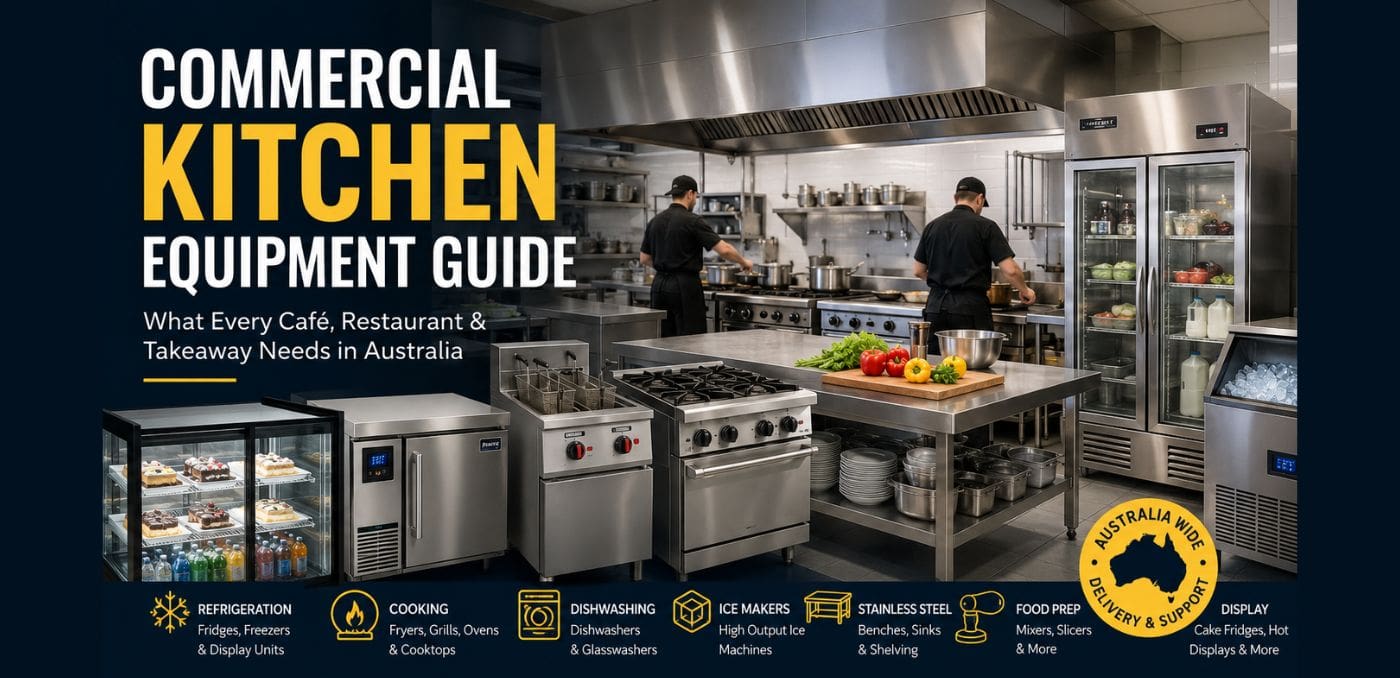
Commercial Kitchen Equipment Guide: What Every Café, Restaurant & Takeaway Needs in Australia
Opening a food business is exciting, but choosing the right commercial kitchen equipment can feel overwhelming. One minute you’re looking at fridges, the next you’re comparing fryers, ovens, dishwashers, prep benches, ice machines and food display cabinets.
And here’s the truth: the cheapest equipment is not always the best choice. In a busy Australian kitchen, your equipment needs to handle long trading hours, hot conditions, fast service and constant cleaning. Whether you’re opening a café, restaurant, takeaway shop, bakery, butcher, bar, supermarket or food truck, the right setup can save space, reduce stress and keep your service running smoothly.
At Bens Hospitality Equipment, we help Australian food businesses choose reliable commercial kitchen equipment for new venues, upgrades and full fit-outs. This guide breaks down the main equipment categories, what each one does, and how to choose the right gear for your business.
What Is Commercial Kitchen Equipment?
Commercial kitchen equipment refers to heavy-duty appliances, storage units, preparation tools and cleaning equipment designed for hospitality and food service businesses.
Unlike domestic kitchen appliances, commercial equipment is built for higher output, regular use and business environments. This can include:
- Commercial fridges and freezers
- Cooking equipment such as fryers, ovens, cooktops and grills
- Dishwashers and glasswashers
- Ice makers
- Stainless steel benches and sinks
- Food preparation machines
- Display fridges and hot food displays
- Kitchenware, utensils and consumables
For example, a small home fridge may be fine for personal use, but a café or restaurant needs a commercial fridge that can recover temperature quickly, hold food safely and handle being opened many times per day.
Why Choosing the Right Commercial Kitchen Equipment Matters
Good equipment does more than just “do the job”. It helps your business run better every day.
The right setup can:
- Improve kitchen workflow
- Keep food at safe temperatures
- Reduce staff waiting time
- Make cleaning easier
- Improve food consistency
- Help avoid service delays
- Support higher output during busy periods
- Make better use of limited kitchen space
For example, a takeaway shop with the wrong fryer capacity may struggle during the dinner rush. A café with an undersized underbench fridge may waste time walking back and forth to storage. A bakery with the wrong display fridge may not present cakes properly to customers.
That’s why it’s important to choose equipment based on your menu, space, power supply, staff workflow and expected customer volume.
Essential Commercial Kitchen Equipment List
Every food business is different, but most venues need a mix of refrigeration, cooking, preparation, washing and storage equipment. Here are the main categories to consider.
Commercial Refrigeration
Refrigeration is one of the most important parts of any commercial kitchen. It protects your ingredients, supports food safety and keeps your kitchen organised. Common commercial refrigeration options include:
- Commercial upright fridges
- Under bench fridges
- Commercial bar fridges
- Prep fridges
- Cake display fridges
- Supermarket fridges and freezers
- Fridge freezer combos
A restaurant may need upright fridges for bulk storage, under bench fridges near the cooking line and prep fridges for fast ingredient access. A café may need a cake display fridge, milk fridge, bar fridge and undercounter storage close to the coffee machine. When choosing a commercial fridge, check:
- Capacity
- External dimensions
- Temperature range
- Ambient temperature rating
- Door type: glass or solid
- Shelving layout
- Ventilation requirements
- Energy efficiency
- Warranty and support
A good fridge should suit your kitchen layout, not just your budget.
Commercial Freezers
Freezers are essential for storing frozen food, meat, seafood, desserts, chips, ice cream and backup stock. Popular freezer options include:
- Commercial upright freezers
- Under bench freezers
- Chest freezers
- Upright display freezers
- Commercial drawer freezers
If your kitchen is tight on space, an under bench freezer can be a smart choice because it gives you frozen storage while also providing extra bench space on top. For retail shops, glass door display freezers help customers see frozen products easily, which can support impulse sales.
Commercial Cooking Equipment
Cooking equipment is the heart of the kitchen. This is where your menu comes to life. Depending on your business, you may need:
- Commercial deep fryers
- Commercial cooktops
- Commercial griddles
- Char grills
- Wok burners
- Noodle cookers
- Salamanders
- Commercial induction cookers
Your cooking equipment should match your menu and service style. For example, a burger shop may need a griddle, fryer and underbench fridge close together. An Asian takeaway may need wok burners, rice cookers, noodle cookers and fast-access prep fridges. A fish and chip shop may need high-output fryers with strong recovery time. When choosing commercial cooking equipment, always consider:
- Gas or electric connection
- Output capacity
- Recovery time
- Bench space
- Cleaning access
- Ventilation requirements
- Installation requirements
- Australian compliance
You can browse the full commercial cooking equipment range online.
Commercial Ovens
Ovens are used across cafés, bakeries, restaurants, catering kitchens, takeaway shops and pizza venues. Common types include:
A commercial convection oven is a great all-rounder for cafés, bakeries and restaurants because it uses fans to move hot air around the chamber, helping food cook evenly and efficiently. A pizza shop, on the other hand, may need a deck oven or stone base pizza oven that can reach higher temperatures for proper pizza cooking. Before buying an oven, check:
- Tray size
- Number of shelves
- Temperature range
- Power requirement
- Steam or humidity function
- Internal dimensions
- External dimensions
- Door clearance
- Ventilation needs
Small details like 10amp vs 15amp power can make a big difference during installation.
Commercial Dishwashers
A busy kitchen cannot run smoothly without proper washing equipment. Commercial dishwashers are designed to clean faster and handle higher volume than domestic machines. Common options include:
A small café may only need an undercounter dishwasher. A restaurant with high table turnover may need a pass through dishwasher with inlet and outlet benches. A bar may need a dedicated glasswasher to keep drinks service moving. When choosing a dishwasher, consider:
- Number of racks per hour
- Plate size clearance
- Glassware requirements
- Water connection
- Drainage setup
- Power supply
- Chemical system
- Bench layout
For new venues, it’s always worth planning the dishwasher area early because plumbing, drainage and workflow matter.
Commercial Ice Makers
Ice makers are essential for bars, cafés, restaurants, hotels, seafood shops and supermarkets. Different businesses need different types of ice:
- Cube ice for drinks
- Flake ice for seafood and display
- Nugget ice for blended drinks and healthcare-style use
- High-output ice machines for busy venues
You can browse commercial ice makers online. Before buying an ice machine, check:
- Daily ice production
- Storage bin capacity
- Ice type
- Water filter requirements
- Drainage requirements
- Ventilation clearance
- Underbench or modular design
A common mistake is buying an ice maker based only on price. If the unit is too small, your staff may run out of ice during peak trade, which can affect drink service and customer experience.
Stainless Steel Benches, Sinks & Shelving
Stainless steel equipment helps keep the kitchen clean, organised and food safe. Common stainless steel items include:
- Stainless steel work benches
- Sinks and sink benches
- Dishwasher inlet benches
- Dishwasher outlet benches
- Stainless steel shelves
- Tapware and pre-rinse sprays
A good stainless steel layout makes prep, cooking, plating and washing much easier. It also helps staff work faster because everything has a proper place. When planning benches, measure carefully and allow room for doors, drawers, staff movement and equipment clearance.
Food Preparation Equipment
Food preparation equipment helps reduce labour and improve consistency. Depending on your menu, you may need:
- Mixers
- Meat mincers
- Meat slicers
- Food processors
- Stick blenders
- Vacuum sealers
- Scales
- Chopping boards
- Gastronorm pans
- Prep containers
A bakery may need a planetary mixer or spiral mixer. A butcher may need a meat mincer and slicer. A café may need blenders, food processors and prep containers for daily service. The right prep equipment can save staff hours every week.
Display Equipment
Display equipment is important for front-of-house sales. If customers can see your food clearly, they are more likely to buy. Popular display equipment includes:
- Cake display fridges
- Countertop display fridges
- Open display fridges
- Hot food displays
- Bain maries
- Pie warmers
- Heated cabinets
A bakery may rely on a cake display fridge to showcase cakes, slices and desserts. A takeaway shop may use a bain marie or hot food display for ready-to-serve meals. A convenience store may use open-front chillers for drinks, sandwiches and grab-and-go products. Display equipment should look clean, bright and easy for customers to shop from.
How to Choose Commercial Kitchen Equipment for Your Business
Before buying equipment, ask yourself these practical questions:
What is on your menu?
Your menu decides most of your equipment. A pizza shop needs different gear from a café, butcher, bakery or sushi shop.
How many customers do you expect to serve?
Higher volume means you need equipment with stronger output, faster recovery and larger capacity.
How much space do you have?
Always measure your available space before ordering. Check width, depth, height, door openings and delivery access.
What power or gas connection do you have?
Some equipment requires 10amp, 15amp, hard-wired power, single phase, three phase, natural gas or LPG.
Does the equipment suit Australian conditions?
Look for units designed for commercial use, proper ambient temperature ratings and suitable warranty support.
Can the equipment be delivered and installed safely?
Large fridges, ovens and dishwashers may need special delivery, positioning or professional installation.
Common Mistakes to Avoid When Buying Commercial Kitchen Equipment
Here are some mistakes we see often:
- Buying based only on price
- Choosing domestic-style equipment for commercial use
- Forgetting to check power requirements
- Not measuring doorways and access points
- Buying a fridge that is too small
- Not allowing ventilation clearance
- Ignoring cleaning and maintenance access
- Choosing equipment before planning workflow
- Forgetting about future growth
A cheap unit can become expensive if it slows down service, breaks down often or does not suit your kitchen layout.
Commercial Kitchen Equipment Checklist
Here’s a simple checklist for new venues:
| Area | Equipment to Consider |
|---|---|
| Refrigeration | Upright fridge, underbench fridge, prep fridge, display fridge |
| Freezing | Upright freezer, underbench freezer, chest freezer |
| Cooking | Fryer, cooktop, oven, griddle, char grill, wok burner |
| Washing | Dishwasher, glasswasher, sink bench, pre-rinse spray |
| Prep | Benches, mixers, slicers, mincers, food processors |
| Storage | Shelving, containers, GN pans, ingredient bins |
| Display | Cake display fridge, hot food display, bain marie |
| Beverage | Bar fridge, ice maker, blender, coffee equipment |
| Cleaning | Mops, buckets, chemicals, bins, cleaning tools |
Frequently Asked Questions & Answers
Most commercial kitchens need refrigeration, cooking equipment, food preparation equipment, stainless steel benches, sinks, dishwashing equipment, storage and cleaning supplies. The exact list depends on your menu, venue size and service style.
Commercial kitchen equipment is built for business use, higher output and longer operating hours. Domestic equipment is usually not designed for constant use in cafés, restaurants, takeaways or commercial food service environments.
Start with the equipment your menu cannot operate without. For most venues, this includes commercial fridges, freezers, cooking equipment, prep benches, sinks and dishwashing equipment. After that, add display units, ice makers and specialised prep machines based on your business type.
The cost depends on the size of your venue and the type of equipment you need. A small café may only need a few key units, while a full restaurant or supermarket fit-out may require refrigeration, cooking, washing, display and stainless steel equipment. It’s best to prepare a list and request a quote based on your actual layout and menu.
Gas equipment is often preferred for high heat and fast cooking, while electric equipment can offer precise control and easier installation in some venues. The best choice depends on your kitchen connection, menu and cooking style.
Commercial fridges are designed for heavier use than domestic fridges, so power use depends on size, design, temperature range, door type and efficiency. Choosing the right size and energy-efficient model can help reduce running costs.
Yes, most cafés benefit from a commercial dishwasher or glasswasher because they clean faster and are designed for regular business use. A domestic dishwasher is usually too slow for hospitality trade.
You can buy commercial kitchen equipment online from Australian suppliers such as Bens Hospitality Equipment, with delivery available across Sydney, Melbourne, Brisbane, Perth, Adelaide and regional areas.
In Conclusion
Buying commercial kitchen equipment is not just about filling a space with appliances. It’s about building a kitchen that works properly during real service. The best setup should support your menu, fit your space, suit your staff workflow and handle daily trade without slowing you down.
Whether you’re opening a café, upgrading a restaurant, fitting out a takeaway shop or building a full commercial kitchen, Bens Hospitality Equipment can help you choose the right gear for your business. Browse our main categories online:
- Commercial Fridges
- Commercial Freezers
- Commercial Cooking Equipment
- Commercial Ovens
- Commercial Dishwashers
- Commercial Ice Makers
- Stainless Steel Benches
- Hot Food Displays
Need help choosing the right equipment? Call 1300 434 125 or contact our team for product advice, quotes and Australia-wide delivery support.