
The Complete Guide to Commercial Soup Kettles for Australian Hospitality Businesses
If you run a café, restaurant, takeaway, or catering business, keeping hot food ready to serve is one of the biggest daily challenges. A commercial soup kettle, also called a soup warmer, is one of the simplest and most effective pieces of equipment you can add to your benchtop. In this guide, we answer the most common questions Australians ask about soup kettles and explain why they’re worth having in your kitchen.
What Is a Soup Kettle?
A soup kettle is a countertop appliance designed to keep liquid foods hot and ready to serve throughout your service period. It uses a wet heat method, similar to a bain marie, where water in the outer chamber heats the removable inner pot. This gentle, even heat keeps your food at the right serving temperature without burning or drying it out.
Most commercial soup kettles in Australia run on a standard 240V/10A plug, so there’s no special installation needed. You just set the temperature and get on with service.
While they’re called soup kettles, they’re useful for much more than soup. You can use them to keep curry, chilli, laksa, gravy, bolognese, beans, pasta sauce, porridge, and even hot drinks like mulled wine at the perfect serving temperature all day.
Browse our full range of commercial soup kettles and soup warmers at Ben’s Hospitality Equipment.
What Is a Soup Kettle Called?
Depending on where you shop or what country the supplier is based in, you’ll see these units listed under a few different names:
- Soup kettle – the most common term in Australia
- Soup warmer – used interchangeably with soup kettle
- Soup pot – sometimes used for smaller or domestic-style units
- Bain marie kettle – refers to the wet heat warming method used
- Food warmer – a broader term that also covers soup kettles
In commercial kitchen circles in Australia, “soup kettle” and “soup warmer” are the two most widely used terms. They refer to the same type of equipment.
Are Soup Kettles Good?
Yes. For any food business serving hot soups, sauces, gravies, or similar liquid foods, a commercial soup kettle is a genuinely useful piece of equipment. Here’s why:
- They keep food at a safe serving temperature. Food safety regulations in Australia require hot food to be held above 60°C. A soup kettle with adjustable temperature control makes this easy to manage without having to babysit a pot on the stovetop all day.
- They free up your cooktop and kitchen space. Once your soup is cooked, transfer it to the kettle and your cooktop is free for other tasks. The compact countertop footprint means you’re not sacrificing much bench space either.
- They make service faster. During a busy lunch rush, having soup ready to ladle straight from the kettle speeds things up considerably. No reheating, no delays.
- They look the part. Many soup kettles, including the Apuro range, have a clean, attractive exterior that suits front-of-house display. Customers can see what’s available, which can actually encourage more orders.
- They reduce waste. Keeping food at a steady hold temperature rather than repeatedly heating and cooling it helps preserve quality and reduces the chance of throwing out spoiled product.
Do Soup Kettles Need Water in Them?
Yes. Most commercial soup kettles use wet heat, meaning you need to add water to the outer chamber before use. The water sits between the outer housing and the inner pot, and when heated it creates indirect, gentle heat that warms the contents without scorching.
Here’s how to use one correctly:
- Fill the outer water reservoir to the recommended level (usually marked inside)
- Place the inner pot into position
- Set your desired temperature using the dial
- Wait for the unit to reach temperature, then add your pre-cooked food
The key point: soup kettles are designed to hold food at temperature, not to cook it from scratch. Always make sure your soup or sauce is already cooked and hot before transferring it to the kettle.
Some newer models use dry heat instead of water. Always check the specifications of the model you’re buying so you use it correctly.
How Long Can You Keep Soup Hot in a Soup Kettle?
A commercial soup kettle can safely hold hot food for the entire duration of your service, often 4 to 8 hours, as long as the temperature stays above 60°C (the Australian food safety minimum for hot holding).
A few things to keep in mind:
- Soup quality can change over a long hold. Thick soups and stews hold well; delicate broths may lose some flavour over extended periods.
- Always use a thermometer to check the internal temperature of the food, not just the kettle’s dial setting.
- Never top up cold or room-temperature soup into a kettle that’s already holding hot food. This brings the temperature down suddenly, which is both a food safety risk and a quality issue.
- At the end of the day, empty, clean, and dry the kettle. Don’t leave food in it overnight.
For most busy cafés and restaurants, a soup kettle can easily handle a full day of service when managed properly.
How Do Restaurants Keep Soup Warm?
Professional kitchens use several methods to keep soup and other hot foods at a safe serving temperature:
Commercial soup kettles are the most practical option for countertop or front-of-house use. They’re easy to operate, energy-efficient, and designed for consistent temperature holding throughout service.
Bain marie units are used in larger buffet or servery setups where multiple dishes need to be held at once. A bain marie works on the same wet heat principle as a soup kettle.
Steam tables are common in canteens, clubs, and high-volume cafeterias. These hold large trays of food in a steamed environment, but take up more space.
Stovetop simmering is still used in smaller kitchens, though it requires constant attention and ties up your cooktop.
For most cafés, takeaways, and small restaurants in Australia, a commercial soup kettle offers the best balance of practicality, cost, and ease of use.
How to Keep Soup Hot on a Buffet
If you’re serving soup on a buffet, whether it’s a hotel breakfast, a catering event, a club or a function centre, a soup kettle is one of the simplest solutions available.
Here are some tips for buffet soup service:
Pre-heat the kettle before adding your soup. Don’t add soup to a cold kettle. Let it heat up first, then add your hot soup directly.
Keep the lid on between serves. The hinged lid on most commercial soup kettles helps retain heat and prevents contamination. Many models have a notch in the lid to rest the ladle without leaving it fully open.
Use a ladle with a long enough handle. For a 10-litre kettle, a ladle with at least a 300mm handle keeps hands well away from hot surfaces.
Set the temperature dial correctly. A clear broth can be held close to 90–95°C, while a thick soup or chowder may do best around 75–80°C. Always keep food above 60°C.
Check the temperature regularly. Even at a self-serve buffet, staff should be monitoring food temperatures every 1–2 hours.
Why Do Restaurants, Cafés and Takeaways Need a Soup Kettle?
If soup, curry, chilli, or gravy is on your menu, even as a side option or seasonal special, a soup warmer makes your operation run more smoothly. Here’s a breakdown by venue type:
Cafés: A 10-litre soup kettle is ideal for a café running a soup of the day. It sits neatly on the bench, looks professional, and keeps your soup at the right temperature from opening to close without any fuss.
Takeaways and fish and chip shops: Keeping gravy and curry sauce hot and ready is a daily need. A small soup kettle handles this perfectly and keeps things moving quickly during the lunchtime rush.
Pubs and clubs: Pub kitchens running a daily soup special or keeping gravy hot for roast nights benefit from having a dedicated soup kettle rather than tying up a stovetop burner all day.
Caterers and event venues: Soup kettles are portable, easy to set up, and run off a standard powerpoint. They’re a go-to choice for catered events where you need to hold hot food in a servery or buffet setup.
Convenience stores and service stations: A soup kettle in a convenience store can be a solid revenue earner on cold winter days, especially in regional or rural Australia where a hot meal on the go is always welcome.
Food trucks and market stalls: The compact size, simple power requirements, and ease of transport make soup kettles a natural fit for mobile food operators.
What Is the Best Soup Kettle for Commercial Use in Australia?
There’s no single right answer. The best soup kettle depends on your volume, your space, and how often you’ll be using it. That said, there are a few things to look for:
Capacity: A 10-litre model is the most popular choice for commercial use in Australia. At roughly 300ml per bowl, a 10-litre kettle gives you about 33 serves. For lower-volume use, a 5 to 6 litre model may be enough. For high-volume operations like clubs or canteens, a 13-litre unit is worth considering.
Wet heat vs dry heat: Wet heat (bain marie style) is generally preferred for soup because it heats food evenly and gently without scorching. Dry heat models are simpler to operate since there’s no water to manage, but some can create hot spots.
Temperature range: Look for a model with a full temperature range of around 35°C to 95°C, giving you the flexibility to hold anything from warm mulled wine to piping hot broth.
Ease of cleaning: A removable inner pot is essential. Look for models where the inner pot can go straight into a commercial dishwasher.
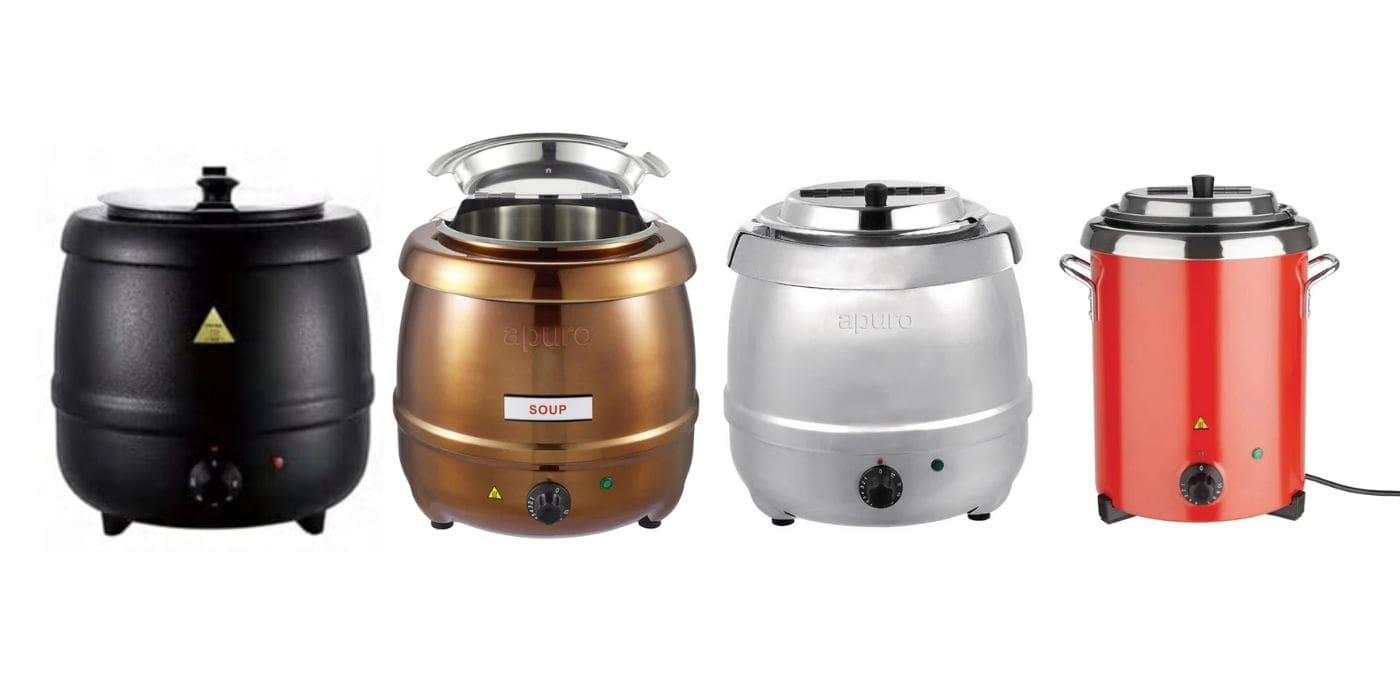
Build quality and finish: Stainless steel is the most durable and easiest to keep clean. Some models come in black or copper finishes, which can look great in a front-of-house setting.
At Ben’s Hospitality Equipment, we stock commercial soup kettles from Apuro, a well-regarded brand in professional kitchens across Australia, along with Kitchenknock models, covering capacities from 5.7 litres up to 13 litres.
Soup Kettle vs Bain Marie: Which One Should You Choose?
A soup kettle is best when you want to hold one liquid food item, such as soup, gravy, curry sauce, laksa or chilli, in a compact benchtop unit. A bain-marie is better when you need to hold multiple trays of food at once, such as rice, vegetables, pasta, sauces, and cooked meats.
For most cafés, takeaways and small food venues, a soup kettle is the easier and more affordable option because it uses less bench space, plugs into a standard power point and is simple for staff to operate.
What Size Soup Kettle Do I Need?
Choosing the right size depends on how many serves you expect during service.
A simple way to estimate:
| Kettle Size | Approx. Serves Based on 300ml Bowl | Best For |
|---|---|---|
| 5–6L | 16–20 serves | Small cafés, sauces, gravy, tasting stations |
| 10L | Around 33 serves | Cafés, takeaways, restaurants, soup of the day |
| 13L | Around 43 serves | Buffets, clubs, caterers, high-volume service |
For most Australian food businesses, a 10L commercial soup kettle is the sweet spot. It gives enough capacity for lunch service without taking up too much bench space.
Can You Cook Soup in a Soup Kettle?
A soup kettle is mainly designed to hold hot food, not cook food from raw ingredients. Soup should be cooked first, then transferred into the kettle while already hot. Using the kettle to cook from cold can take too long and may create food safety issues.
What Foods Can You Put in a Soup Kettle?
You can use a soup kettle for:
- Soup of the day
- Laksa broth
- Curry sauce
- Gravy
- Chilli con carne
- Bolognese sauce
- Pasta sauce
- Nacho cheese sauce
- Baked beans
- Porridge
- Hot custard
- Mulled wine or hot cider
- Hot chocolate in some setups
A helpful warning: Avoid very thick foods that may stick or separate unless you stir them regularly during service.
How to Clean a Commercial Soup Kettle
At the end of service, turn the unit off, allow it to cool slightly, then remove the inner pot for cleaning. Empty the water from the outer chamber if your model uses wet heat. Wash the inner pot, lid and ladle with warm soapy water or place dishwasher-safe parts into a commercial dishwasher if approved by the manufacturer.
Wipe the outside of the kettle with a soft damp cloth. Avoid harsh scourers, steel wool or strong chemicals, as these can damage the finish. Always dry the unit before storing it.
Quick cleaning tips:
- Empty and clean daily
- Do not leave soup in the kettle overnight
- Keep the lid clean to prevent food build-up
- Descale the water chamber if you are in a hard-water area
- Check the power cord regularly
Common Soup Kettle Mistakes to Avoid
A soup kettle is easy to use, but a few small mistakes can affect food quality and safety:
- Adding cold soup into a hot kettle
- Forgetting to add water to wet-heat models
- Overfilling the inner pot
- Leaving the lid open for long periods
- Holding thick soups too hot without stirring
- Using the kettle to cook food from scratch
- Not checking the actual food temperature with a thermometer
- Leaving food in the kettle overnight
A good soup kettle will do its job well, but it still needs proper daily use and basic food safety checks.
Where to Place a Soup Kettle
Place your soup kettle on a flat, stable bench close to a power point. For self-service areas, position it where customers can access it safely without blocking walkways. Make sure the ladle has somewhere clean to rest and keep the lid closed between serves.
For back-of-house use, keep the kettle near your plating or takeaway packing area so staff can serve quickly during busy periods.
Avoid placing the kettle too close to the edge of the bench, near water splashes, or directly under shelves where items could fall into the food.
Are Soup Kettles Energy Efficient?
Yes, soup kettles are generally energy-efficient compared with keeping a pot simmering on a cooktop all day. Once the unit reaches temperature, it cycles on and off to maintain heat. This makes it practical for cafés, buffets and takeaways that need hot food ready without using a burner for hours.
They also help reduce pressure on the kitchen during service because staff do not need to keep reheating soup on the stove.
Soup Kettle Buying Checklist
Before buying a soup kettle, check:
- Capacity: 5L, 10L or 13L
- Power: usually 240V / 10A
- Heat type: wet heat or dry heat
- Temperature range
- Removable inner pot
- Lid style and ladle notch
- Stainless steel or display finish
- Ease of cleaning
- Warranty and spare parts support
- Whether it suits front-of-house display or back kitchen use
For cafés and takeaways, a 10L model is usually the most practical starting point.
Final Buying Advice
For most Australian cafés, takeaways and restaurants, a 10L commercial soup kettle is the best all-round choice. It gives enough capacity for daily soup service, gravy, curry sauce or hot specials, while still being compact enough for a benchtop or buffet station. Look for a model with adjustable temperature control, a removable inner pot, easy-clean surfaces and a lid that helps keep heat in during service.
If you only need to hold gravy or small sauce batches, a 5–6L model may be enough. For clubs, caterers, hotels and busy buffet service, a larger 13L soup warmer may be the better option.
FAQs
Can you put cold soup in a soup kettle?
No, it is best to add soup while it is already hot. A soup kettle is designed to hold food at serving temperature, not heat cold food quickly.
Can soup kettles burn soup?
They can if used incorrectly, especially with thick soups or sauces. Wet heat models reduce this risk, but thick foods should still be stirred during service.
Do soup kettles use much electricity?
Most commercial soup kettles are low-power benchtop units and are generally cheaper to run than keeping a stovetop burner on all day.
Can a soup kettle be used front of house?
Yes. Many soup warmers are designed for customer-facing areas, buffets, cafés and self-serve stations.
What is the most popular soup kettle size?
A 10L soup kettle is the most common choice for commercial use because it suits cafés, takeaways, restaurants and catering setups.