How Australian Cafés and Restaurants Are Cutting Labour Costs with Smarter Equipment
Running a café or restaurant in Australia right now is tough. Wages keep going up, good staff are hard to find, and customers still expect fast, quality service. If you’re a hospitality operator, you’ve probably felt the pressure from all sides.
The good news? Smart equipment is changing the game. Across Australia, cafés and restaurants are investing in the right commercial kitchen gear to reduce how many labour hours they need without cutting corners on food quality or customer experience.
In this blog, we’ll show you exactly how Australian hospitality businesses are using smarter equipment to cut labour costs, run leaner teams, and stay profitable in 2026 and beyond.
Labour costs can represent more than 40% of total spending for Australian restaurants. Getting this number under control is one of the biggest challenges and biggest opportunities for any café or restaurant owner.
The Labour Cost Problem in Australian Hospitality
Let’s be honest about the numbers. Australian hospitality businesses are under enormous financial pressure right now.
According to industry data, turnover for cafés, restaurants and takeaway food services reached $66.27 billion in the 2025 financial year, but profit margins are shrinking fast. The sector is dealing with:
- Wage inflation running at around 4.2% per year
- More than 200,000 unfilled hospitality job vacancies across the country
- Rising energy bills and food costs are eating into margins
- Net profit margins as low as 3 to 4 per cent for many venues
- Labour costs make up anywhere from 26% to over 40% of total expenses
With labour benchmarks suggesting costs should sit below 30% of revenue, most venues are already over that line. And with minimum wage increases continuing, this problem isn’t going away.
The solution isn’t just to roster fewer staff, which often just reduces service quality and hurts revenue. The smarter play is to use better equipment that helps your existing team do more, faster, with less effort.
Why Equipment Is the Answer - Not Just Fewer Staff
There’s a big difference between cutting staff and cutting unnecessary labour. The best hospitality operators know that the right commercial kitchen equipment enables a smaller, smarter team to produce the same or more output than a larger team with outdated equipment.
Think of it this way: a well-designed kitchen with the right equipment means one person can do what used to take two. That’s not about working your team harder, but it’s about setting them up to work smarter.
Here’s where the real savings happen:
- Faster food prep reduces the hours needed before and during service
- Automated cooking equipment reduces the need for skilled labour at the stove
- Efficient dishwashing speeds up turnaround and reduces kitchen hand hours
- Better refrigeration and food storage cut prep time and reduce waste
- Smart workflow layouts mean staff cover more ground with fewer steps
According to industry forecasts, AI and automation in restaurants could reduce labour costs by up to 25% in the next few years. You don’t need robots to get started. You just need the right gear.
The Best Types of Equipment for Cutting Labour Costs
1. Combi Ovens: The Workhorse of the Modern Kitchen
A combi oven is one of the best investments an Australian café or restaurant can make. These ovens combine steam and convection cooking in one unit, which means one machine does the job of several.
With a combi oven, a single cook can manage multiple dishes at once. You can program recipes directly into the machine, so less-skilled staff can produce consistent, quality food without needing a head chef watching over every dish.
Labour saving benefit: Pre-programmed cooking modes mean less supervision, less skill required per cook, and faster turnaround during service.
Time saving example: A café running breakfast service can load trays of pastries, eggs, and bacon into a combi oven and let it run automatically while one person manages the coffee bar.
Brands like Rational, Giorik, Fagor and Unox are well-regarded in the Australian market and trusted by commercial kitchens for their reliability and performance.
2. Commercial Dishwashers: Speed Up Turnaround, Reduce Kitchen Hands
Manual dishwashing is one of the most labour-intensive tasks in any hospitality venue. A good commercial dishwasher can wash a full rack of plates and glasses in as little as 60 to 90 seconds, something that takes a person 10 to 15 minutes by hand.
Types of commercial dishwashers that reduce labour include:
- Underbench dishwashers: compact, fast, perfect for small cafés
- Passthrough dishwashers: high-volume restaurants use these to process large numbers of items quickly
- Glasswashers: purpose-built for bars and venues that cycle through glassware quickly
- Flight dishwashers: used in large operations to wash thousands of items per hour with minimal staff involvement
Investing in a quality commercial dishwasher means you may not need a dedicated kitchen hand for washing duties. That’s a direct saving on wages, especially during weekend or evening service when penalty rates apply.
Labour saving benefit: A passthrough dishwasher can replace the equivalent of one part-time kitchen hand, saving thousands of dollars each month in wages.
3. Food Preparation Equipment: Cut Your Prep Time in Half
Prep time is one of the biggest hidden labour costs in Australian kitchens. Many kitchens have chefs spending hours peeling, slicing, dicing, and mixing before service even begins. The right prep equipment can slash that time significantly.
Key prep equipment that saves labour hours includes:
- Commercial food processors and vegetable cutters: slice, dice, and julienne vegetables in seconds
- Commercial planetary mixers: mix, whip, and knead dough for bakeries and pastry-heavy menus without manual effort
- Meat slicers: consistent, fast slicing without skilled labour
- Potato peelers and vegetable prep machines: bulk peeling in minutes instead of hours
- Blast chillers: rapidly cool cooked food so it can be stored safely, allowing prep-ahead cooking
When a café can batch-cook and blast-chill items ahead of service, it reduces the number of staff needed during peak hours. One person can do the prep work for an entire week in a few focused shifts.
Labour saving benefit: Reducing daily prep time by even 2 hours across a team translates to thousands of dollars in annual wage savings.
4. Refrigeration: Better Cold Storage, Less Waste, Less Labour
It might not seem obvious, but the right commercial refrigeration directly impacts your labour costs. Here’s how:
- Organised, well-designed cold storage means staff spend less time searching for ingredients
- Proper refrigeration allows batch cooking and prep-ahead, reducing the number of service staff needed
- Energy-efficient units reduce power bills, freeing up cash that can offset other costs
- Reliable refrigeration prevents stock loss: every wasted ingredient is also wasted labour that went into preparing it
Australian kitchens face unique challenges too. In summer, kitchens can hit 35 to 40 degrees Celsius during service. Commercial refrigeration rated for high ambient temperatures runs more efficiently in these conditions, meaning lower power consumption and fewer breakdowns.
A breakdown during service doesn’t just cost you repair bills, but it costs you lost revenue and the extra labour needed to manage the chaos.
Labour saving benefit: Right-sized, energy-efficient refrigeration with good layout reduces the time staff spend managing stock and reduces costly service disruptions.
5. Automated Coffee Equipment: Serve More with Less Staff
Australia has one of the world’s most sophisticated coffee cultures, and café operators know that the coffee bar is where labour costs can spiral quickly. A single busy café might need two or three baristas during peak hours to keep up with demand.
Automated and semi-automated coffee machines are changing this equation. Fully automated coffee systems can be programmed to produce consistent espresso, milk texturing, and drink assembly with far less barista input.
Grind-by-weight grinders, which are becoming the new standard in Australian specialty cafés, eliminate the need for constant barista adjustment, reducing the skill level required and improving consistency.
IoT-enabled coffee machines can also self-adjust grind settings and monitor extraction quality in real time, reducing the time staff spend on calibration and maintenance.
Labour saving benefit: In high-volume cafés, automated coffee systems allow one barista to manage output that previously required two, cutting labour costs during peak service periods.
6. Kitchen Layout and Workflow Design: Often Overlooked, Always Impactful
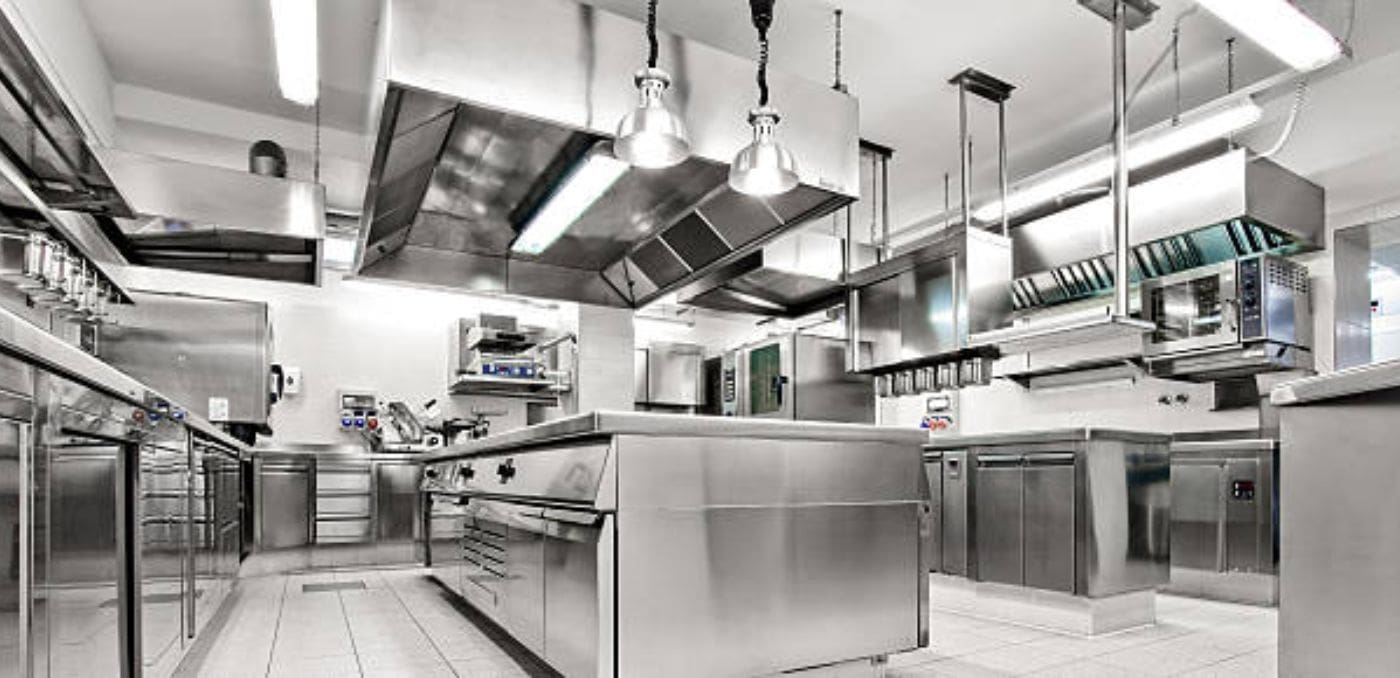
The equipment you choose matters, but where and how you position it matters just as much. A well-designed commercial kitchen layout reduces the number of steps your team takes during service, which directly translates to faster output and lower labour costs.
Key layout principles that reduce labour include:
- Equipment on castors so it can be quickly repositioned without tradespeople
- Logical prep-to-cook-to-plate zones that minimise cross-kitchen walking
- Stainless steel benches and surfaces that clean quickly and don’t require special treatment
- Adequate ventilation so staff aren’t slowed down by heat exhaustion
- Equipment grouped by function to reduce the number of stations needed
At Ben’s Hospitality Equipment, we work with café and restaurant owners across Australia to plan kitchen layouts that make the most of every square metre, because a smarter layout means a leaner, more efficient team.
The Real Maths: What Does Smarter Equipment Actually Save?
Let’s put some real numbers around this. Here’s how equipment investments can translate to labour savings for a typical Australian café:
Equipment | Labour Saving | Approx. Annual Saving* |
Combi Oven | Reduce cook supervision time by ~2 hrs/day | $15,000–$25,000 |
Commercial Dishwasher | Replace 1 part-time kitchen hand | $20,000–$35,000 |
Food Prep Equipment | Cut daily prep time by 2+ hrs | $10,000–$18,000 |
Automated Coffee Machine | One barista covers peak output | $12,000–$22,000 |
Efficient Refrigeration | Less restocking time, fewer breakdowns | $3,000–$8,000 |
*Estimates based on Australian award wage rates and industry benchmarks. Actual savings will vary by venue size and operation.
Choosing the Right Equipment for Your Business
Not every café or restaurant needs the same gear. The key is choosing equipment that’s the right size and capacity for your operation, not just the biggest or most expensive option.
Here’s a simple way to think about it:
- High-volume venues benefit most from passthrough dishwashers, combi ovens with large capacity, and automated coffee systems
- Small cafés with limited bench space should look at compact underbench dishwashers, benchtop combi ovens, and multifunctional prep equipment
- Venues with large prep loads like bakeries or catering operations will see the biggest gains from commercial mixers, food processors, and blast chillers
- Bars and clubs get the most out of efficient glasswashers and bar refrigeration that speeds up service
The goal is always to match the equipment to your workflow, so your team is never waiting on the gear, and the gear never sits idle.
Don't Forget! Equipment Reliability Saves Money Too
A cheap piece of equipment that breaks down regularly isn’t really cheap. Every breakdown during service costs you:
- Lost revenue while food can’t be produced
- Wasted food stock that can’t be stored or cooked
- Emergency repair callout fees
- Extra staff hours to manage around the problem
- Stress and reduced staff morale
That’s why it pays to choose commercial-grade equipment from trusted brands with strong Australian support networks. Brands like Turbo Air, Bromic, B+S, Goldstein, and Meiko have solid reputations in the Australian market for reliability and longevity.
When comparing equipment, always ask:
- What’s the warranty period, and does it include labour and parts?
- Are spare parts available in Australia?
- Is there a local service technician network?
- Is it rated for Australian conditions, including high ambient temperatures?
Financing Your Equipment Investment
One of the biggest reasons hospitality operators put off upgrading their equipment is the upfront cost. But here’s the thing! Modern commercial kitchen equipment often pays for itself within months through labour savings alone.
For example, a quality commercial dishwasher that costs $8,000 to $15,000 can save you the equivalent of a part-time kitchen hand, potentially $20,000 to $35,000 per year in wages. That’s a payback period of under 12 months in many cases.
Financing options like equipment rental, Rent-Try-Buy, and chattel mortgage arrangements are widely available in Australia and allow you to get the equipment working for you right away without a large capital outlay. Weekly repayments on financed equipment are also typically tax-deductible as a business expense.
Talk to our team at Ben’s Hospitality Equipment about financing options that suit your business situation.
What Australian Industry Experts Are Saying
Industry leaders across Australia are increasingly vocal about the need for smarter equipment investment to manage labour costs.
“Labour-saving automation, from kitchen robots to systems integration, is one of the most important strategies available to Australian hospitality operators right now.” Rod Fowler, Director of Food Industry Foresight
The data backs this up. A 2025 survey of Australian restaurant leaders found that 99% are already using some form of automation to boost efficiency. Restaurant operators believe automation will improve marketing, staff management, payments, inventory management, and menu optimisation.
The shift is happening. The question is whether your business is ahead of it or behind it.
Practical Steps to Start Cutting Labour Costs Today
If you’re ready to start using smarter equipment to cut labour costs, here’s a practical approach:
Step 1: Audit your current kitchen. Look at where your team spends the most time. Is it in prep? Dishwashing? Cooking? Identify the biggest time drains.
Step 2: Calculate your current labour costs. Break down your wage bill by task and time of day. This tells you where equipment investment will have the biggest impact.
Step 3: Identify equipment upgrades. Match the time-draining tasks to equipment that can automate or speed them up.
Step 4: Look at layout and workflow. Consider whether your kitchen layout is helping or hurting your team’s efficiency.
Step 5: Talk to a specialist. A hospitality equipment specialist can walk you through what’s right for your specific operation, menu, and volume.