
From Pot to Plate: Why Chefs Rely on Commercial Stick Blenders
In a professional kitchen, the most valuable equipment isn’t always the biggest or most expensive. Often, it’s the tool that quietly integrates itself into daily service — used without thought, relied on without question. The commercial stick blender belongs firmly in this category.
Once considered a niche prep tool, the stick blender has evolved into an essential piece of equipment across cafés, restaurants, catering kitchens and food production spaces throughout Australia. Its rise isn’t driven by trends or technology hype, but by something far more practical: workflow efficiency.
From Convenience to Necessity
There was a time when soups were ladled into jug blenders, blended in batches, then poured back into pots. It worked, but it wasn’t elegant. It took time, introduced risk, and broke the rhythm of service.
Commercial stick blenders changed that rhythm.
By allowing chefs to blend directly in the cooking vessel, they eliminated unnecessary steps. No decanting. No batching. No temperature loss. No extra dishes. What began as a convenience gradually became a necessity, particularly in kitchens where speed and consistency matter.
Today, it’s difficult to find a professional kitchen that doesn’t rely on one.
Designed for Pressure, Not Just Power
A common misconception is that commercial stick blenders are simply more powerful versions of domestic models. In reality, the difference is less about raw wattage and more about engineering for pressure.
Commercial kitchens operate in conditions that domestic appliances are never designed to handle:
extended run times
hot, dense ingredients
repeated daily use
steam, vibration, and heat
A commercial stick blender is built for this environment. Its motor is designed to run without overheating. Its shaft is reinforced to move through thick soups and purées without flexing. Internal components are engineered to withstand repetition rather than occasional use.
This focus on durability is what separates professional equipment from household tools.

The Importance of Shaft Length — A Detail That Matters
In magazine reviews and buying guides, shaft length rarely gets the attention it deserves. In practice, it’s one of the most important factors in usability and safety.
If too short, the blender struggles to reach the base of a stock pot, causing uneven results and splashing. If too long, and control becomes awkward in smaller vessels.
Most kitchens fall into predictable patterns:
smaller cafés work comfortably with shorter shafts
restaurants require mid-length shafts for daily service
catering kitchens benefit from longer shafts for bulk preparation
Choosing the right shaft length improves blending efficiency, reduces mess, and protects staff from hot liquids, small details that matter in real kitchens.
Commercial Stick Blender Shaft Length
| Shaft Length | Best For | Typical Kitchen Types | Common Uses | Why It Works Well | Limitations |
|---|---|---|---|---|---|
| 200–250 mm (Short Shaft) | Shallow containers & light prep | Cafés, coffee shops, bars | Sauces, dressings, aioli, pesto, milk mixes | Excellent control, lightweight, minimal splashing in small pots | Too short for stock pots or bulk prep |
| 300–350 mm (Mid-Length Shaft) | Everyday commercial use | Restaurants, pubs, bistros | Soups, purees, batters, curry & pasta sauces | Most versatile length, good balance of reach and control | May struggle in very deep stock pots |
| 400–450 mm (Long Shaft) | Bulk and high-volume prep | Catering kitchens, hotels, aged care | Large batches of soup, stocks, mashed veg | Reaches deep pots safely, reduces splash from hot liquids | Less precise in small containers, heavier |
| 500 mm+ (Extra-Long Shaft) | Industrial food production | Central kitchens, factories | Very large vats, bins, bulk processing | Maximum reach and safety in extreme volumes | Overkill for cafés and restaurants |
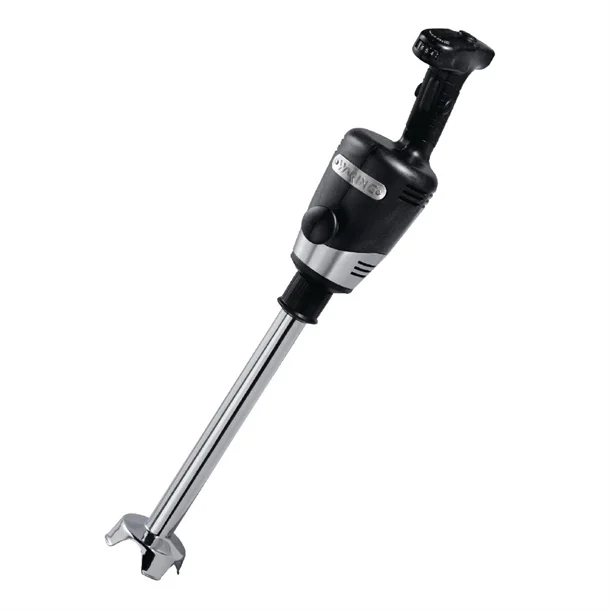
Shaft Length vs Pot Size
| Pot Size | Recommended Shaft Length |
|---|---|
| 5–10 L saucepan | 200–250 mm |
| 15–30 L stock pot | 300–350 mm |
| 40–60 L stock pot | 400–450 mm |
| Industrial vats | 500 mm+ |
Texture Is a Professional Standard
Texture is often the first thing a diner notices — even before flavour. A soup that feels grainy or a sauce that separates signals inconsistency, regardless of how good the recipe is.
Commercial stick blenders play a critical role in maintaining texture standards. Their ability to create smooth, stable results supports consistency across shifts, staff changes, and busy services.
In venues where brand reputation relies on repeat customers, this consistency isn’t optional, but it’s expected.
Texture sensitivity isn’t limited to professional kitchens either. In everyday food discussions online, people regularly talk about how grainy soups or uneven sauces ruin the eating experience. In one Reddit discussion, users describe how texture alone can make a meal unpalatable, even when flavours are spot on, highlighting just how important smooth, consistent blending really is.
Workflow, Labour, and the Cost of Time
In hospitality, time is one of the most expensive ingredients.
Every prep task sits inside a chain. When blending takes longer than it should, everything behind it slows down: sauce finishing, soup reheating, plating, service. Commercial stick blenders reduce friction at these choke points by allowing ingredients to be processed directly in the cooking vessel, eliminating transfers, cooling delays, and rework.
From a labour perspective, the savings compound quickly. Faster blending means:
fewer staff tied up on prep
less double-handling of hot liquids
reduced clean-down time between tasks
more predictable prep windows across shifts
This matters most during peak periods and staff changeovers. When equipment performs consistently, kitchens rely less on individual skill levels and more on repeatable processes. New or casual staff can achieve the same results without slowing the line or calling for help.
Fatigue is another hidden cost. Hand-finishing textures, straining sauces, or correcting split emulsions adds physical and mental load. Over time, this contributes to slower prep, mistakes, and burnout. A reliable stick blender shortens tasks and reduces repetitive strain, helping staff stay sharper through long services.
The impact isn’t dramatic in a single shift — it’s cumulative. Saving two or three minutes per task, multiple times a day, across multiple stations adds up to hours of labour recovered each week. Over months, that translates into smoother services, fewer prep bottlenecks, and a kitchen that runs with less stress and more control.
Built for the Australian Kitchen Environment
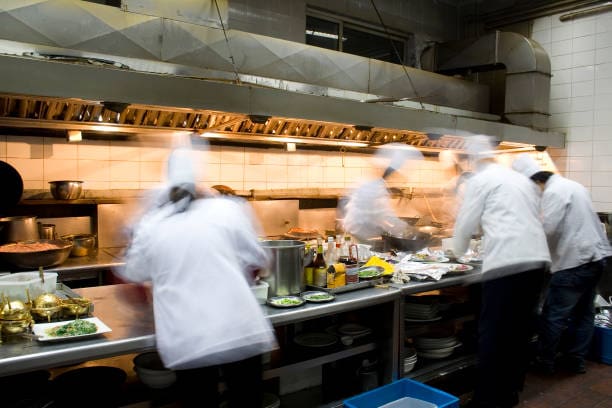
Australian hospitality kitchens operate in tough conditions. Long trading hours, warm ambient temperatures, limited space and minimal downtime are everyday realities across cafés, restaurants and catering venues. In this environment, equipment that can’t handle sustained use quickly becomes a liability.
Commercial stick blenders are designed specifically for these demands. Unlike domestic units, they’re built for repeated daily operation, often blending directly in hot pots during busy prep periods. Heavy-duty motors deliver stable output even as kitchen temperatures rise, helping prevent power loss or overheating during extended use.
Construction quality is critical. Stainless steel shafts and blade guards withstand frequent washing, heat, oils and acidic ingredients while supporting strict food safety standards. In Australian kitchens, where hygiene requirements are non-negotiable, this durability ensures equipment can be cleaned thoroughly without degrading over time.
Sealed internal components further protect performance. By keeping moisture, steam and food particles out of the motor housing and controls, commercial stick blenders reduce the risk of electrical issues and premature failure. This is especially important in steam-heavy environments where blending is done directly over simmering soups and sauces.
Ease of cleaning also plays a role in daily efficiency. Quick-release shafts and smooth surfaces allow staff to clean and sanitise equipment quickly between tasks, reducing downtime and improving allergen control.
With space often limited, one blender may handle multiple tasks across the kitchen — from soups and sauces to purees and emulsions. That versatility demands consistent performance, not just long life.
In the end, durability delivers confidence. Confidence that equipment will perform reliably during prep and peak service alike.
Cleaning, Compliance, and Practical Design
Food safety regulations place increasing emphasis on cleaning and hygiene. Equipment that complicates cleaning routines adds risk.
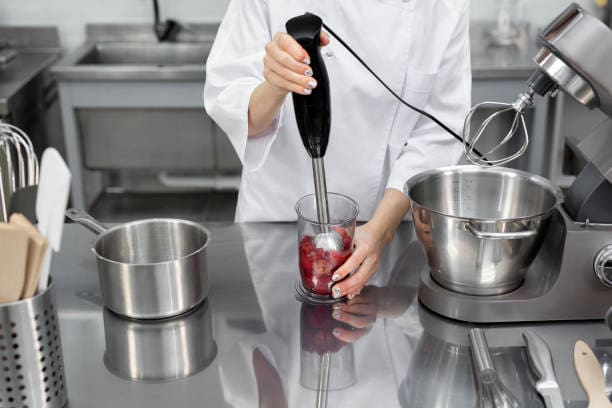
Commercial stick blenders with removable shafts and smooth surfaces simplify sanitation, making it easier for kitchens to meet compliance standards without slowing operations. Good design here isn’t about aesthetics — it’s about practicality.
More Than a Tool — Part of the Kitchen System
What sets the commercial stick blender apart is how seamlessly it integrates into kitchen systems. It doesn’t demand space. It doesn’t interrupt workflow. It adapts to the way kitchens already operate.
That adaptability is why it has become indispensable.
To Sum Up
In professional kitchens, the best equipment earns its place through daily performance, not marketing claims. Commercial stick blenders have earned theirs by solving real problems quietly and efficiently.
They don’t replace skill — they support it. They don’t change how kitchens cook — they help them cook better.
And in an industry where reliability is everything, that’s exactly what matters.
Bens Hospitality Equipment specialises in outfitting commercial kitchens and bars across Australia. Explore our commercial stick blenders, along with a full range of commercial food prep equipment designed to support real service conditions — from cafés and restaurants to catering and high-volume kitchens.