
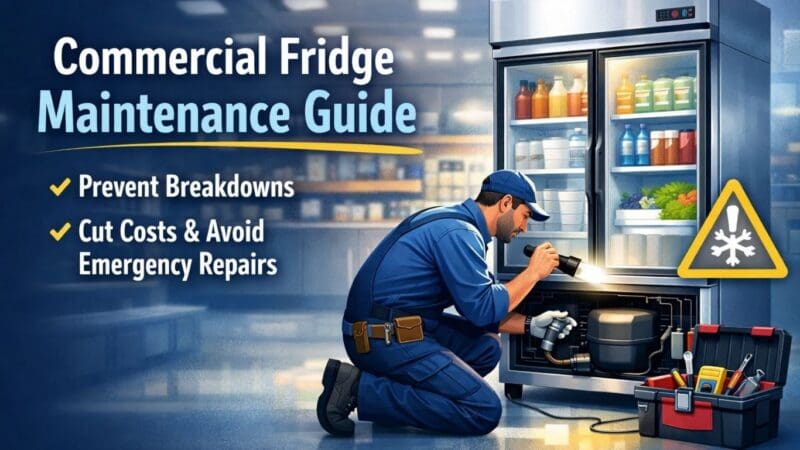
Commercial Fridge Maintenance Guide: Prevent Breakdowns, Cut Costs & Avoid Emergency Repairs
A commercial fridge is one of the hardest-working pieces of equipment in any hospitality venue. It runs 24/7, often in hot kitchens, under constant door openings and heavy product loads. When it fails, service slows, stock is at risk, and stress levels spike fast.
Good commercial refrigeration maintenance isn’t just about cleanliness — it’s about protecting food safety, avoiding downtime, and reducing the need for costly commercial fridge repair, commercial freezer repair, or even urgent emergency refrigerator repair calls.
This guide walks through practical maintenance habits that keep your refrigerators and/or freezers running reliably in real-world Australian hospitality conditions.
Why commercial refrigeration maintenance matters
Commercial fridges and freezers operate under far greater load than domestic units. Heat, grease, airflow restrictions, and heavy use all increase wear on compressors and cooling components.
Without routine maintenance, small issues become expensive failures:
compressors overheat
airflow becomes restricted
ice builds up
seals leak cold air
electrical components strain
The result is higher power bills, inconsistent temperatures, and unexpected breakdowns — exactly when you least need them.
Preventive maintenance dramatically lowers the likelihood of emergency repairs and extends equipment lifespan.
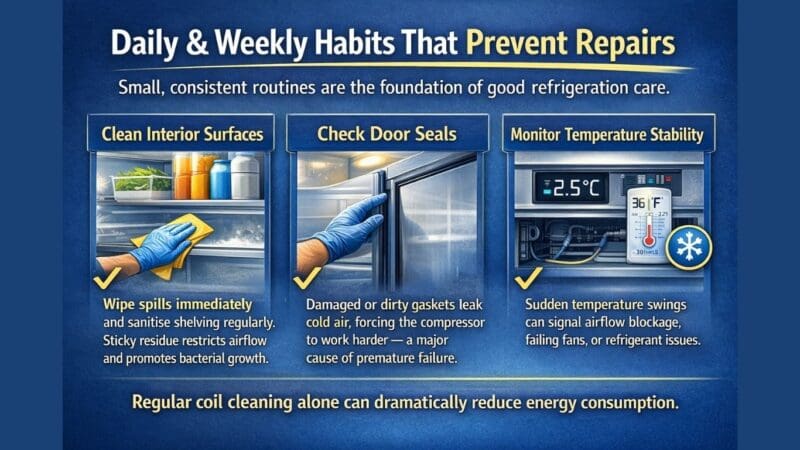
Daily & Weekly Habits That Prevent Repairs
Small, consistent routines are what separate a fridge that runs for years from one that constantly needs emergency service. Commercial refrigeration doesn’t usually fail suddenly — it gives warning signs. Daily and weekly checks catch those signs early, before they become expensive repairs, stock loss, or service downtime.
Think of these habits as preventative care: a few minutes now can save thousands later.
Clean interior surfaces
Spills, crumbs, and sticky residue might look harmless, but inside a commercial fridge they disrupt airflow patterns that are critical for even cooling. When airflow is restricted, cold spots and warm zones develop, forcing the compressor to cycle more aggressively.
Over time this increases wear, raises energy consumption, and can shorten component life.
Regular wiping also protects food safety. Residue encourages bacterial growth, mould, and odours — especially in humid environments common in hospitality kitchens.
Best practice
Wipe spills immediately — don’t wait for end-of-day cleaning
Sanitise shelves weekly
Check drain channels for buildup
This simple habit keeps airflow efficient, reduces strain on the cooling system, and maintains hygienic storage conditions.
Check door seals
Door gaskets are one of the most overlooked — and most important — parts of a commercial fridge.
A worn, cracked, or dirty seal allows warm air to leak in continuously. The fridge responds by running longer cycles to maintain temperature, which accelerates compressor wear and increases power usage.
Poor sealing also causes condensation, frost buildup, and unstable internal temperatures.
Best practice
Run your hand along seals daily to feel for gaps
Clean with warm water weekly to remove grease buildup
Replace seals showing cracks, flattening, or brittleness
Healthy seals maintain temperature efficiency and dramatically reduce mechanical strain.
Monitor temperature stability
Temperature fluctuation is often the earliest warning that something isn’t right.
Inconsistent readings can indicate:
Blocked airflow
Overloading
Failing fans
Dirty condenser coils
Refrigerant issues
Catching instability early prevents food spoilage and stops minor faults from escalating into system failure.
Best practice
Check digital display readings daily
Verify with an independent thermometer weekly
Watch for slow recovery after door openings
Stable temperature equals stable performance — and fewer emergency call-outs.
Keep vents clear
Commercial refrigeration depends on uninterrupted airflow — both inside the cabinet and around the external condenser area.
Blocked vents trap heat, forcing the compressor to work harder and raising operating temperatures. Prolonged overheating is one of the fastest ways to damage refrigeration components.
Common airflow blockers include packaging, stacked containers, dust buildup, and poor placement against walls.
Best practice
Never pack products tightly against internal vents
Maintain clearance around rear and side ventilation
Inspect condenser areas weekly for dust or debris
Good airflow keeps cooling efficient, protects electrical components, and reduces energy strain.
Each of these checks takes only minutes, yet together they form a powerful preventative routine.
Commercial refrigeration failures rarely happen without warning — they build slowly through airflow restriction, heat stress, and inefficient operation. By addressing these factors daily and weekly, you dramatically reduce the likelihood of:
Compressor burnout
Fan motor failure
Frost or condensation damage
Temperature-related stock loss
Emergency repair costs
The result is equipment that runs smoother, lasts longer, and costs less to operate.
Preventative care isn’t extra work — it’s operational insurance.
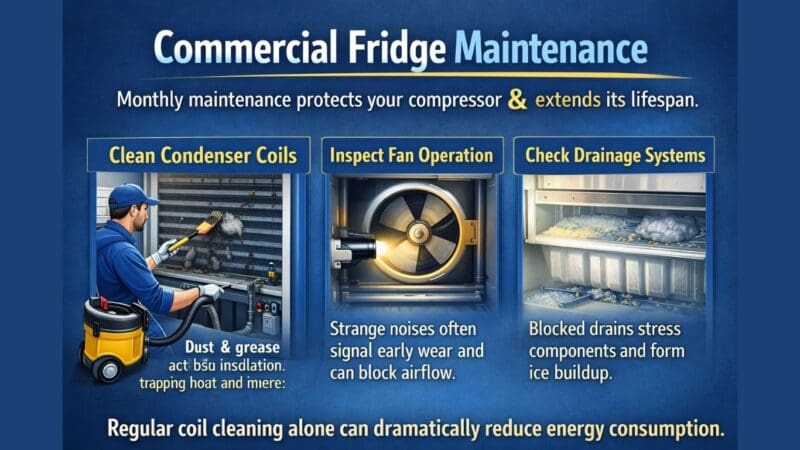
Monthly Maintenance That Protects Your Compressor
Daily care keeps your fridge clean and organised, but monthly maintenance is what truly protects the mechanical heart of your refrigeration system. The compressor is the hardest-working and most expensive component inside any commercial fridge or freezer. Almost every major refrigeration failure can be traced back to excess heat, restricted airflow, or maintenance that was delayed or skipped. Understanding the early warning signs of compressor stress, like those outlined in guides on compressor failure, helps you recognise symptoms before they escalate, giving you time to decide whether a repair is sufficient or if replacement makes more sense.
This is why monthly checks deliver some of the biggest long-term savings for hospitality venues. Regular inspection and cleaning reduce energy waste, lower mechanical strain, and identify small developing faults before they turn into system shutdowns or emergency repair situations. A consistent monthly routine doesn’t just keep equipment running — it protects your investment, stabilises performance, and dramatically reduces the risk of costly downtime when you can least afford it.
Clean condenser coils
The condenser coil’s job is to release heat pulled from inside the cabinet. When coils are clean, heat transfers efficiently and the compressor runs at safe operating temperatures.
But commercial kitchens produce airborne grease, flour dust, lint, and debris. Over time, this buildup forms an insulating layer on the coil surface.
When heat can’t escape:
Compressor runtime increases
Internal pressure rises
Electrical load climbs
Cooling efficiency drops
This constant overwork accelerates wear and dramatically raises the chance of compressor burnout — one of the most costly refrigeration failures.
Energy consumption also rises because the system must work longer to achieve the same temperature.
Best practice
Vacuum or brush coils monthly (more often in greasy kitchens)
Use a soft coil brush — never high pressure
Ensure power is isolated before cleaning
Even a lightly dirty coil can increase operating temperature significantly. Regular cleaning is one of the highest-impact maintenance actions you can perform.
Inspect fan operation
Fans are responsible for moving air across coils and throughout the cabinet. Without proper airflow, heat exchange slows and temperature balance is lost.
A failing fan forces the compressor to compensate, increasing strain and reducing system efficiency.
Warning signs include:
Grinding or rattling sounds
Intermittent spinning
Excess vibration
Reduced airflow
Left unchecked, a worn fan motor can fail completely — causing rapid overheating and potential compressor damage.
Best practice
Listen for unusual noise during operation
Confirm smooth, uninterrupted spinning
Remove debris or grease buildup around blades
Healthy airflow ensures stable cooling and reduces mechanical stress throughout the system.
Check drainage systems
Commercial refrigeration naturally produces condensation. Drain systems safely channel this moisture away from critical components.
When drains clog with debris, grease, or biofilm:
Water pools inside the cabinet
Ice forms around evaporator areas
Airflow becomes restricted
Internal parts experience moisture stress
This extra strain affects fan motors, sensors, and cooling efficiency — and in severe cases can lead to corrosion or electrical faults.
Best practice
Inspect drain lines monthly for blockage
Flush gently with warm water if needed
Check drain pans for overflow
Proper drainage protects internal components and keeps cooling cycles stable.
Monthly refrigeration maintenance is fundamentally about managing heat — the single biggest threat to compressor lifespan. When condenser coils stay clean, fans operate freely, and drainage systems flow properly, the entire unit runs under less stress. Operating temperatures remain stable, compressor cycles stay efficient, and electrical load is reduced, allowing the system to cool consistently without overworking its core components. This directly translates into longer compressor life, lower energy consumption, fewer emergency repair call-outs, and a reduced risk of unexpected downtime during busy service periods. In reality, most refrigeration failures are not caused by defective parts but by gradual heat stress that builds when routine care is ignored. Something as simple as regular coil cleaning can dramatically improve efficiency and extend equipment life, making it one of the highest-value maintenance habits in any hospitality environment. Put simply, investing a few minutes each month protects the most expensive and hardest-working component in your refrigeration system.
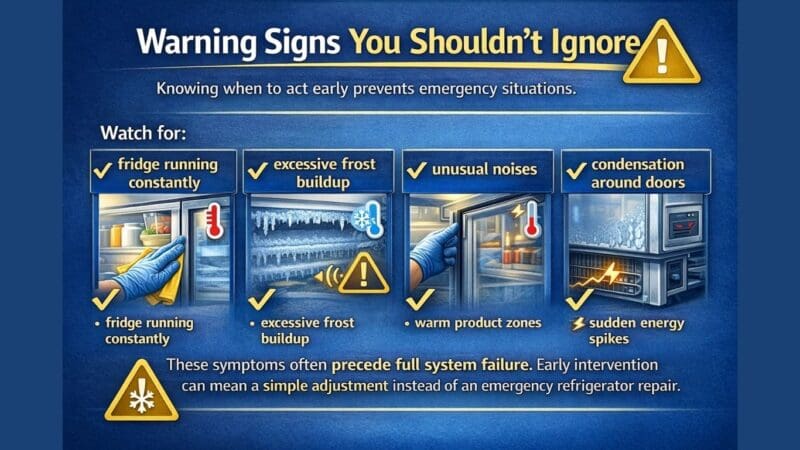
Warning signs you shouldn’t ignore
Commercial refrigeration almost never fails without warning. Units typically show small behavioural changes long before a breakdown occurs, and recognising these early signals is what separates a quick fix from a costly emergency repair.
These symptoms indicate that airflow, heat exchange, or mechanical components are under stress. Acting early protects stock, reduces downtime, and prevents compressor damage.
Here’s what to watch for and what it usually means.
Fridge running constantly
A commercial fridge should cycle on and off as it maintains temperature. If it runs continuously, the system is struggling to remove heat.
Common causes include:
Dirty condenser coils
Air leaks from worn door seals
Blocked airflow
Overloading
Continuous operation overheats the compressor and increases energy consumption. Left unchecked, this is one of the fastest paths to mechanical failure.
What to do: Check seals, airflow clearance, and coil cleanliness immediately.
Excessive frost buildup
Light frost is normal in some areas, but heavy ice formation signals airflow or moisture issues.
Possible causes include:
Door seals leaking humid air
Blocked vents
Defrost cycle problems
Ice restricts airflow and forces components to work harder, creating uneven cooling and temperature instability.
What to do: Inspect door seals and airflow paths, and schedule service if frost returns quickly after cleaning.
Unusual noises
Commercial refrigeration should run with a steady, consistent sound. Grinding, rattling, buzzing, or clicking noises usually indicate early mechanical wear.
These sounds can point to:
Failing fan motors
Loose components
Compressor stress
Ignoring unusual noise often allows minor wear to develop into major component failure.
What to do: Investigate immediately — unusual sounds are an early warning, not background noise.
Warm product zones
If some areas inside the cabinet feel warmer than others, airflow is being disrupted.
This may be caused by:
Blocked vents
Overpacked shelving
Fan issues
Uneven cooling risks food safety and forces longer compressor cycles.
What to do: Reorganise stock to restore airflow and monitor temperature stability.
Condensation around doors
Moisture forming around door frames indicates warm air intrusion or humidity imbalance.
This often signals:
Worn gaskets
Doors not sealing properly
Frequent prolonged openings
Condensation increases frost buildup and cooling load.
What to do: Clean and inspect seals; replace if needed.
Sudden energy spikes
If electricity usage climbs without a change in workload, the refrigeration system may be compensating for inefficiency.
Common contributors include:
Dirty coils
Continuous compressor operation
Airflow restriction
Energy spikes often appear before performance problems become obvious.
What to do: Perform a full maintenance check — energy changes are a hidden early warning.
Each of these warning signs is the system telling you something is under strain. Addressing problems early usually means simple maintenance — cleaning, seal replacement, airflow correction — rather than emergency refrigeration repair or compressor replacement.
The earlier you intervene, the lower the cost, the shorter the downtime, and the greater the protection for your equipment and stock.
Commercial refrigeration rewards attention. When you respond to warning signs quickly, you prevent small issues from becoming service-stopping failures.
When to call a professional technician
Even with strong day-to-day care and monthly maintenance, commercial refrigeration still needs periodic professional servicing to protect long-term reliability. An annual or ideally biannual inspection allows a qualified technician to evaluate areas that aren’t visible during routine cleaning. This includes pressure-testing the refrigerant circuit to detect leaks or inefficiencies, inspecting electrical components for early signs of wear or overheating, calibrating thermostats to ensure accurate temperature control, and verifying airflow performance throughout the system. These checks help maintain cooling efficiency, prevent hidden stress on the compressor, and catch developing faults before they escalate into breakdowns. Professional servicing is essentially preventative insurance: it stabilises performance, improves energy efficiency, and significantly reduces the likelihood of emergency callouts or costly product loss. Investing in scheduled maintenance keeps the system operating within safe design limits, protecting both your equipment and your business continuity.
The real cost of skipping maintenance
A neglected commercial fridge rarely chooses a convenient time to fail. Break-downs almost always happen during peak service, when the kitchen is under pressure and cold storage is critical. When that happens, the consequences stack up quickly: spoiled stock, interrupted service, lost revenue, and potential compliance risks if safe food temperatures can’t be maintained. Emergency repairs also carry premium costs. A typical service call alone often starts around $250 for the first hour just to inspect and diagnose the issue — and that’s before parts, additional labour, or after-hours fees are added. Many failures that trigger these urgent callouts stem from preventable heat stress, airflow restriction, or overlooked maintenance. Preventive care keeps cooling systems running within safe operating limits, stabilises energy consumption, and dramatically reduces the likelihood of sudden downtime. Seen in this light, routine maintenance isn’t an optional expense — it’s operational insurance for your cold chain, protecting both equipment reliability and the continuity of your business when it matters most.
To Sum Up
Commercial refrigeration is one of those systems you only notice when it stops working, and by then, the disruption can be costly. Consistent commercial refrigeration maintenance is the simplest way to protect your equipment, your stock, and your daily workflow. Small routine habits, combined with scheduled professional servicing, help prevent avoidable breakdowns and reduce the likelihood of urgent commercial fridge repair, commercial freezer repair, or emergency callouts during peak service.
A well-maintained fridge runs more efficiently, holds temperature more reliably, and lasts significantly longer under the demands of a busy hospitality environment. In practical terms, that means lower operating costs, fewer surprises, and greater confidence that your refrigeration will perform when your business depends on it. Treat maintenance as part of normal operations, not an afterthought, and your equipment will reward you with consistent, dependable performance year after year.
Bens Hospitality Equipment supplies top commercial fridges and freezers, and works closely with licensed HVAC technicians. Whether you’re deciding between repair or replacement, we can help you weigh the long-term value, expected performance, and cost implications so you can make a confident decision. If you need guidance, support, or connections to trusted technicians, our team is ready to assist. Contact Bens team!